
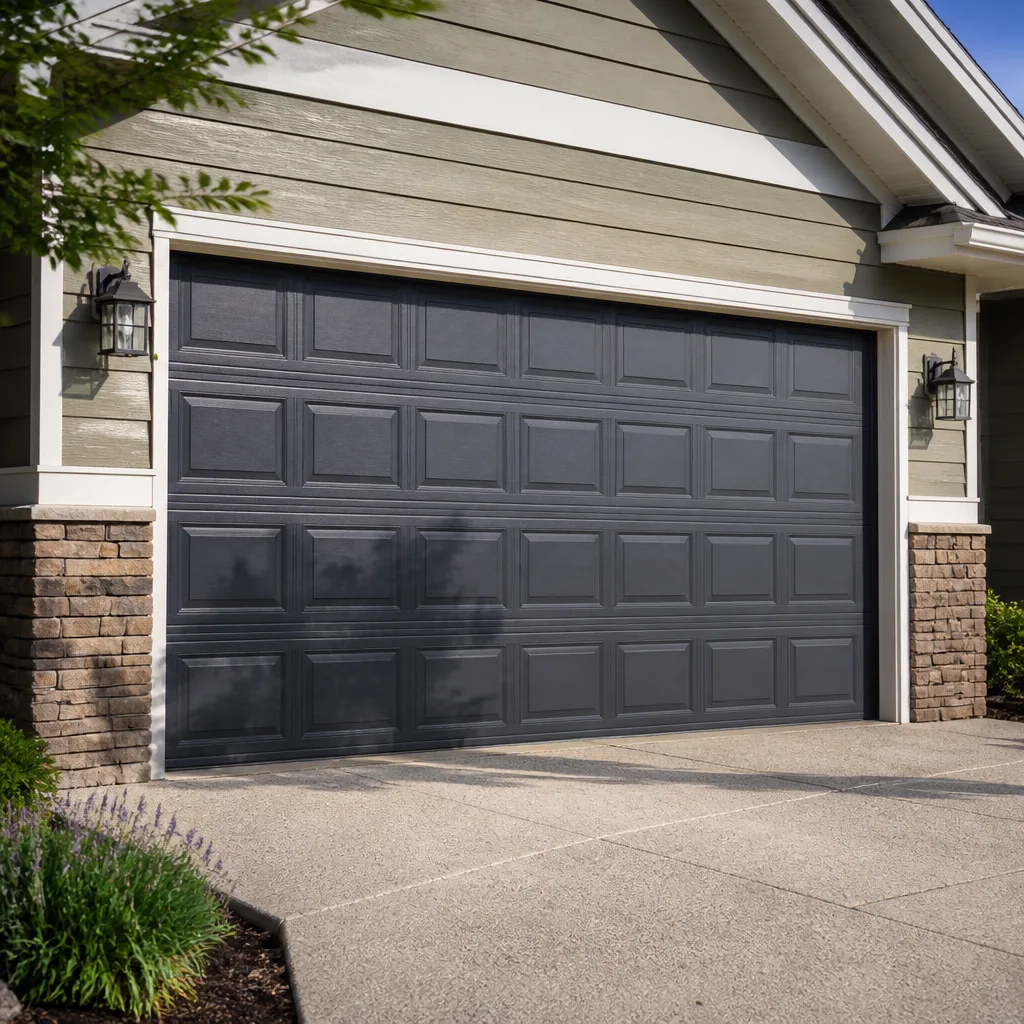
 Raised-panel steel
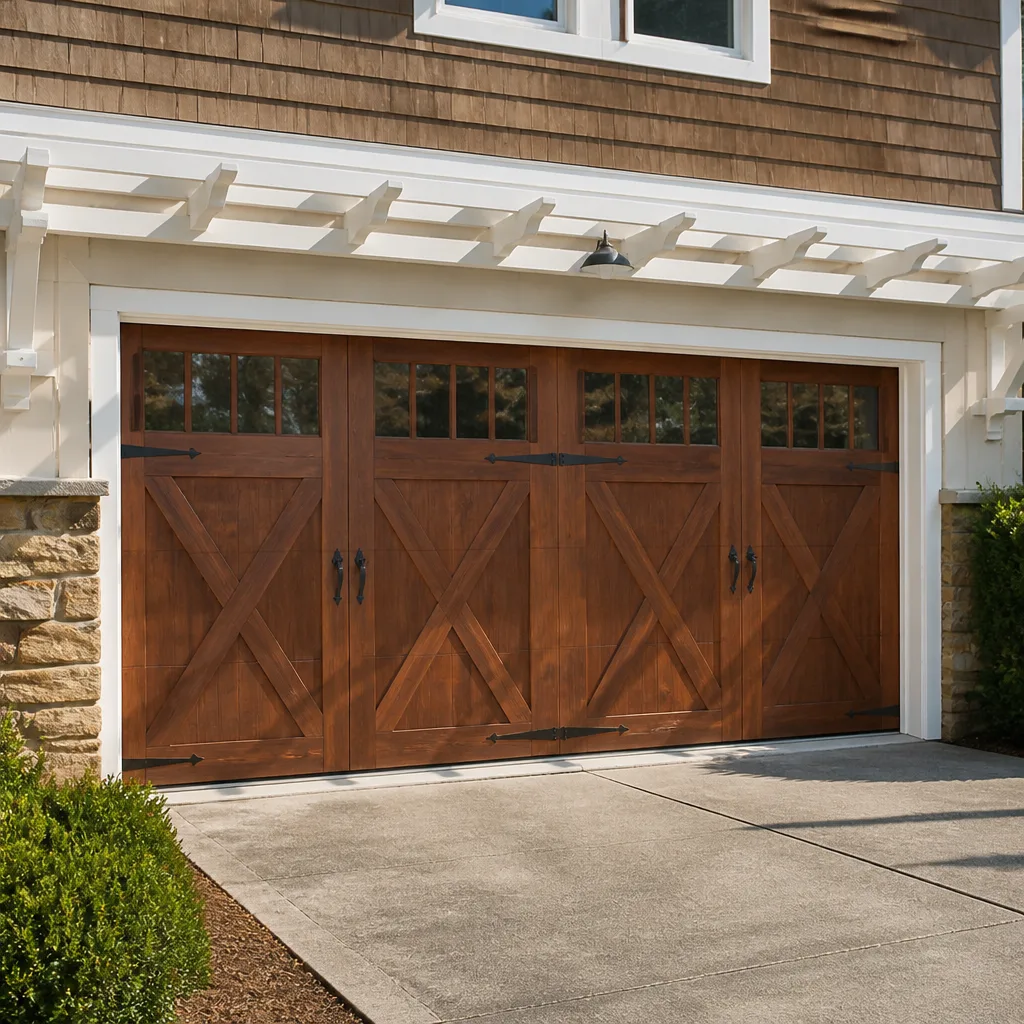 Carriage house
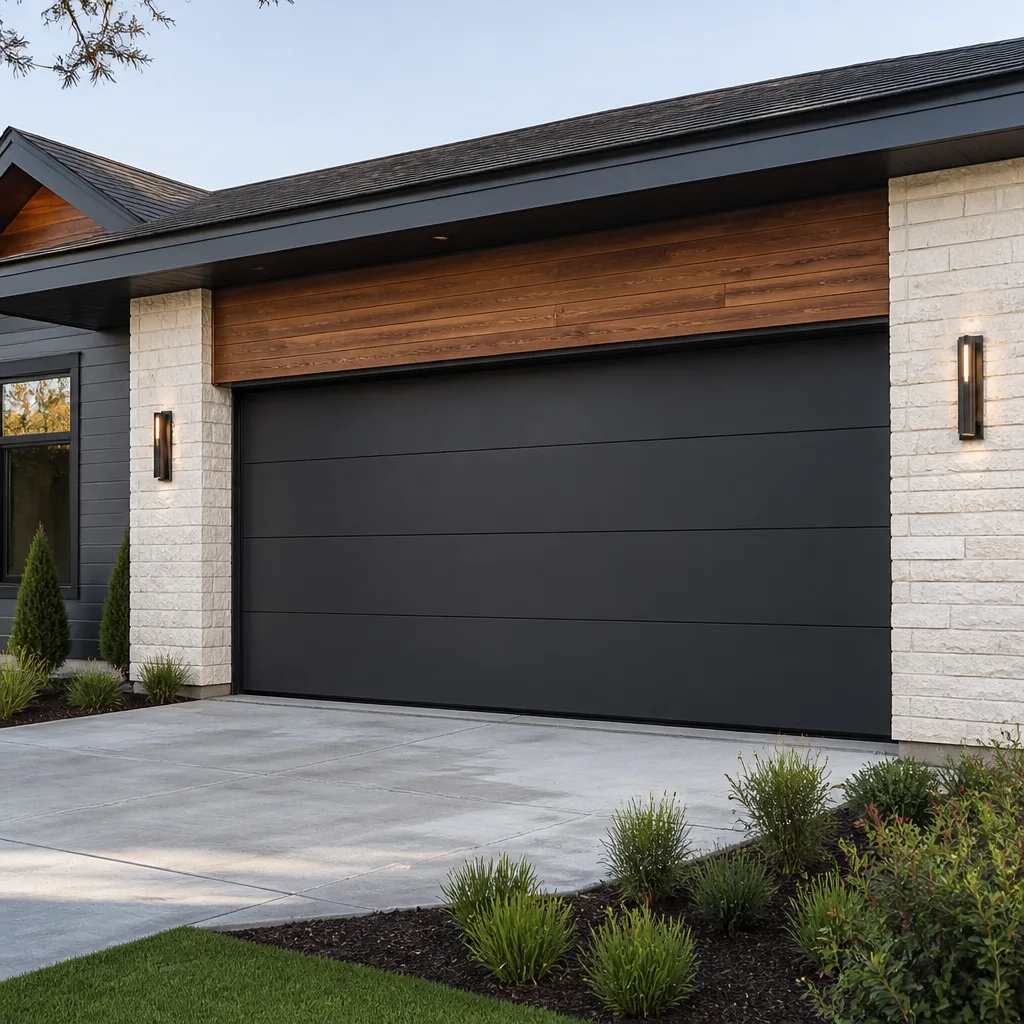 Modern flush
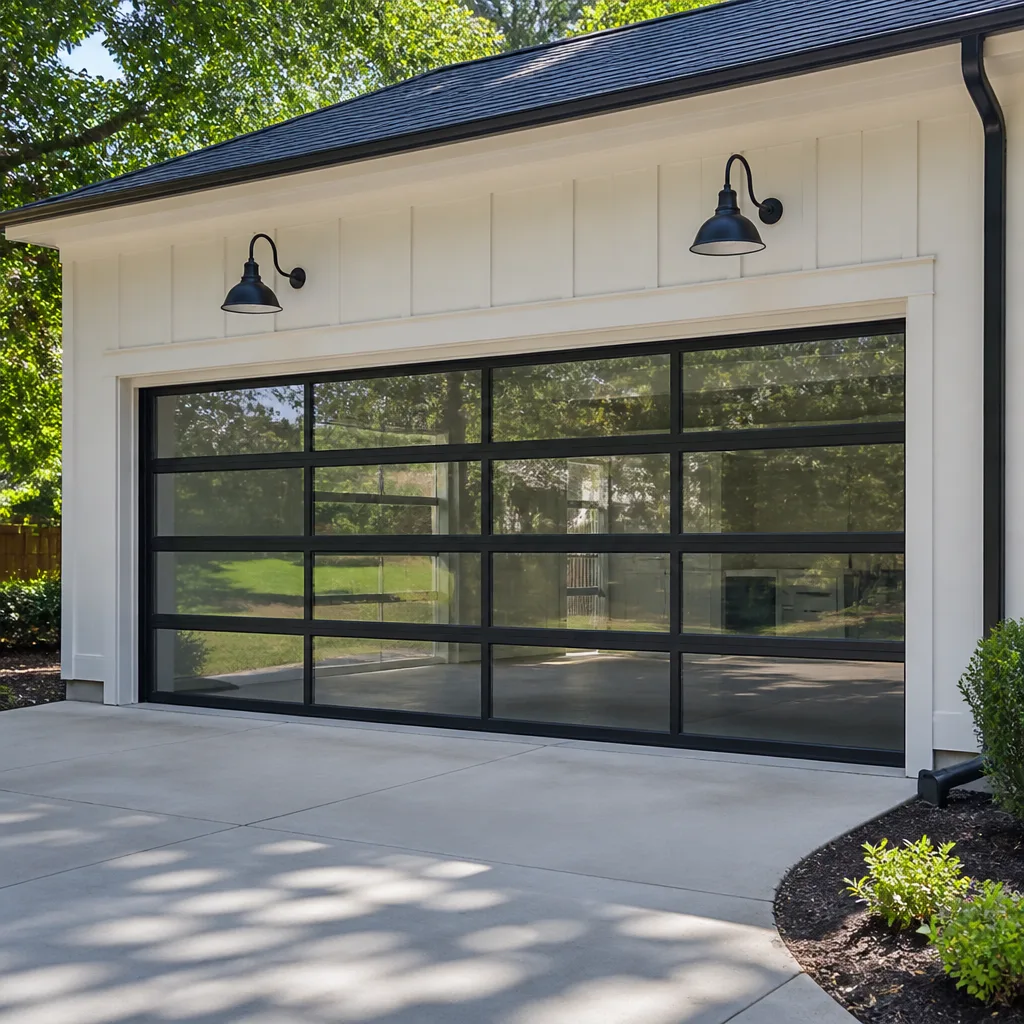 Full-view glass
 LiftMaster openers
 Chamberlain openers
Full 25-point door and opener safety check with every visit - springs, cables, rollers, tracks, and your LiftMaster or Chamberlain opener included
You get a price before we start. It does not change when the pro arrives.
Get your free estimateStyles & brands we work with
- Raised-panel steel
- Carriage house
- Modern flush
- Full-view glass
- LiftMaster openers
- Chamberlain openers
See the difference
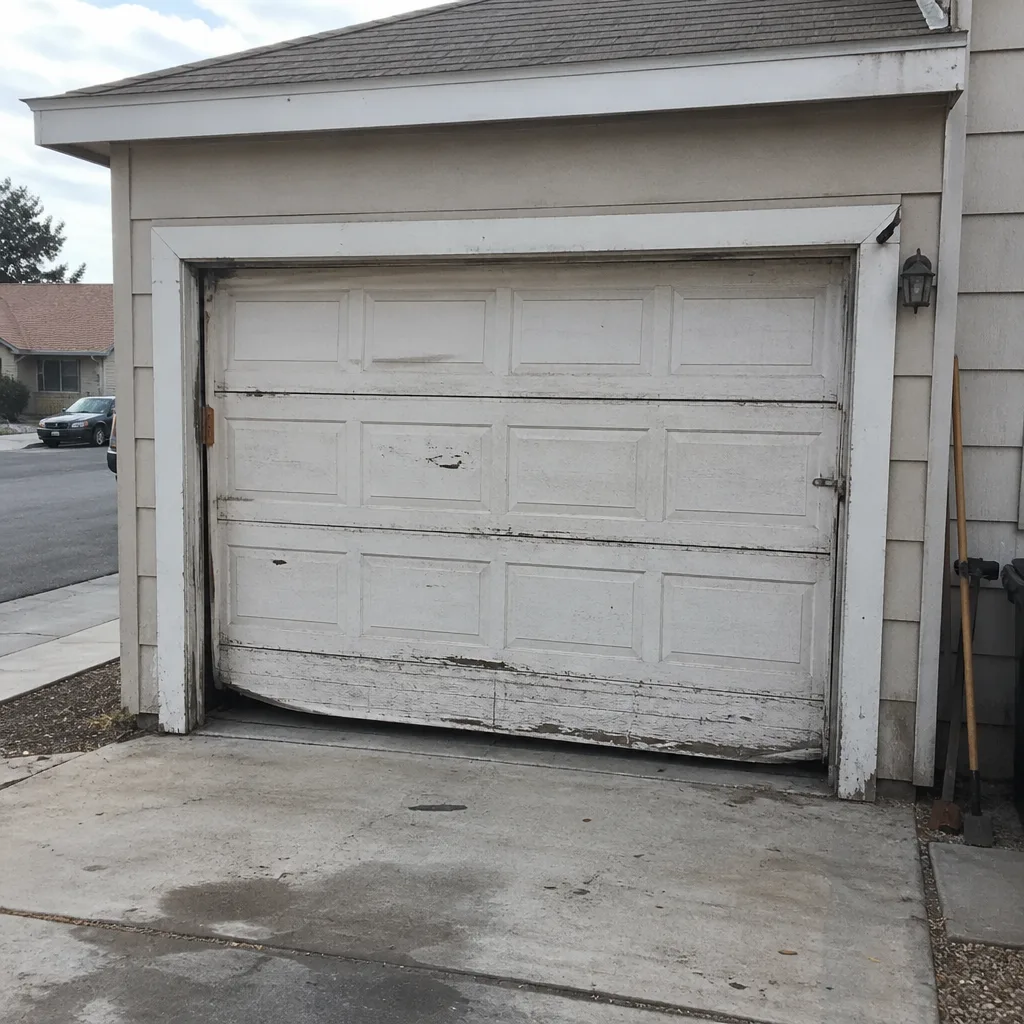 Before
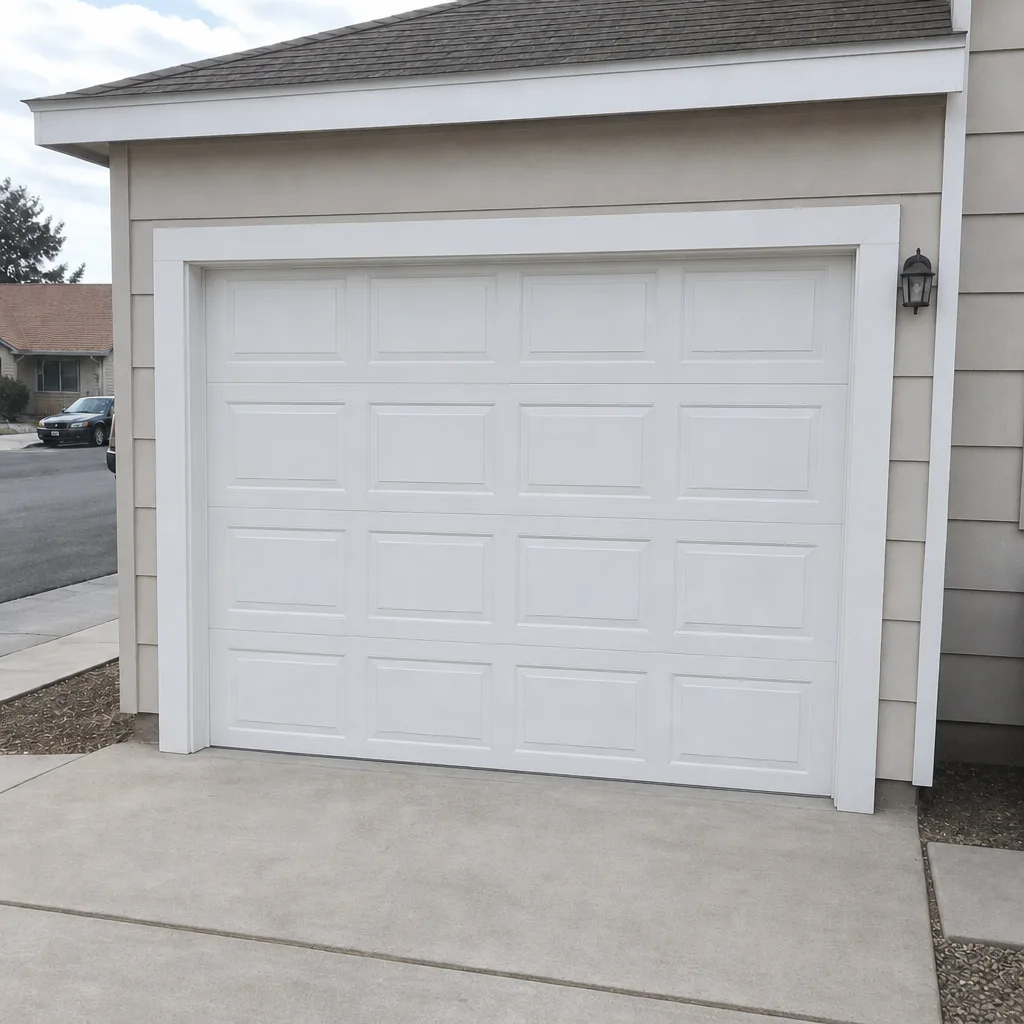 After
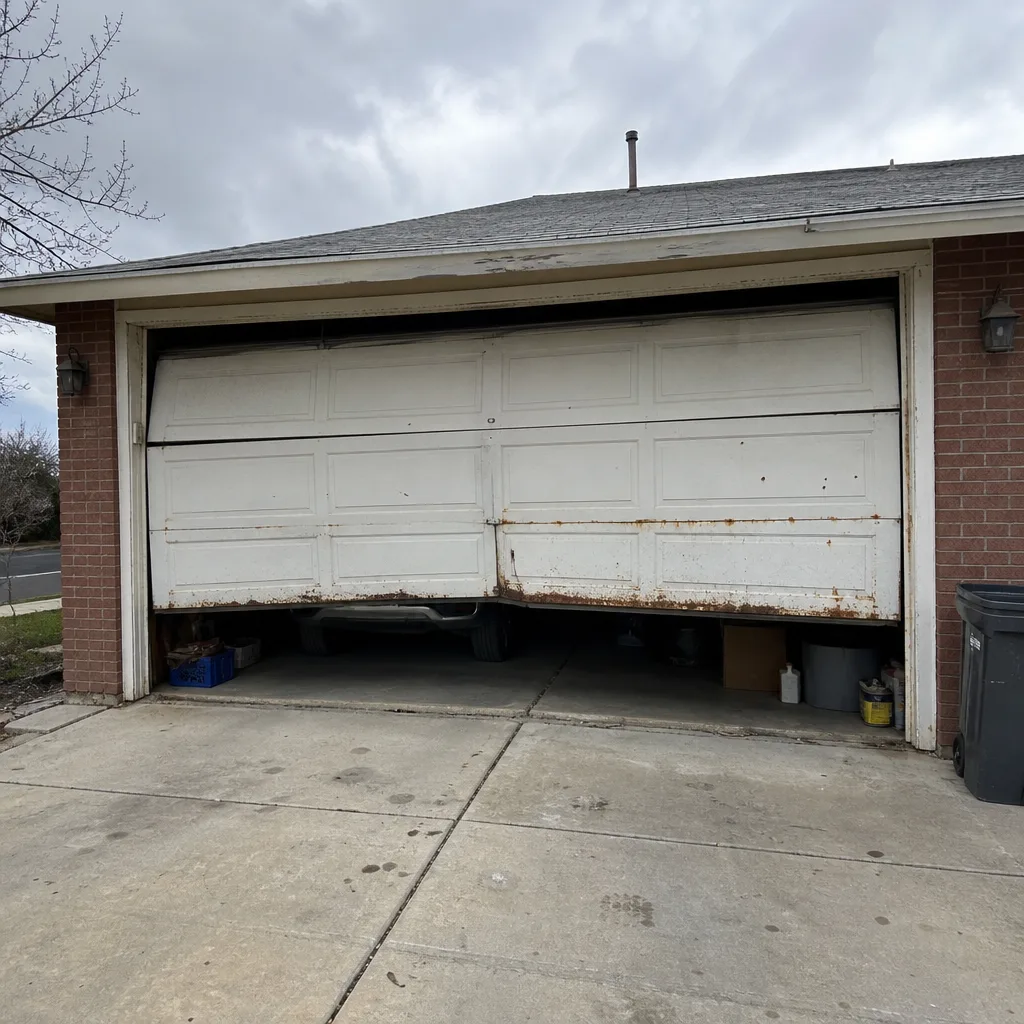 Before
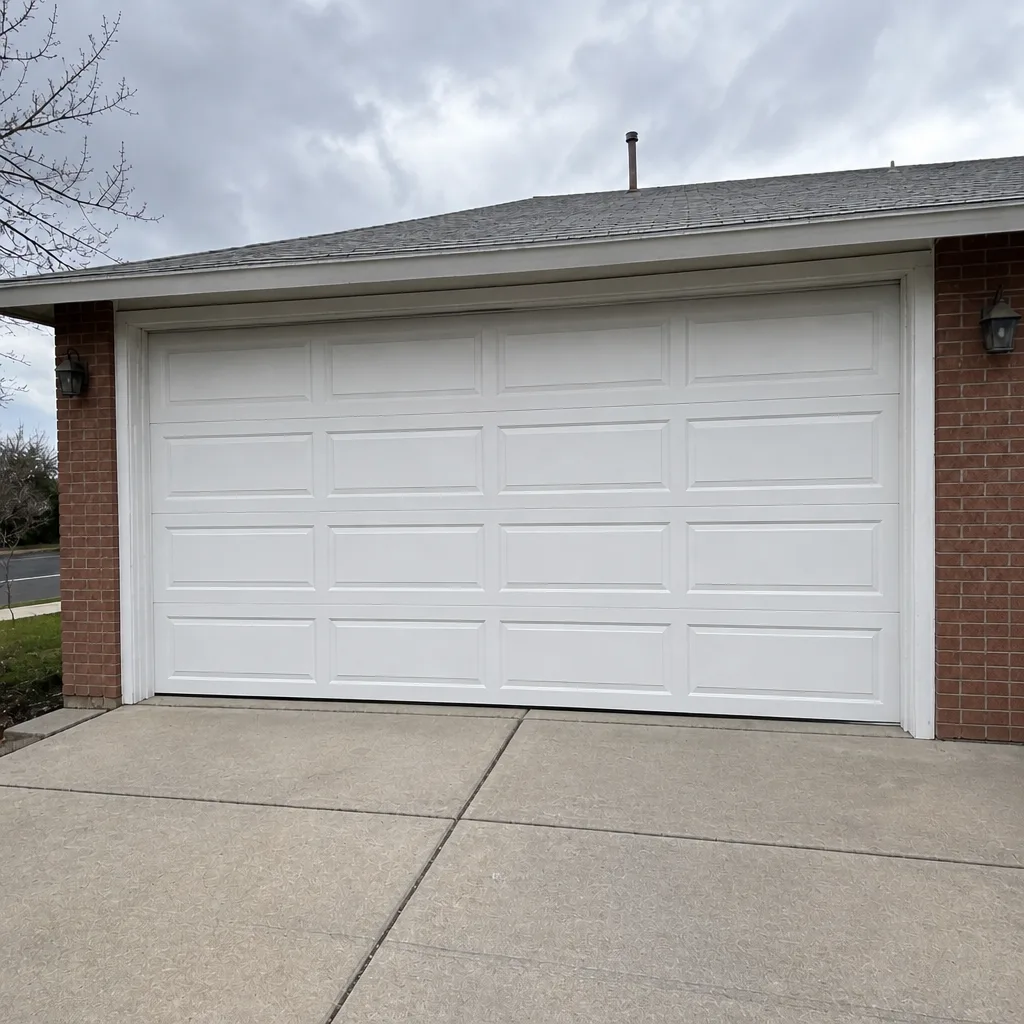 After
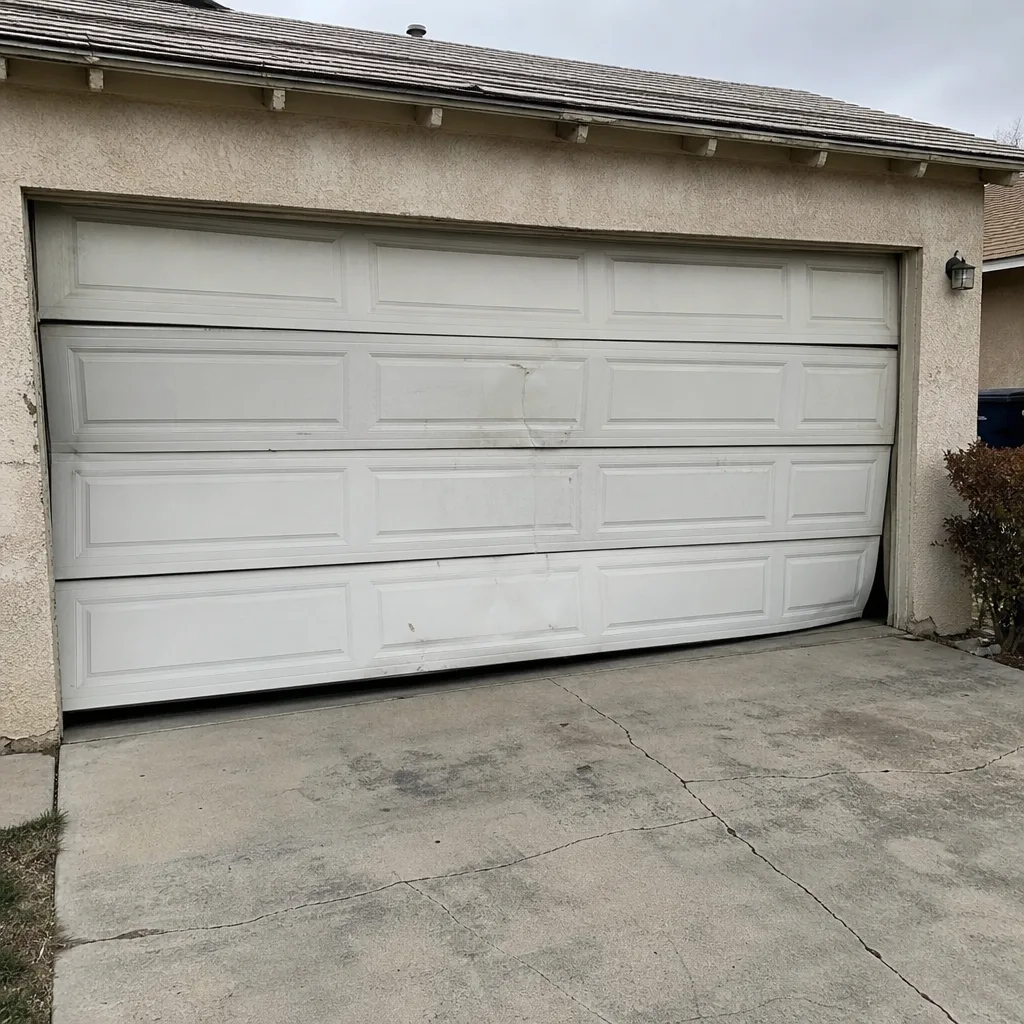 Before
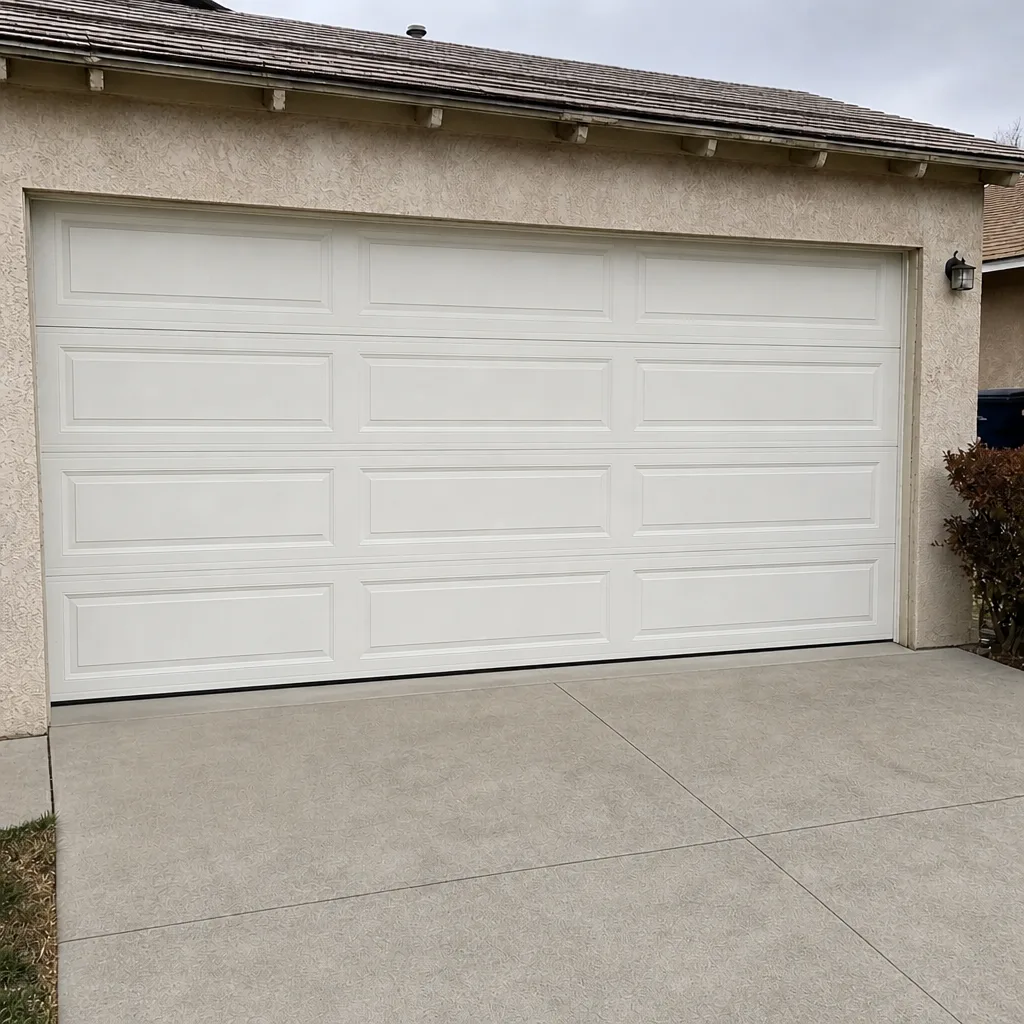 After
Garage Door Making Grinding Noise in Whitney, NV: What It Means and How to Stop It
A grinding noise from a Whitney garage door almost always comes from metal-on-metal contact at two points: the torsion spring coils above the door, or the roller stems sliding in the track. If you sprayed WD-40 on it last spring and the grinding is back by July, you used the wrong product for a desert climate. WD-40 is a water displacer, not a durable lubricant. It cooks off fast above 100°F, then leaves a sticky residue that grabs the fine grit blowing through Las Vegas Valley garages. That grit turns a quiet roller into a grinding one. Call (844) 797-9248 if you’d like a straight answer on what your door is telling you.
Why the Noise Comes Back Every Summer in Whitney
Whitney’s housing went up almost entirely in the 1990s and early 2000s, and nearly every two- and three-car garage here still has its original builder-grade sectional steel door. Those panels, hinges, and rollers are now 25 years old. Steel rollers and the steel track they ride in expand at slightly different rates in the heat. That small gap between them is why a door can grind all afternoon and run quiet by midnight when the temperature drops.
Here’s the part most homeowners haven’t heard. Standard garage-door grease is rated for mild climates. Summer highs above 105°F vaporize it inside a season, and UV does the rest. What’s left behind is residue that collects the dust that settles on everything in the valley. You spray and the noise quiets for a few weeks. Then the grit builds, the metal wears, and by the next July the grind is louder than before.
The right product for a Whitney door is a high-temp white lithium grease or a silicone-based lubricant rated for desert heat. That’s the back-to-back spray-and-grind cycle explained. The wrong lubricant is the reason the same noise returns every year.
What to Look For: Matching the Noise to the Cause
A grinding door is not a single problem. It’s one symptom with four common sources, and they sound different once you know what to listen for. Here’s the comparison we run through on a first visit.
| Where the grind shows up | Most likely source | Why it happens | Typical fix range |
|---|---|---|---|
| Top of travel, sharp metallic scrape | Torsion spring coils | Dry coils grinding coil-on-coil under high tension | $180-$340 |
| Rhythmic grind or clunk timed to door movement | Cracked or flat-spotted roller stem | Builder-grade plastic rollers after 25 years | $110-$220 |
| Grind only in summer heat | Track mis-spaced against expanding steel | Thermal expansion widens a marginal gap | $120-$240 |
| Grind at the hinge plates | Dried hinge pins and worn bushings | Grease cooked off, grit in the joint | $150-$600 (repair call) |
Grinding at the top of the door travel usually traces back to the torsion spring. Those coils carry the entire weight of the door under high tension, so when they run dry the coil-on-coil contact makes a metallic scrape. A spring that grinds is a spring that is also dry and closer to failure than you’d like. Treat the noise as a maintenance alert, not just an annoyance.
Grinding or clunking that keeps pace with the door’s movement often comes from a cracked roller stem. Builder-grade plastic rollers flat-spot and crack, and one cracked stem can make a rhythmic sound that homeowners routinely blame on the track or the opener. That misdiagnosis wastes money. Replacing an opener won’t quiet a bad roller.
If the grind only appears on a hot afternoon, thermal expansion is the suspect. A track that’s marginally mis-spaced will pinch only when both the roller and track steel are at peak temperature. Checking that gap at operating temperature, not in the cool of the morning, is the difference between a fix that lasts and one that doesn’t.
Can You Just Lubricate It and Skip the Repair?
Sometimes. If the only issue is dried lubricant on sound parts, the right product quiets it. But a grinding door that gets lubricated without a diagnosis is likely back within a season, because grease doesn’t fix a cracked roller stem or a spring that’s already weakening. That’s why our technicians identify the specific noise source before quoting: spring, roller, hinge, or track. We tell you what’s actually wrong, then state the flat price for the correct fix before any work starts. No surprises on the bill.
One neighborhood detail worth knowing. Because whole Whitney streets were framed and finished within months of each other by the same builders, doors tend to fail on the same schedule. One snapped spring on a cul-de-sac often signals a dozen neighbors within weeks. If your door is grinding and you’re the third house on the block to call this month, that’s not coincidence. It’s the batch.
We keep springs, cables, and openers on the truck so most of these jobs finish in a single visit. And every completed repair is covered by our 90-Day Done Right Promise, in writing. If it isn’t right, we come back. No paperwork, no arguing. We’re factory-familiar with all the majors, including Chamberlain, Genie, Clopay, and Amarr, so the right part is on the shelf whichever builder put your door in.
How we track a grinding door down, step by step
- We listen at the door first, then run it through a full cycle to pinpoint where in the travel the grind starts.
- We check the torsion spring coils for dryness and coil-on-coil contact at the top of the travel.
- We inspect every roller stem and hinge plate for cracks, flat spots, and grit-packed joints.
- We check the track gap at operating temperature, since a marginal mis-space only shows up in the heat.
- We state the flat price for the correct fix before any work begins, then complete most jobs in one visit.
If you’d rather not climb a ladder and guess, that’s what we’re here for. For a broader look at what we handle, see our Garage Door Repair services, or start at our home page.
What Does Grinding Noise Repair Cost in Whitney?
Most grinding-noise repairs in Whitney land in the $150-$600 range, and the exact figure depends on which part is failing. Roller replacement is the lightest hit; a failing torsion spring sits at the higher end. Here are the ranges we quote.
- Roller Replacement: $110-$220
- Track Realignment: $120-$240
- Spring Repair: $180-$340
- Cable Repair: $130-$250
- Opener Repair: $120-$320
- Garage Door Repair (full call): $150-$600
We also have standing offers that never disappear: $50 off any repair over $250, a free second opinion on any written estimate, and an $89 seasonal tune-up. Seniors and veterans get a permanent 5% discount on top. Our technicians have up to 10 years of experience, and they’re background-checked and uniformed on every job. To schedule, see Garage Door Repair in Whitney.
Frequently Asked Questions
Usually metal-on-metal contact, most often from a dry torsion spring, a cracked roller stem, or a track that’s mis-spaced and only grinds in the heat. The single most common cause on an older Whitney door is dried-out lubrication at the torsion spring or roller interface. Call (844) 797-9248 and we’ll help you sort out which one yours is.
No, not as a lubricant. WD-40 is a water displacer that evaporates quickly in high heat and leaves a residue that attracts the grit that blows through a desert garage. For Whitney’s climate, use a high-temp white lithium or silicone-based grease instead. If your door is already grinding, call us for an exact quote before you spray again; a free second opinion on any written estimate is standard.
That pattern points to thermal expansion. Steel rollers and track expand at slightly different rates, and a track that’s marginally mis-spaced can pinch only when both reach peak temperature. Diagnosing it means checking the track gap when the door is hot, not in the cool morning. Call (844) 797-9248 for a no-pressure assessment.
In most cases, yes. We keep springs, cables, and openers on the truck, and calls are answered by a live person around the clock, so many grinding repairs finish in one visit. If your particular door needs a specialty part, we’ll tell you upfront rather than leave you guessing. Reach us at (844) 797-9248. Estimates are free.
A Square Deal on Your Grinding Door
If you’d rather have it looked at, Mainspring Garage Door Co. Whitney offers a no-pressure assessment in Whitney. Call (844) 797-9248 and we’ll find the actual source of the noise, state the flat price, and stand behind the work in writing. You shouldn’t have to think about your garage door again.
Written by the team at Mainspring Garage Door Co. Whitney, serving Whitney, NV.