
Last updated November 17, 2026
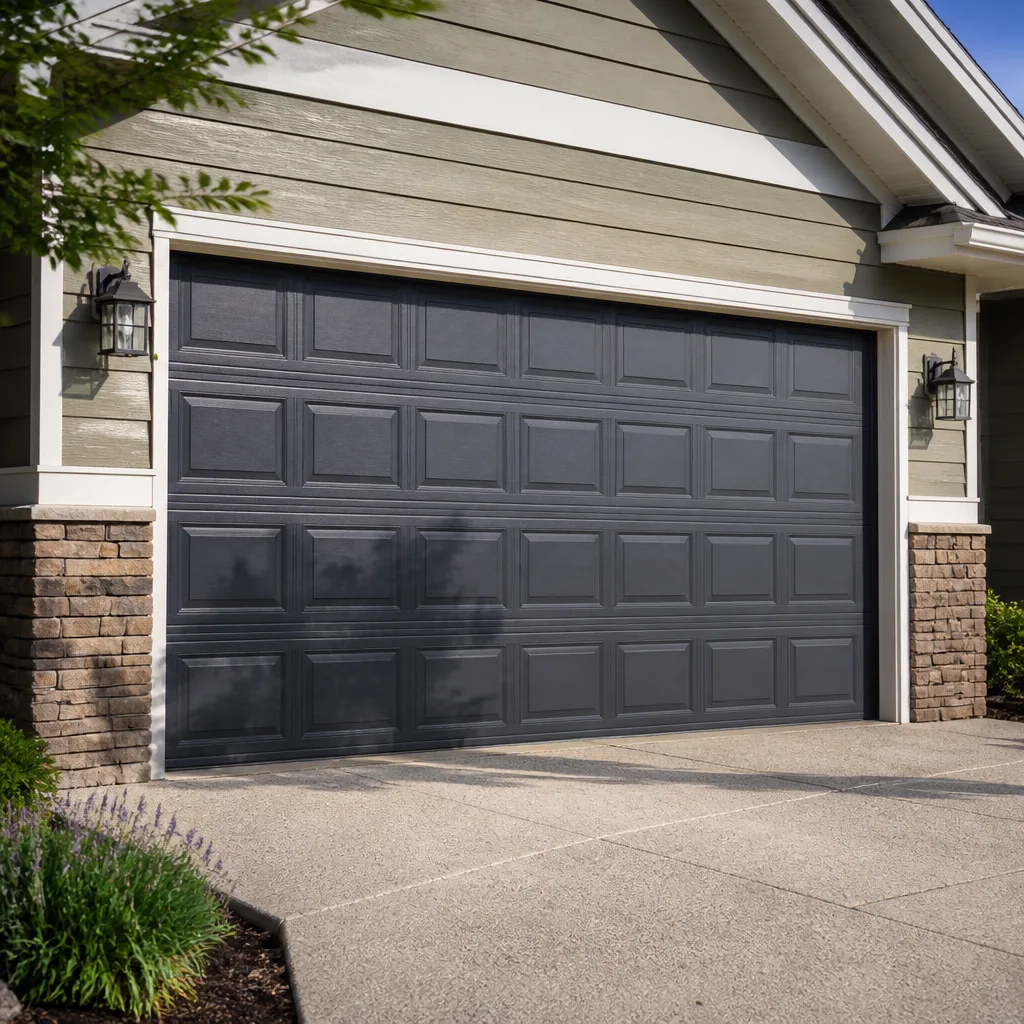 Raised-panel steel
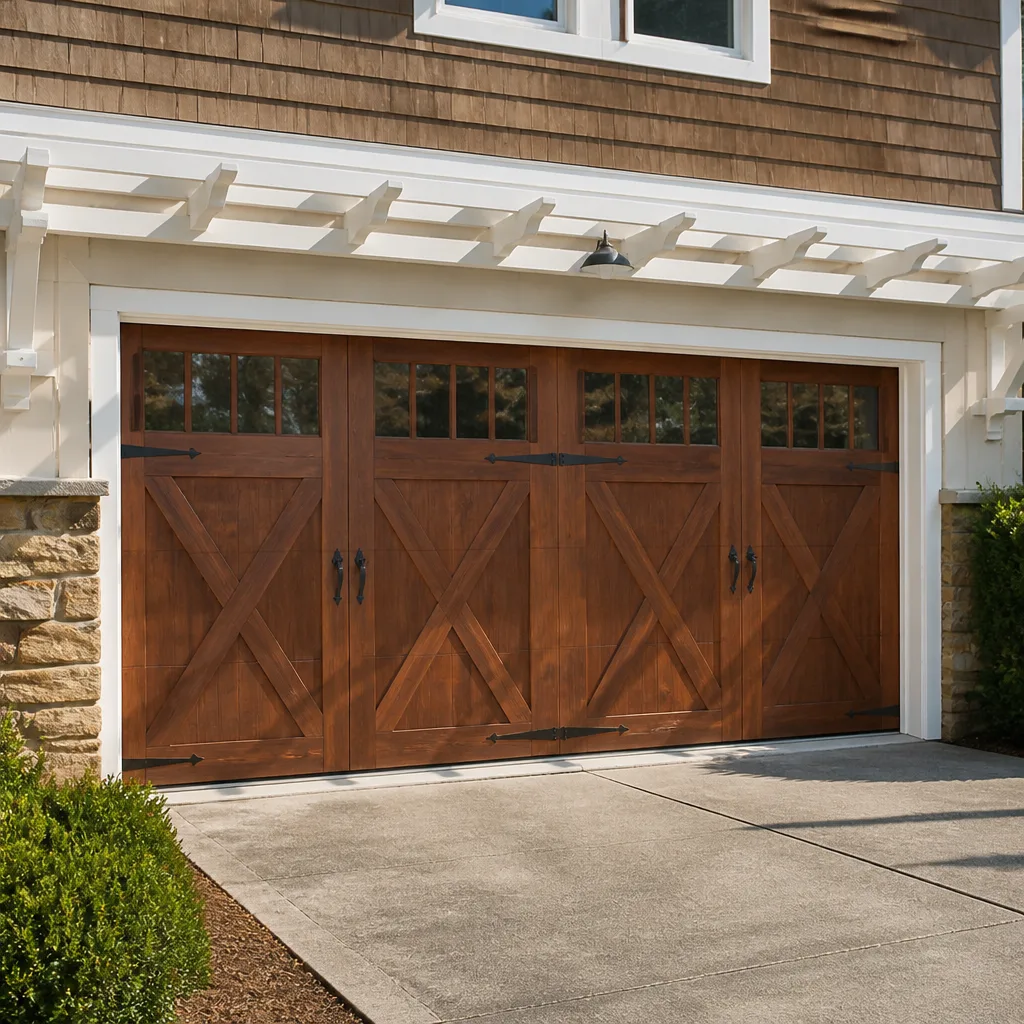 Carriage house
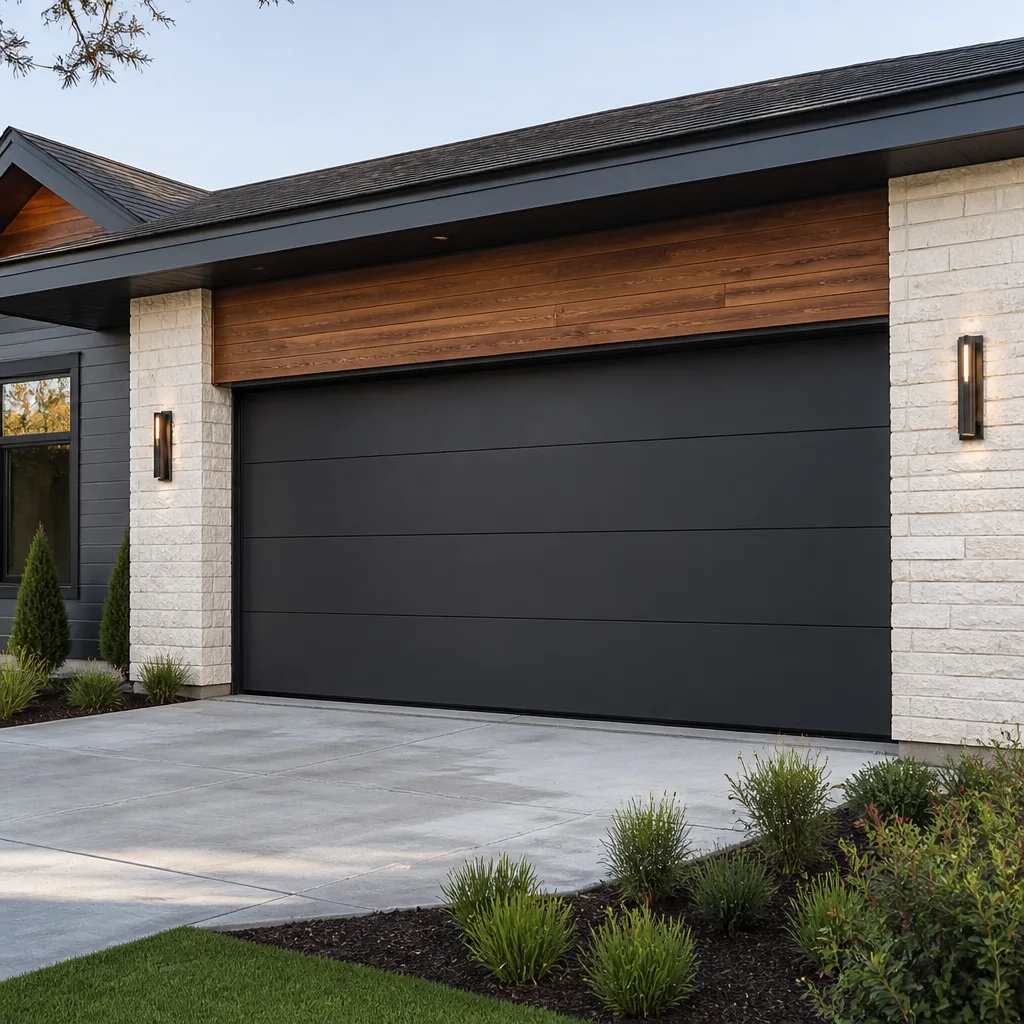 Modern flush
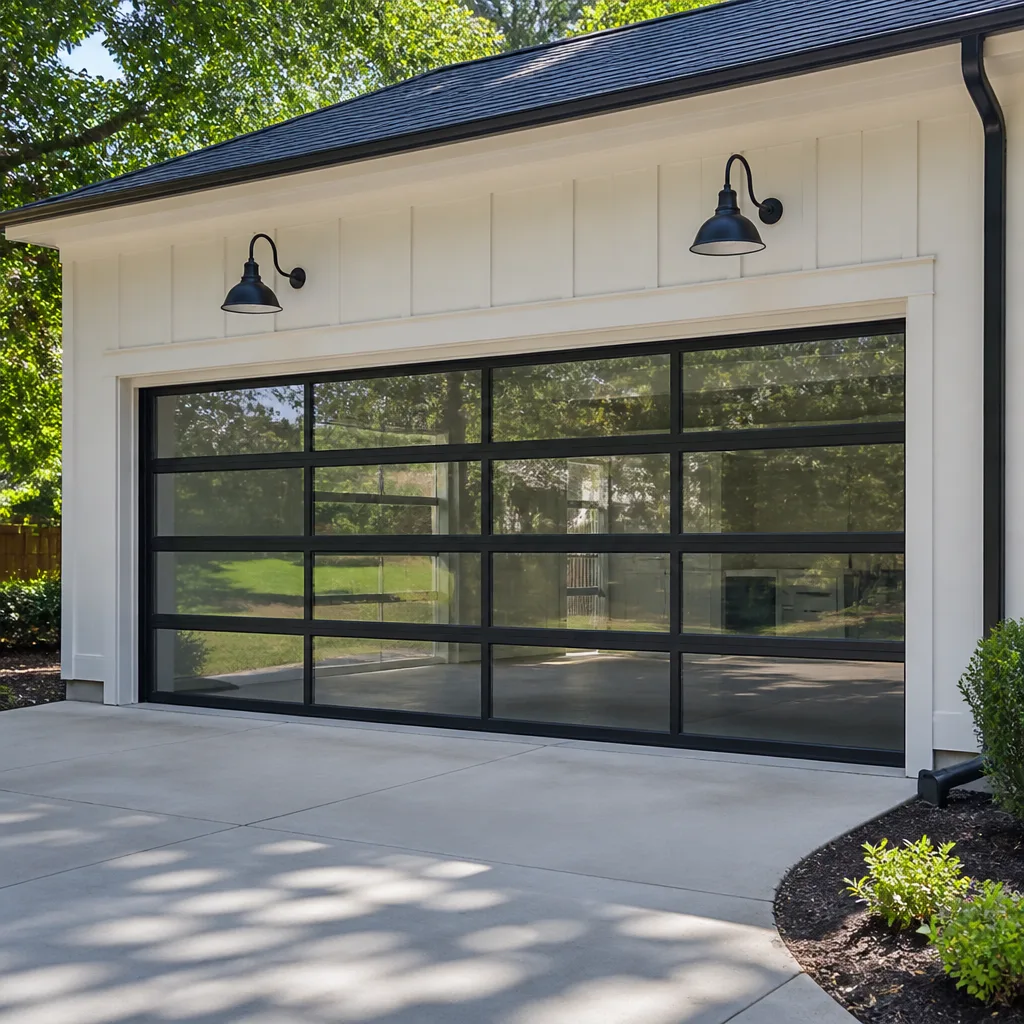 Full-view glass
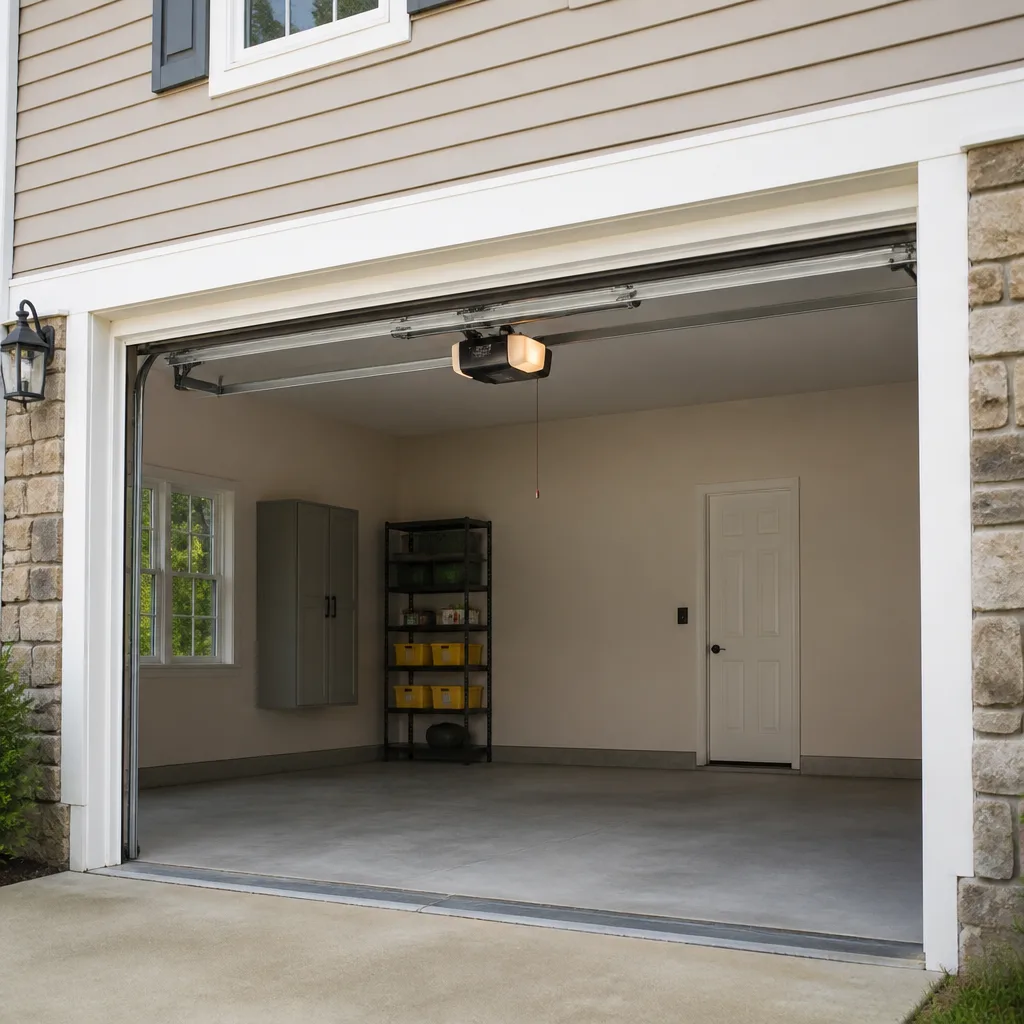 LiftMaster openers
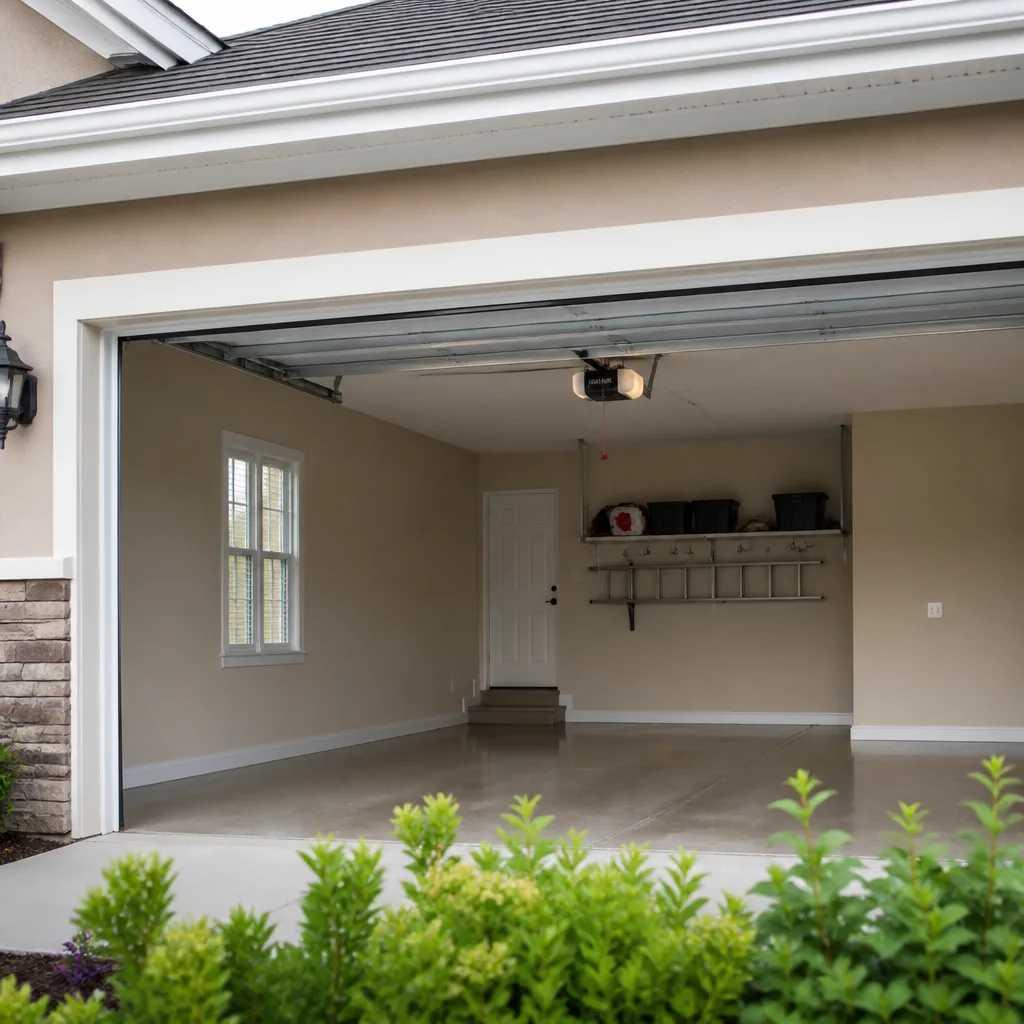 Chamberlain openers
Full 25-point door and opener safety check with every visit - springs, cables, rollers, tracks, and your LiftMaster or Chamberlain opener included
You get a price before we start. It does not change when the pro arrives.
Get your free estimateDIY vs Professional Emergency Garage Door: What’s Safe to Do Yourself
A homeowner who forces an off-track garage door back into the track with a pry bar and a YouTube video will spend roughly four times more on the resulting repair than the original emergency call would have cost. We’ve seen it happen more times than we can count, and it’s not a rare outcome. The pressure to act fast in an emergency is exactly what turns a fixable problem into an expensive one. This guide covers what you can safely do yourself when your door fails, what you should never touch, and the one diagnostic step that tells you whether the trouble is in the opener or the door. If you’re in Whitney and your door has come off track or won’t close, read this first.
Quick Answer
The only safe DIY emergency actions are the ones that require no tools and no contact with the mechanical system: pull the manual release cord, wipe the photo-eye lenses, and check the vacation lock. Everything else – track realignment, spring work, cable work, and forced operation – belongs to a trained technician. If the door is off track or a spring has broken, stop, secure the area, and call a professional.
Quick Answer: In a garage door emergency, the three things you can always safely do yourself are the manual release pull, the photo-eye wipe, and the vacation lock check – all tool-free and mechanical-contact-free. Anything that requires a wrench, a pry bar, or touching a track, spring, or cable is a job for a trained technician. When in doubt, stop and call.
Styles & brands we work with
- Raised-panel steel
- Carriage house
- Modern flush
- Full-view glass
- LiftMaster openers
- Chamberlain openers
Table of Contents
- The Three No-Tools Actions That Are Always Safe
- Why Emergencies Make Normally Manageable Tasks Dangerous
- The Off-Track Door: Why It Looks Simple and Isn’t
- The One Diagnostic Test Worth Doing Before You Call
- Temporary Security: What to Do When the Door Won’t Close Overnight
- Springs and Cables: The Parts You Never Touch
- What to Tell the Technician When You Call
- Common Mistakes to Avoid
The Three No-Tools Actions That Are Always Safe
In a true emergency – the door is stuck open at midnight, the opener is grinding, the door won’t close and the house is exposed – your first instinct is to grab a tool. Don’t. There are exactly three things you can do that touch nothing mechanical and create no new risk. Learn these by heart before something goes wrong.
1. Pull the manual release cord
Every garage door opener has a red-handled release cord hanging from the trolley carriage. Pull it straight down and toward the door (angle varies by brand, so check your opener manual for Chamberlain, Genie, or whichever model you have). This disconnects the door from the opener so you can lift it by hand. It’s the single most important safety action available to you. Once released, the door is on its own springs – never let go of a door that is half-raised, because it can slam down.
2. Wipe the photo-eye lenses
The two small lenses near the bottom of the track on either side of the door are safety beam eyes. When dust, spiderwebs, or a shifted lens breaks that beam, the door refuses to close. A soft dry cloth and 30 seconds of your time resolves a surprising number of “door won’t close” calls we get here in Whitney, where blowing desert dust builds up on the eyes faster than in most places. Don’t use cleaners or solvents on the lens – a dry cloth is enough.
3. Check the vacation lock
Many openers have a vacation lock mode – often a physical switch on the wall control or a lockout setting in the app – that disables the opener while you’re away. If it’s engaged, the opener will not respond to any remote, and the door will not move. Check the wall button and the door opener app on your phone before you call. It’s an easy answer, and we’d rather save you the call than dispatch a technician for a switch.
Why Emergencies Make Normally Manageable Tasks Dangerous
The tasks that feel easy during a YouTube tutorial turn dangerous at 11 PM in a dim garage. This is a pattern, not a coincidence. Emergency conditions add four compounding factors that make the same job four times more dangerous than it is in daylight.
Adrenaline
Adrenaline narrows focus. Fast hands and a fixed stare on the problem are exactly what causes tools to slip off stubborn bolts and fingers to land where they shouldn’t. Garage door components are under tension. Slip a pry bar, and the results are not forgiving.
Poor lighting
Standard garage lighting casts shadows that hide the relationship between a cable, a drum, and the bracket it’s wound on. You can’t see tension. You can’t see a frayed cable about to fail. In the dark, the risk of touching the wrong thing is real. Even a flashlight in your non-working hand is not a safe substitute.
Working alone
Every safe garage door repair procedure assumes two people. One guides the door, one handles the tool. When you’re alone, you’re doing both jobs and neither one gets full attention. Since most homeowners will not wake a neighbor at midnight, the working-alone condition is often unavoidable in an emergency – which means the job is also often unsuited to the emergency.
Skipping the safety steps
Videos edited for length cut the safety setup. They skip the vice grips (never touch the torsion bar), they skip the second person, they skip the lockout. A viewer already in a hurry gets the shape of a repair without the safeguards that make it survivable. That is why we tell neighbors in Whitney to treat every emergency garage door repair video as information, not instruction.
The Off-Track Door: Why It Looks Simple and Isn’t
An off-track door is the most common emergency call we get. It also looks like the most obvious DIY fix. The door is obviously out of its track. So you guide it back in with a pry bar. Case closed. That assumption is how the four-times-more-expensive repair happens.
What holds a panel in track
A garage door panel stays in the track because the hinges and rollers are designed to pivot as the door travels, and because the door’s entire weight is distributed by the cable system under tension. The rollers sit inside the track under load. A door that has come off track is not a door sitting loose. It’s a door where the load-bearing relationship has failed. The weight of the door is now held by whatever it happened to land on.
What happens when tension releases
The moment you pry a panel toward the track in an off-track condition, you can release the tension holding the cable. When that tension lets go, the cable whips. A snapped garage door cable can move at a speed that no human can react to, and it will slice through whatever is in its path. We’ve seen garage doors where the cable has embedded in the wall after a failed DIY track attempt. That is the real cost, not the labor. It’s the injury and the wall repair and the now-destroyed door panels.
What to do instead
If the door is off track, do not touch the track, the door, or the cable. Do not run the opener. If you have a second person available, they can pull the manual release to remove tension from the opener system. Then stop, note what you see, and call. The door can be reset by a technician – an emergency call is much cheaper than a damaged door, a damaged wall, or worse.
The One Diagnostic Test Worth Doing Before You Call
Before you dial, run one safe test that tells you and the technician whether the problem is in the opener or the door itself. This is the single most useful piece of information you can bring to a phone call, and it requires no tools beyond your own arms.
- Push the wall button to see if the door responds at all. If the opener hums but doesn’t move, the motor is trying to run. If it doesn’t hum, the opener has no power or the logic board has tripped.
- Pull the manual release cord so the door is disconnected from the opener.
- Lift the door by hand from the bottom center. It should raise with even pressure and stay open on its own at the halfway point. It should feel smooth and balanced – not light enough to fly open, not so heavy that it takes your full weight.
- Watch for balance. If the door feels light, the springs are over-tensioned. If it feels very heavy, the springs are fatigued or broken. If it raises unevenly, a cable or roller is off.
- Let it back down gently to the closed position before you call.
If the door lifts and balances smoothly by hand but the opener won’t move it, your problem is in the opener. You can tell the technician, “the door lifts smooth, the opener won’t run” – and they’ll know exactly what to bring. If the door is heavy, sticks, or the springs look broken, the problem is in the door, and the issue is mechanical. In our experience in Whitney, more than half of the emergency calls we get are one of these two conditions, and knowing which is which saves a return trip and a diagnosis fee.
Temporary Security: What to Do When the Door Won’t Close Overnight
A door that won’t close overnight is a security problem. It’s also a problem where a rushed fix creates a new mechanical failure. Here is what’s safe and what isn’t.
What’s safe
- Pull the manual release and lower the door by hand. Once disconnected, you can close the door manually. This is the cleanest way to secure the house overnight.
- Vice grips on the vertical track below a roller will hold a door that tries to creep up, but only if you can do it safely and the door is already closed. If you’re not sure, skip this.
- Lock the door from the inside. Many residential garage doors have an interior slide lock, and a cinder block or a heavy box against the bottom panel adds a physical barrier. It’s not a security system, but it prevents casual entry.
- Use a door brace or a length of 2×4 laid across the bottom as a physical stop, with the door’s bottom weather seal compressed against it.
What’s not safe
- Do not prop the door partially open and assume the opener will hold it. If you’ve disconnected the trolley, the opener cannot hold the door. If the door feels light, the springs are still loaded and the door can slam.
- Do not tape or zip-tie the door closed as your only solution. A taped door under garage door weight will fail, usually at the wrong time.
- Do not run the opener with the door disconnected to try to close it. The trolley will just run past the carriage and add a new repair to your list.
If your door has to stay open overnight and there’s a security concern, the most honest thing to tell yourself is that the door needs a technician. We’re in Whitney, we keep a live person on the phone around the clock, and an emergency call on the day is far cheaper than the consequences of a taped door and a bad guess.
Springs and Cables: The Parts You Never Touch
We’ll be direct here because it’s the part of the conversation that matters most. The springs and cables on a garage door carry the entire weight of the door. They are tensioned systems. They are not user-serviceable, and nothing on this page should be read as instructions to touch them.
- Torsion springs – mounted on the shaft above the door. Under extreme tension. A failed torsion spring can release with enough force to break bones. This is not a DIY component, even for a confident, capable homeowner.
- Extension springs – mounted on the sides. Also under tension. A snapped extension spring can whip and strike anything nearby, including the person who happened to be standing next to it.
- Cables – wound around the drums at the top corners of the door. A slack or snapped cable will whip. Never pull, cut, or attempt to rewind a cable. Never touch a frayed cable.
- The bottom bracket – the small bracket at the bottom corner of the door where the cable attaches. It is under the full load of the cable. Never loosen, tighten, or tap the bolts on that bracket.
What we tell neighbors in Whitney is simple: if a spring is broken, you’ll know it – the door will feel extremely heavy and the spring will show an obvious gap. If a cable is snapped, you’ll see it hanging and the door will be off-balance. In both cases, the door is in a state where the only safe action is to stop and call. A trained technician arrives with the tools and the knowledge to release the tension safely. Our technicians have up to 10 years of experience with these systems, and they treat a broken spring call as one of the most routine, most controlled repairs in the trade.
What to Tell the Technician When You Call
When you call – and we pick up every call with a live person, day or night – the more precise your description, the faster the fix. Here’s the information that matters, in the order it matters.
- What is the door doing? Not moving at all, moving a few inches, jerking, humming without moving, or moving but not closing all the way.
- Where is it? Fully closed, fully open, halfway, or off-track.
- Did you run the manual release test? Tell us what happened when you lifted the door by hand – was it heavy, light, uneven, or smooth?
- Are the springs intact? Do you see a gap in either of the springs above or beside the door?
- Is any cable hanging, loose, or visibly damaged? If yes, stay clear of the door and tell us that immediately.
- Is there anything in the door’s path? A toy, a bike, a stool, the family cat. It matters.
- What’s the make and model? LiftMaster, Chamberlain, Genie, and Craftsman are the most common openers we see in Whitney. The brand tells us what to expect.
Give us this information and we can often tell you what parts to expect on the truck before we leave. That is why most jobs are completed in a single visit – the technician arrives with the springs, cables, or openers your door needs already loaded. And before any wrench comes out, the flat price is quoted and agreed with you. No surprises on the bill, whether it’s a $180 spring replacement or an opener board swap.
Common Mistakes to Avoid
- Prying an off-track door back into position. We covered this, but it bears repeating. The pry bar is the single decision that turns a $300 repair into a $1,400 door replacement, and it’s the mistake we see most often.
- Holding the door open by hand and letting the opener pull it. The opener is not built to carry a door’s weight, and this can strip gears or snap the trolley carriage. If the door won’t stay up, it’s a spring problem, not an opener problem.
- Taping the door closed overnight. Tape is a visual stop, not a physical one. At 4 AM, when the wind pulls the door and the tape gives, the result is a door that can travel anywhere.
- Spraying lubricant on the track. The track is meant to be dry. Lubricant lets rollers slide out of alignment, which increases the risk of an off-track condition. Lubricate the hinges, rollers, and springs – not the track.
- Repeatedly pressing a binding opener. If the door moves a few inches and stops, do not hold the wall button to “help” it. The binding condition is what causes opener motor failure, and pushing through it can damage the door’s panels.
- Assuming a blowing desert wind is the only cause. In Whitney, dust and springtime gusts do a lot of damage to weather seals and rollers. That’s the reason we recommend an $89 seasonal tune-up – dust and wind wear the door faster than in most climates, and a tune-up is cheaper than an emergency call.
- Paying for a diagnosis before you’ve run the release test. The manual release test takes 10 minutes, requires no tools, and tells the technician what to bring. It’s the most valuable 10 minutes of your emergency.
See the difference
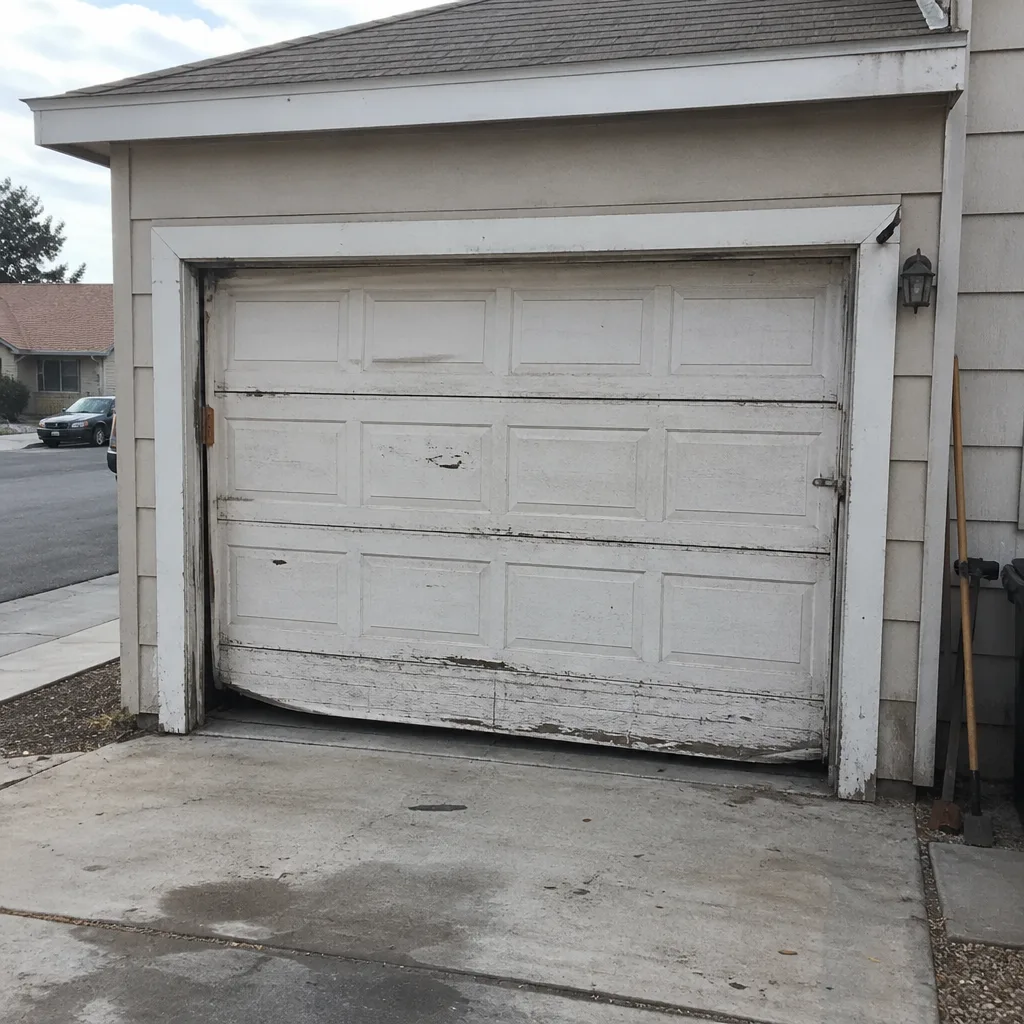 Before
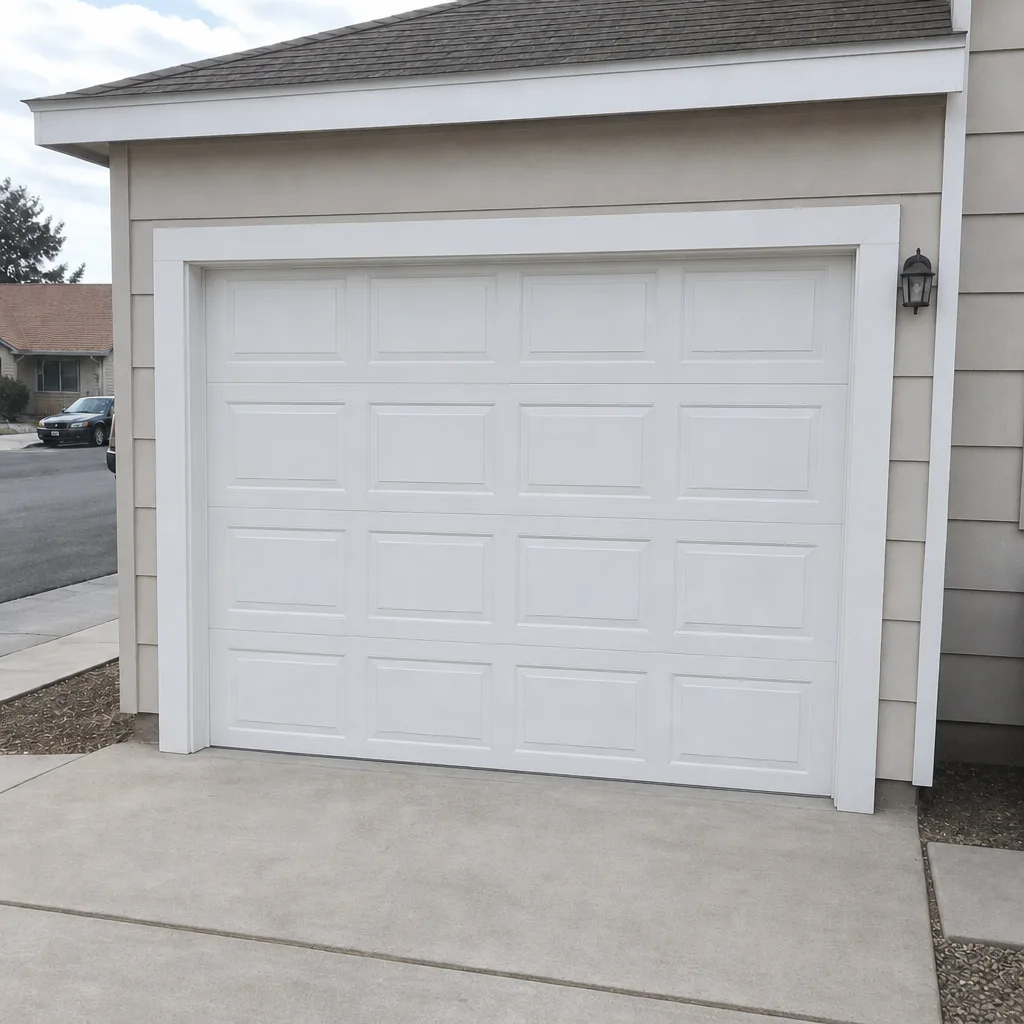 After
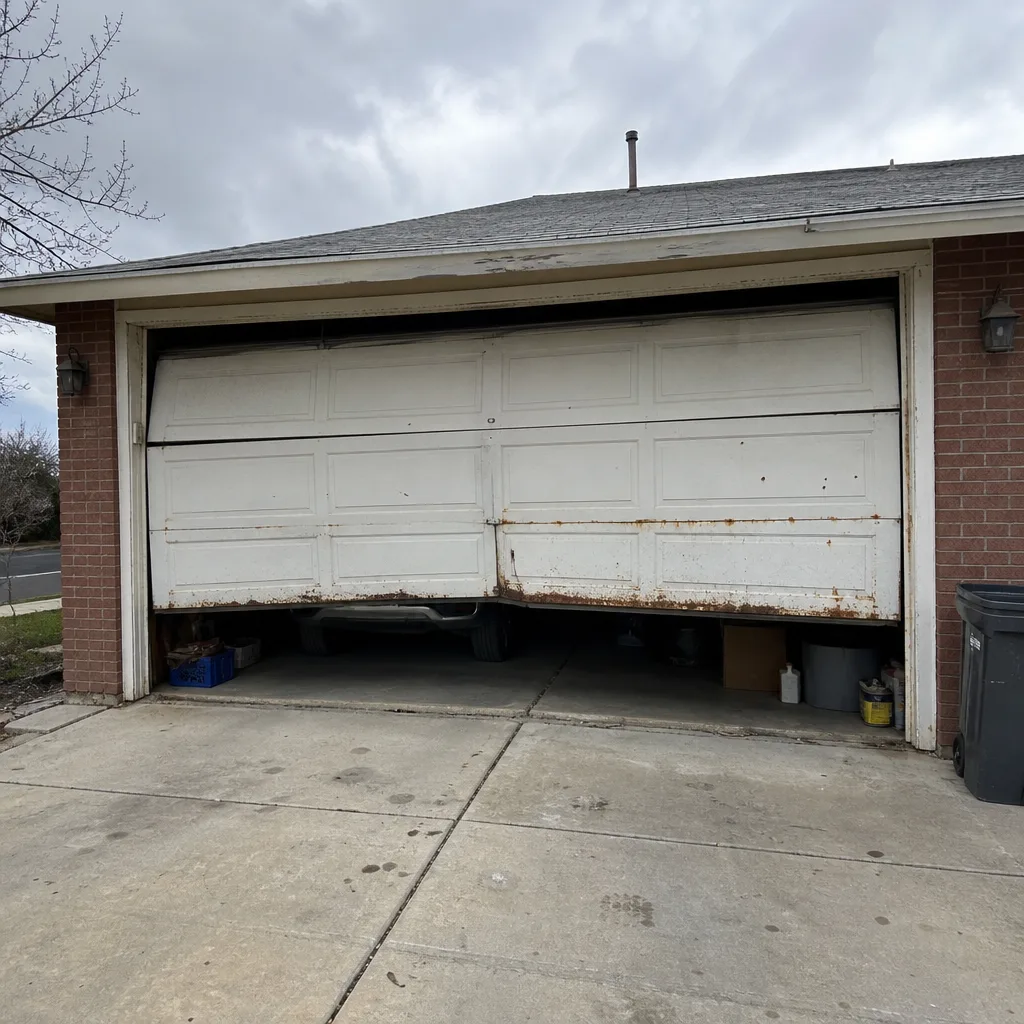 Before
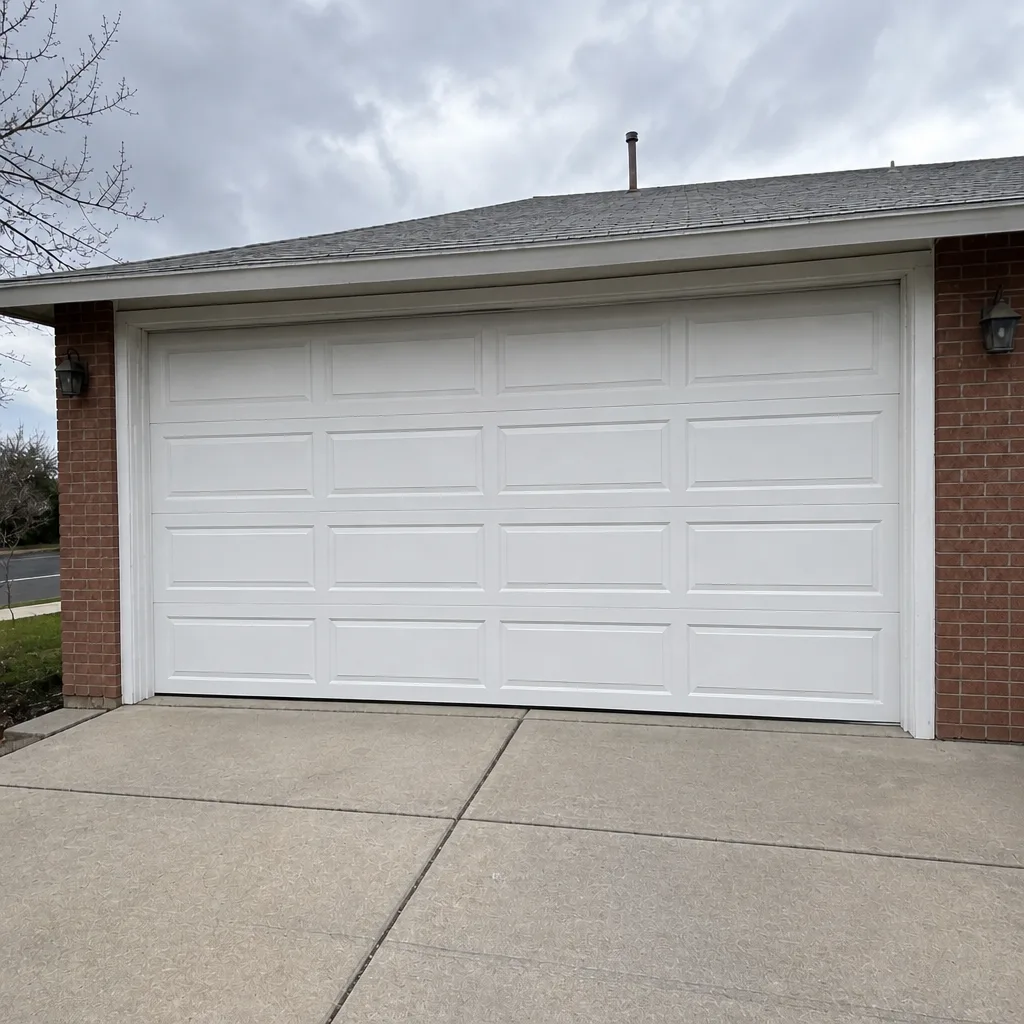 After
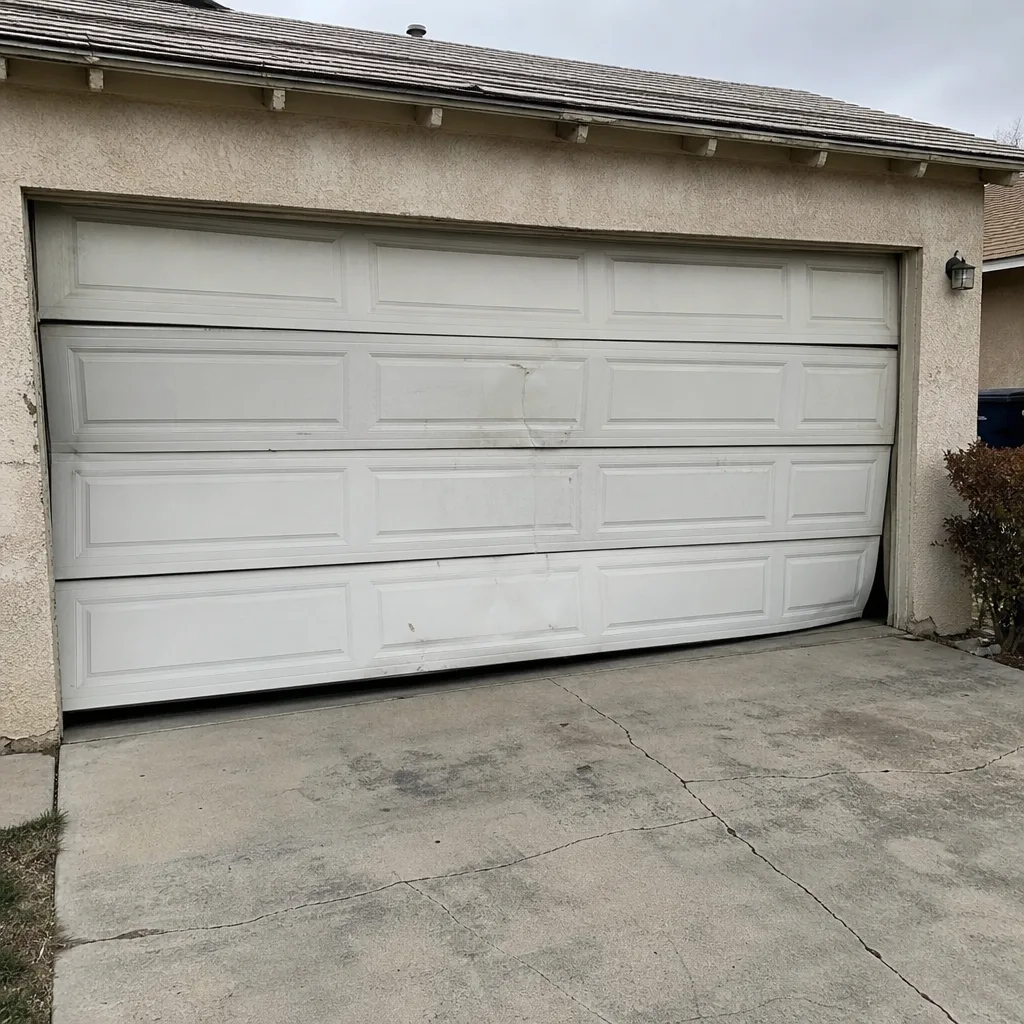 Before
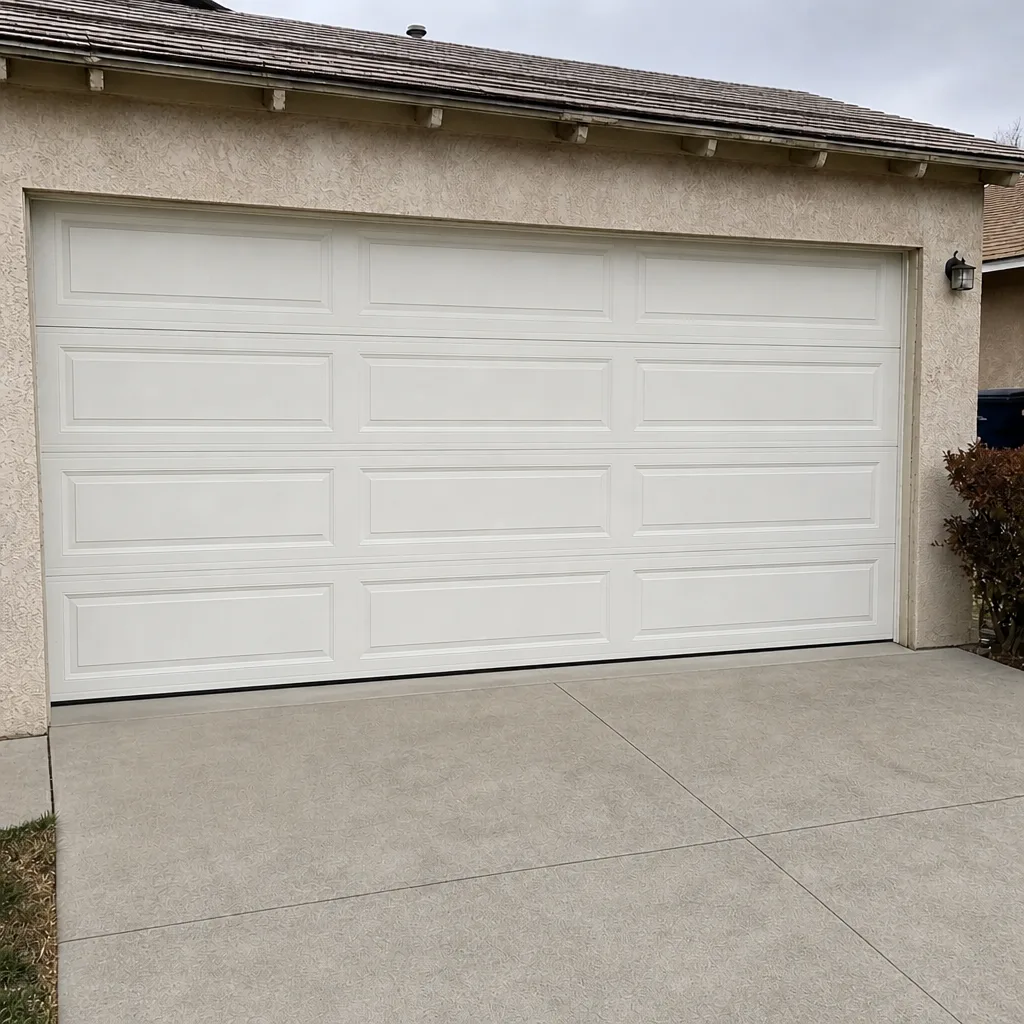 After
When to Call a Professional
Call a professional when any of the following is true: the door is off track, a spring is broken or has a visible gap, a cable is hanging or frayed, the door is heavy and won’t stay up, the opener hums without moving, or you simply aren’t sure. The four-times-more-expensive repair isn’t a scare statistic. It’s the result of a highly loaded spring system being handled under emergency conditions by a person working alone in the dark. We’ve walked into plenty of garages where the door was in pieces after a midnight attempt, and every homeowner has told us the same thing: they wish they had called first. Mainspring Garage Door Co. Whitney offers free estimates in Whitney – call (844) 797-9248 for a live person, day or night. Before any work begins, we’ll quote a flat price and agree on it with you. If it’s not done right, our Mainspring Garage Door Co. Whitney home team comes back at no charge under our 90-Day Done Right Promise, in writing.
Frequently Asked Questions
The only safe DIY emergency actions are the three that require no tools and no contact with the mechanical system: pulling the manual release cord, wiping the photo-eye lenses, and checking the vacation lock. Anything involving the track, springs, cables, or forcing the door to move belongs to a trained technician. If the door is off track or a spring is broken, stop and call.
No. Forcing an off-track door back into position puts you in the path of a loaded cable under tension, and if that tension releases it can whip and cause serious injury or structural damage. The door is held in track by load-bearing hinges and rollers, not by a fitting you can tap back into place. Call a technician – this is a controlled repair, not a DIY one.
It depends on why. If the photo-eye lenses are dirty, the door won’t close, and wiping them clean will resolve it. If the vacation lock is engaged, the door won’t respond at all. If the door is heavy and won’t stay up on its own, the springs are fatigued or broken, and that’s an emergency call. In Whitney, blowing dust on the photo-eyes accounts for a surprising share of late-night “door won’t close” calls we handle, and it’s a wipe-and-test fix.
No, not if anyone can reach it. A door left open is an invitation, and the honest fix is to close the door manually – pull the manual release and lower it by hand. Do not tape it, do not prop it partway with the opener engaged, and do not try to run the opener with the door disconnected. If the door is off track or the springs are broken, the safe overnight answer is a call to a professional, not a workaround.
The manual release test is a tool-free diagnostic: pull the release cord, lift the door by hand, and feel whether it’s smooth and balanced, heavy, or light. It tells you and the technician whether the problem is in the opener or the door. Yes, do it before calling – it’s safe, it takes a few minutes, and it’s the single most useful piece of information you can bring to the phone call.
Most emergency garage door repairs in Whitney land between $180 and $450 depending on the cause – spring replacement, cable replacement, roller and track realignment, or opener work. That’s the range we quote as a flat price before any work begins, and we agree on it with you in advance. Whether it’s spring replacement on a Chamberlain opener or a Genie logic board issue, you won’t see a surprise number on the bill. Call (844) 797-9248 for a free estimate and a flat quote for your door.
The flat price is quoted and agreed before any work begins, so the price you agree to is the price on the bill. That’s the no-surprises promise, and it applies to a Garage Door Repair in Whitney call just as it does to a Garage Door Opener in Whitney installation. If a technician finds a second problem the quote didn’t cover, they’ll tell you before touching it and quote that separately.
The Bottom Line
In an emergency, your fastest move is the one that does not touch the machine. Pull the release cord. Wipe the eyes. Check the vacation lock. Run the hand-lift test to learn whether the problem is in the door or the opener. Then decide – and if the door is off track, the spring is broken, or a cable is hanging, the decision is a call, not a pry bar. We’re in Whitney, our phones are answered by a live person around the clock, our trucks carry the springs and openers your door needs, and every job is finished with a flat price agreed in writing and a 90-Day Done Right Promise behind it. For a Garage Door Installation in Whitney or an emergency repair, call (844) 797-9248 – we’ll pick up, hear what your door is doing, and tell you straight. That’s how a square deal starts, and it’s how it ends. Our technicians have up to 10 years of experience and know the major brands – LiftMaster, Chamberlain, Genie, Clopay, Amarr, Wayne Dalton, Craftsman, and Raynor – as well as the neighborhoods they’re working in. Free second opinions on any written estimate, and a permanent 5% senior and veteran discount, so you know exactly what you’re getting before you commit. Call for a free estimate.
Written by the team at Mainspring Garage Door Co. Whitney.