
Last updated November 17, 2026
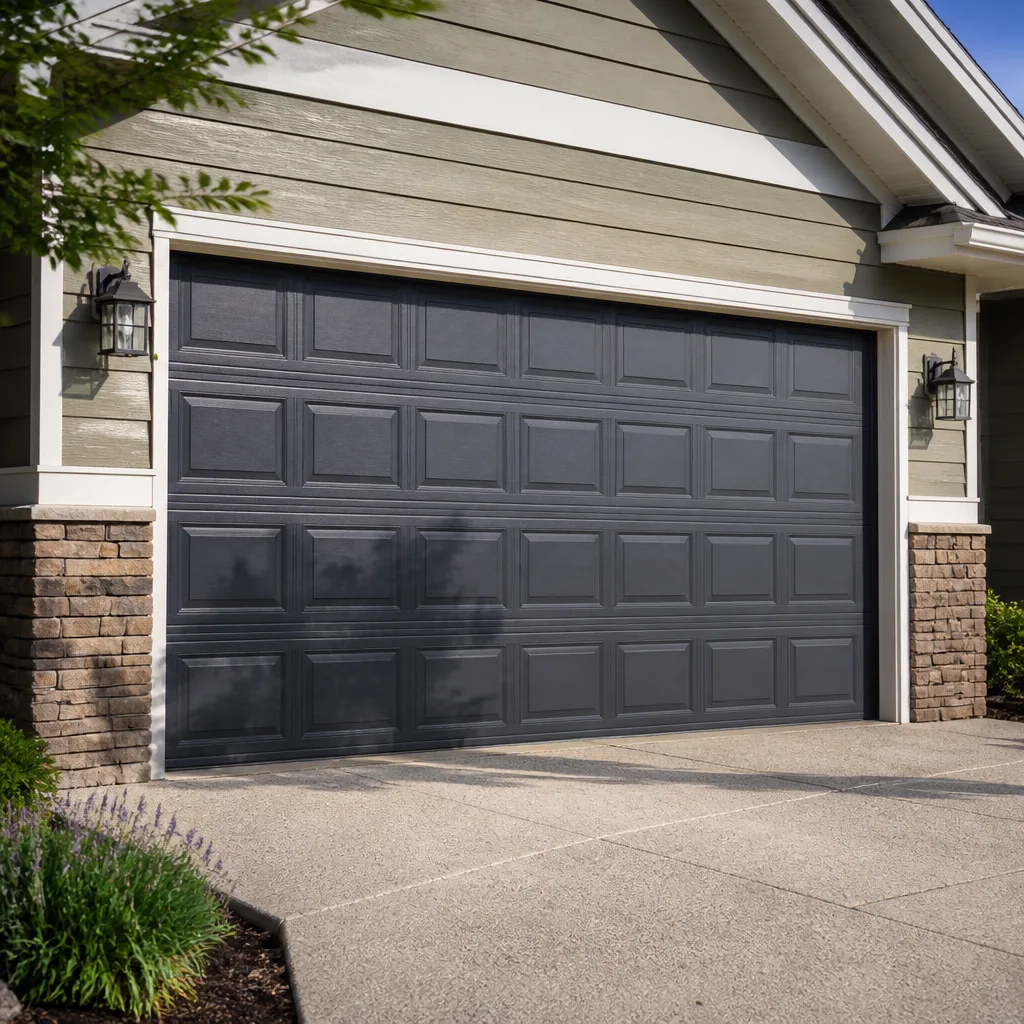 Raised-panel steel
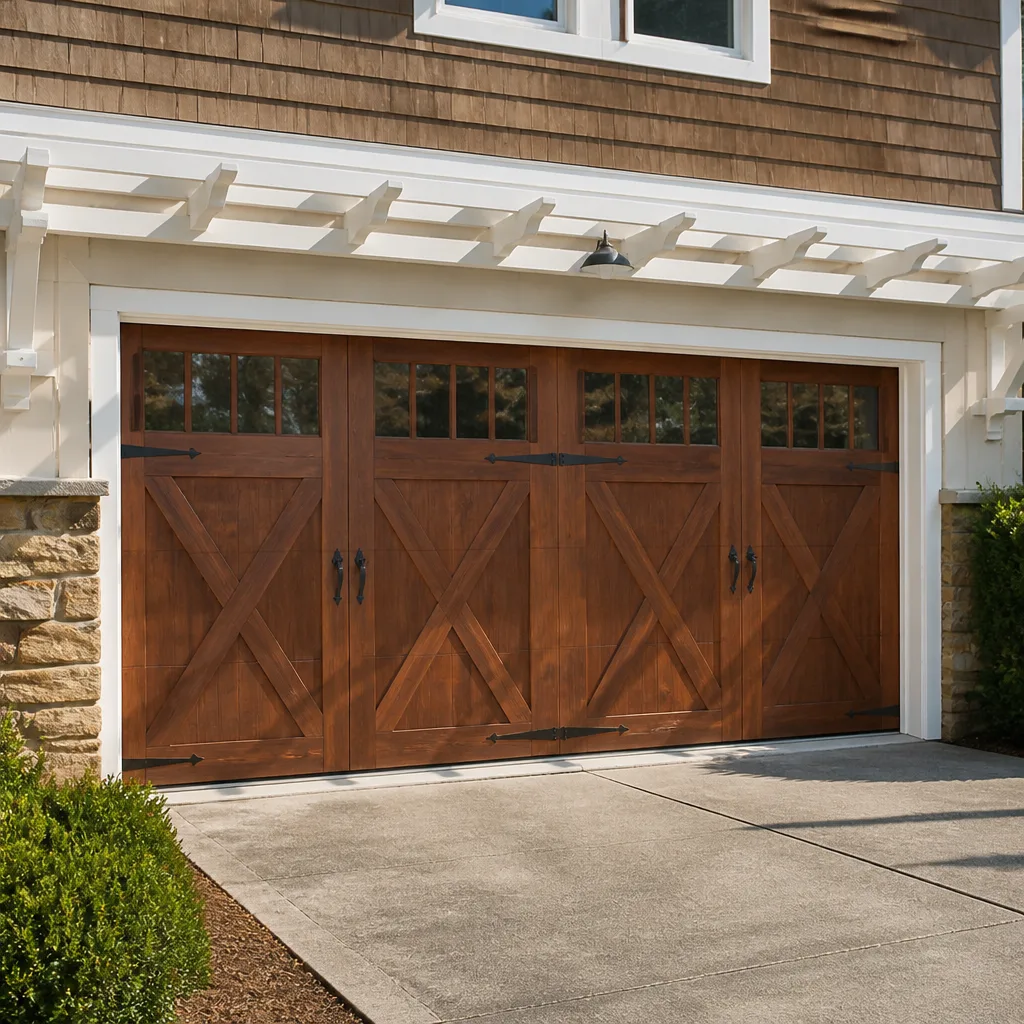 Carriage house
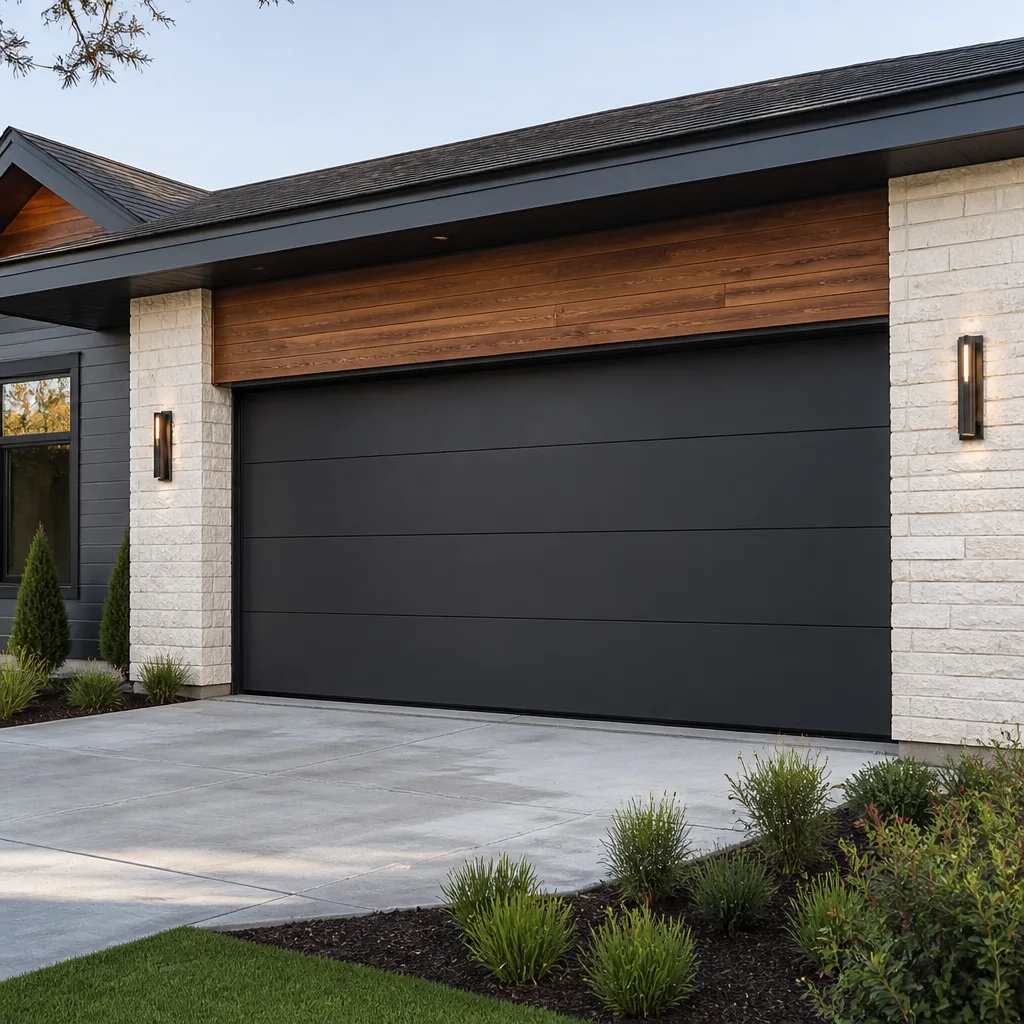 Modern flush
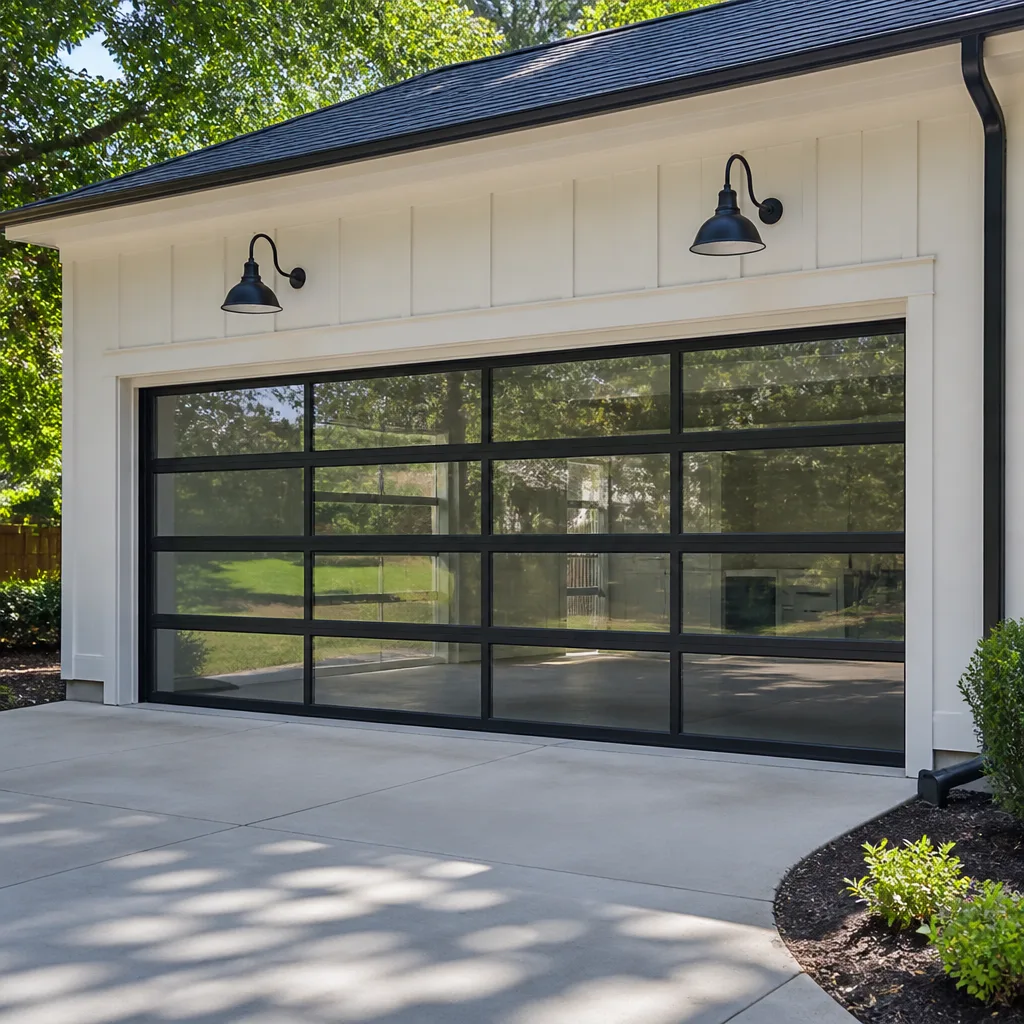 Full-view glass
 LiftMaster openers
 Chamberlain openers
Full 25-point door and opener safety check with every visit - springs, cables, rollers, tracks, and your LiftMaster or Chamberlain opener included
You get a price before we start. It does not change when the pro arrives.
Get your free estimateGarage Door Opener Warning Signs Every Homeowner Should Know
A garage door opener that reverses two inches after it meets the floor is not broken. It’s doing its job, following a safety rule wired into every unit we service. A door that reverses six inches before it ever reaches the floor has a sensor problem. Most homeowners describe both situations the same way (“my door won’t close”) and end up sold the same repair. The gap between those two diagnoses is often the difference between a $30 drive gear and a $400 replacement. In this guide, we lay out what each warning sign actually points to, so you can tell when to watch, when to schedule service in Whitney, and when to stop using the opener today.
Quick Answer
The most serious opener warning signs are metal grinding, a burning smell, and visible gear debris in the motor housing – these mean stop using it now. Gradual slowing, a louder-than-usual motor, and cold-weather hesitation are degradation signs that warrant a service call within a couple weeks. A remote that fails while the wall button works usually points to wiring or a dead battery, not a failing motor.
Styles & brands we work with
- Raised-panel steel
- Carriage house
- Modern flush
- Full-view glass
- LiftMaster openers
- Chamberlain openers
Table of Contents
- Why an Opener Gives Warnings Before It Fails
- Warning Signs That Mean Stop Today
- Warning Signs of Gradual Wear
- Matching the Symptom to the Component
- Warning Signs That Only Show Up in Certain Conditions
- Warning Signs in the Safety System
- Your Three-Tier Framework: Watch, Schedule, Stop
- When to Call a Professional
Why an Opener Gives Warnings Before It Fails
An opener is one of the few machines in a house that announces its own decline. The motor doesn’t seize at once. A drive gear wears down tooth by tooth. A belt stretches a fraction of an inch every season. A logic board heats up a little more each summer. The physical signs show up long before the door stops working entirely, which is why reading them correctly matters more than most homeowners realize.
In Whitney, we see this pattern play out on doors that sit in direct desert sun for two decades. Summer heat stresses the motor housing while winter cold thickens the lubricant on the rail. Both move the wear clock forward in ways homeowners don’t always connect to their opener. By the time a door actually stops halfway up, the unit has usually been leaving clues for months.
Here’s the framework we recommend. Treat every warning sign as a message about a specific part. Grinding is not “general decline.” It’s usually the drive gear. Slow travel is not “old age.” It’s usually a force setting that needs adjustment or a worn belt. The more precisely you can describe the symptom when you call, the faster the right fix lands, and the less you spend guessing.
To understand the components behind these symptoms, our Garage Door Opener service in Whitney page walks through motor types, drive styles, and what each one tends to fail with first.
Warning Signs That Mean Stop Today
Some warning signs are urgent. If you see any of the following, stop operating the door and call for service before the next use. Continuing to run an opener that’s already failing can turn a small repair into a bigger one, and in some cases it can damage the door itself.
- Metal-on-metal grinding on the upstroke. This is often the drive gear stripping, and every cycle chews more material off. Waiting rarely helps.
- A burning smell from the motor housing. Could be a hot motor, a shorted board, or a capacitor about to fail. Unplug the unit and leave it unplugged.
- Visible gear debris inside the housing. White or black shavings under the motor cover mean the gear is already failing. Use the manual release and stop using the opener.
- The door travels a few inches and stops. That’s the opener detecting an obstruction it can’t clear. Forcing it invites a spring or cable failure, which is a genuine safety concern.
- The door drops or sags when you release the trolley. This points to a spring or cable problem in the door system, not the opener. Leave it alone and call a trained technician; high-tension springs and cables can cause serious injury to anyone working near them.
In Whitney, we see this cluster most often on LiftMaster and Craftsman units that have gone eight or ten summers without a tune-up. The heat accelerates gear wear, and once the grinding starts, it rarely resolves on its own.
For door-system problems that present as opener failures, our Garage Door Repair in Whitney team handles springs, cables, rollers, and tracks alongside opener work.
Warning Signs of Gradual Wear
Other warning signs fall into a different bucket. They’re not emergencies, but they’re also not nothing. Gradual degradation is the opener telling you it’s losing efficiency. Left alone, these signs often turn into the urgent ones above within a season or two.
- Slower travel than it used to have. A door that takes noticeably longer to open or close points to a force setting that’s drifting or a belt that’s stretching.
- A louder motor than it used to be. No, you’re not imagining it. A well-maintained opener should sound roughly the same year after year. Growing noise signals wear in the drive or a rail that needs lubrication.
- Slight hesitation at the start of travel. The opener pauses a beat before moving. Often the capacitor is aging or the logic board is slow to send the signal.
- Occasional missed remote signals. If the remote works nine times out of ten, the culprit is often interference or a battery, but a weakening receiver board is also possible on older units.
- Auto-reverse triggering without an obstruction. The door touches nothing and still reverses. That’s usually the sensor alignment, the down-limit setting, or a worn photo-eye.
None of these mean stop using the door. All of them mean schedule a service call within the next two weeks. A Whitney homeowner who catches a slowing travel early usually spends far less than one who waits for the gear to strip. Our Mainspring Garage Door Co. Whitney home page has the full picture of how we handle both categories.
Matching the Symptom to the Component
Every warning sign points somewhere specific. The table below is the same one our technicians use when they’re taking a call over the phone. If you can describe which row you’re in, you’re already ahead of the diagnosis.
- Grinding on the upstroke: Most likely the drive gear or the sprocket. Drive gear wear is the most common single failure on chain-drive openers.
- Slow travel: Force setting too low, or a worn belt/chain that needs replacement.
- Remote fails, wall button works: Remote battery, remote programming, or interference from a nearby LED or smart-home device. Rarely the motor itself.
- Wall button fails, remote works: Wiring to the wall station or a failed wall station circuit. Different fix from the row above.
- Intermittent operation (works some days, not others): Logic board, sensor interference, or a loose connection at the motor head.
- Door reverses with nothing in the way: Photo-eye misalignment, sun glare on the sensor, or a down-limit adjustment.
- Door opens part way then reverses to closed: Force limit hit on the upstroke. Could be a binding track, a door out of balance, or a failing torsion spring.
Wayne Dalton and Raynor units, in particular, tend to present open-then-reverse as a force-setting issue rather than a board failure. Getting that distinction right on the first visit is why we stock the parts. Most Whitney jobs are finished in a single trip because we bring springs, cables, gears, and openers on the truck.
For doors that have outlived the opener itself, our Garage Door Installation in Whitney service covers new-door and full-opener replacements with a written quote before we start.
Warning Signs That Only Show Up in Certain Conditions
Some of the most telling warning signs don’t show up on every cycle. They show up when the conditions line up, which is why they get dismissed as “one of those things.” They’re not. Each one tells you something specific about the part that’s struggling.
Cold-morning hesitation
A Whitney winter morning can drop into the 30s, and that’s when a failing opener often shows its first real symptom. Older lubricant thickens in the cold, so a motor that’s already working hard stumbles at the start of the cycle. If the door runs normally once the sun hits the rail, the issue is usually lubrication and force setting, not a dying motor. But if the hesitation shows up on warm days too, the motor is telling you something different.
Failure only on a fully loaded door
Doors with extra insulation panels carry more weight. If an opener lifts the door fine when you’re testing it by hand but fails once the door is fully assembled, the opener is under-powered for its door. That’s not a warning sign of failure; it’s a warning sign of a mismatched install. Many Whitney doors we’re called out on were fitted with a 1/2-horsepower opener where 3/4 or 1 horsepower was the right choice for a heavier insulated door.
Failure only on hot afternoons
Opener logic boards and capacitors can get finicky when the motor housing heats up. If a door refuses to close at 4 p.m. but works at 8 a.m., the motor or board is telling you it has a heat issue. This one gets misdiagnosed as “sometimes it just doesn’t work” more than any other symptom.
Failure only when the sun is on the sensor
In Whitney, a west-facing garage gets direct sun most of the afternoon. Photo-eyes that get sun glare can fail intermittently, causing the door to reverse on its own. If it happens only at a certain time of day, that’s the signal.
Warning Signs in the Safety System
The safety system on a modern opener has its own warning signs, and they matter just as much as mechanical ones. A door that closes fast on a child, pet, or car can cause serious injury. A door that opens unexpectedly can let someone in. Both are preventable, and both signal a specific component.
A sensor LED that flickers
The photo-eye LED on each side of the door should be steady, not blinking. A steady blink usually means misalignment. A slow flicker can mean a weak connection or failing sensor. If yours flickers when the door is still, align the sensors first. If they won’t hold alignment, replace them before someone gets hurt.
A door that reverses with nothing in the way
If the door touches nothing and reverses anyway, that’s a safety signal, not a mechanical one. Most often it’s photo-eye misalignment or a down-limit that’s set too high so the door reaches “closed” before the opener thinks it should. This is one of the signs we see most in Whitney on homeowners who’ve lived in a house for twenty-plus years and never touched the limits.
A wall button that must be held to close
If you have to press and hold the wall button to keep the door closing, it’s not normally that way. Some units ship this way from the factory as a feature, but on most openers, this is a symptom of a wall station gone bad or a photo-eye that’s out. If it started recently, treat it as a warning sign.
Reversal that only happens in one direction or at the very end of travel
Reversal-on-contact in the middle of the cycle is normal. Reversal in the last two inches is a down-limit issue. Reversal on the upstroke is almost always a force-limit issue tied to a binding door. Each points at a different part.
Your Three-Tier Framework: Watch, Schedule, Stop
When we take a call, we sort the symptom into three tiers before we ever dispatch a truck. Homeowners can do the same. Here’s how we’d suggest you use yours.
Tier 1: Watch and monitor
- Remote occasionally misses from far away. Replace the battery first.
- Motor slightly louder than last year. Note it and get a tune-up when it’s convenient.
- Door pauses briefly at the start of the cycle on cold mornings. Watch through a season.
Tier 2: Schedule service within two weeks
- Consistently slow travel across every cycle.
- Valley or garage interior running noticeably warmer than usual after the door runs.
- Door reverses without obstruction and you can’t find the reason.
- Wall button requires holding to close.
- Remote fails only from inside the garage while the wall button works fine.
Tier 3: Stop using the opener today
- Metal grinding on the upstroke.
- Burning smell from the motor housing.
- Visible gear debris.
- Door falls or sags when you release the trolley.
- Any visible broken spring or frayed cable. This is a genuine safety concern; leave the door alone and call a trained technician.
For anything in Tier 3, our Garage Door Opener in Whitney team answers live calls around the clock. For Tier 1 and Tier 2, an $89 seasonal tune-up catches most of these before they turn into a breakdown. All work is covered by our 90-Day Done Right Promise: if it’s not right, we come back and fix it, in writing, no arguing.
Common Mistakes to Avoid
- Assuming all symptoms mean “replace the opener.” A grinding gear is a $30 to $50 part. A $400 replacement unit is unnecessary in most cases. The symptom tells you which.
- Adjusting the force setting higher to make the door close. Force limits exist to protect people and pets. Raising them masks the real problem and can damage the door.
- Ignoring cold-weather hesitation because it “works when it warms up.” That hesitation is the motor telling you the lubricant or the capacitor needs attention. Waiting a season or two invites the failure.
- Replacing the remote before testing the wall button. If the wall button works, the remote is the problem. If only the remote works, the wall station or its wiring is. Test both before you buy anything.
- Running the door with visible spring damage. Torsion springs, in particular, carry the door’s entire weight. A broken spring can seize a door mid-travel, and the components are dangerous to handle without training.
- Skipping the tune-up because the door still opens. Whitney’s summer heat stresses motor housings more than most climates. An annual tune-up is cheaper than a single motor replacement.
- Calling a general handyman for opener work. A licensed, insured, background-checked technician on every job is not the same as a handyman who happens to have a ladder. Ask before you book.
See the difference
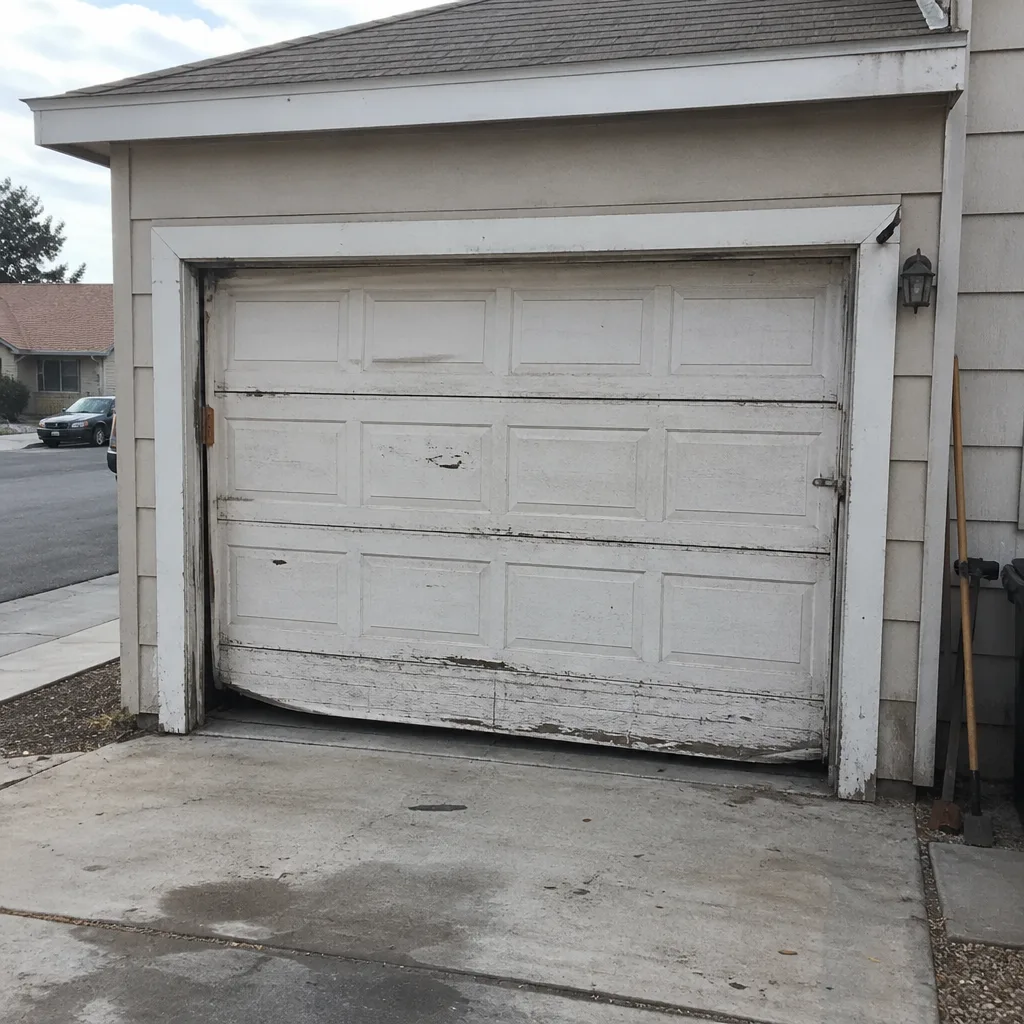 Before
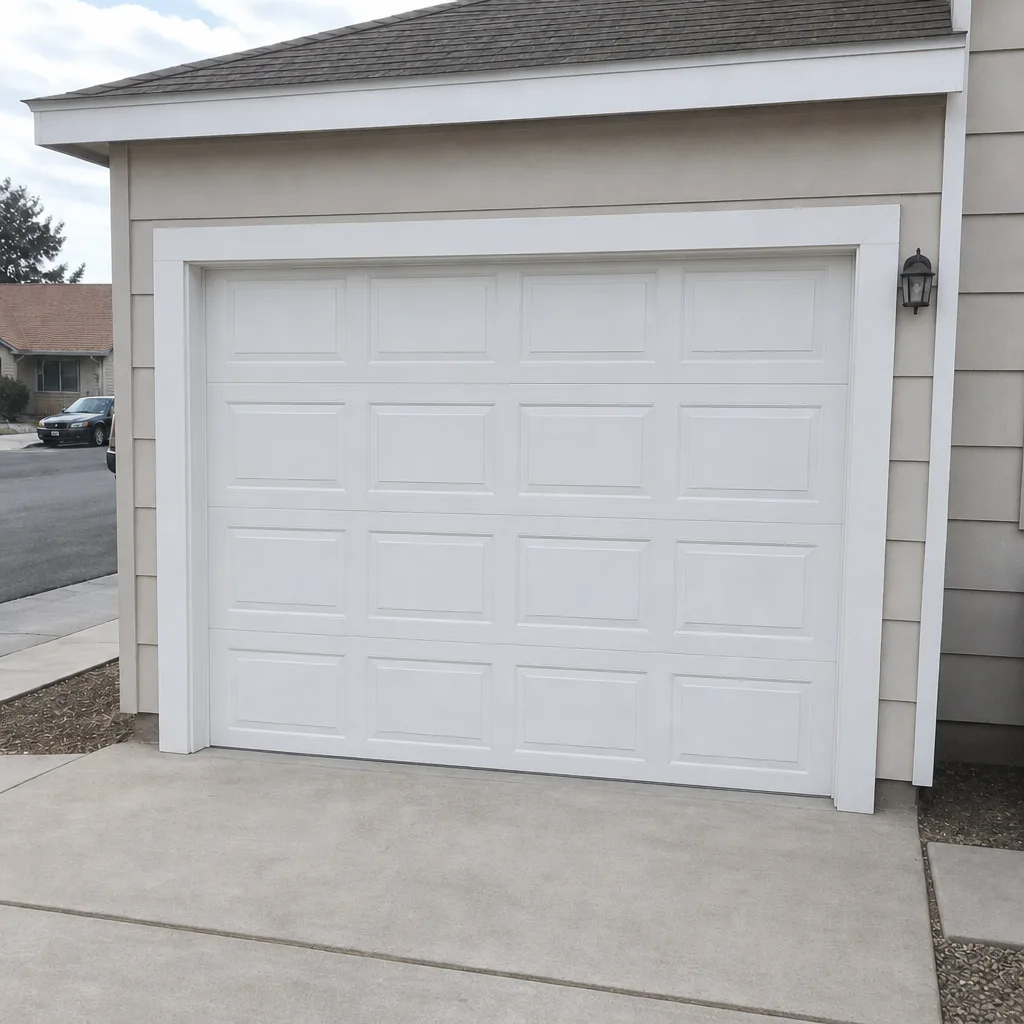 After
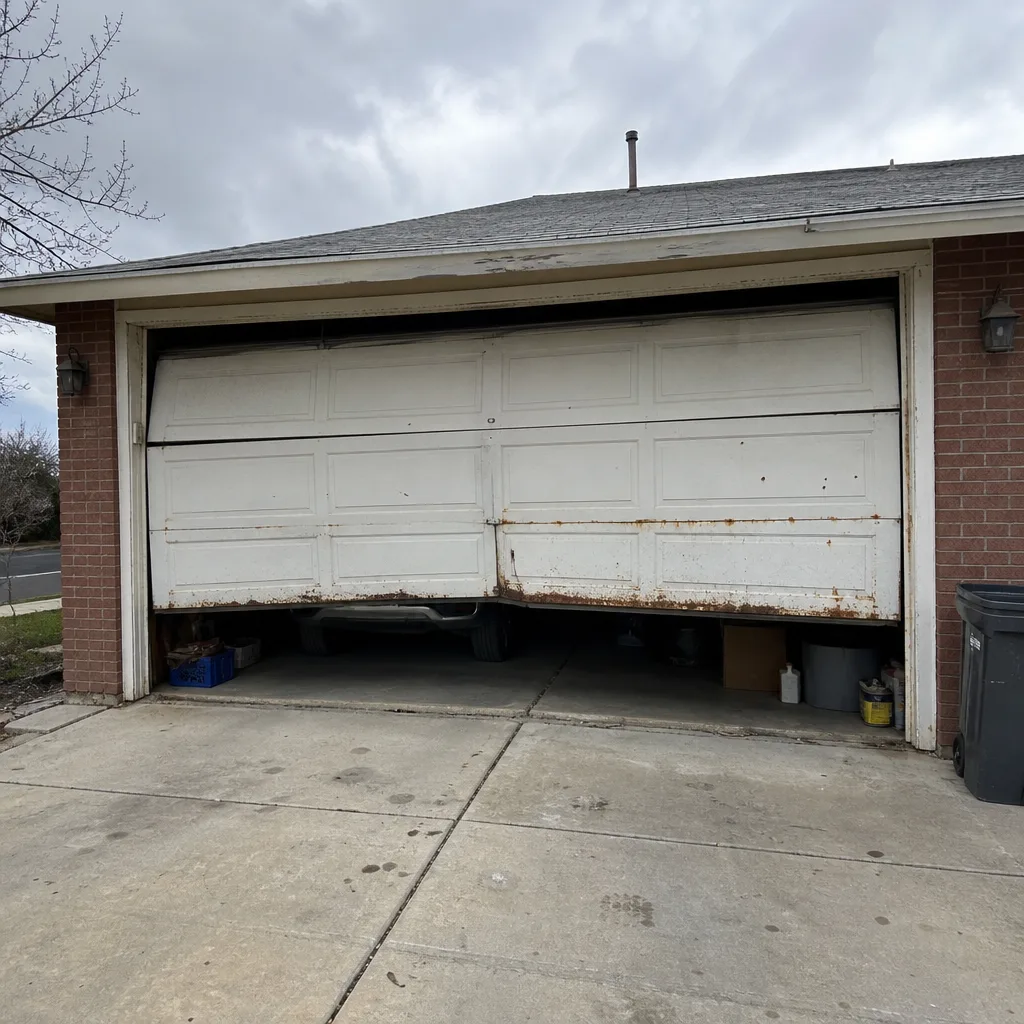 Before
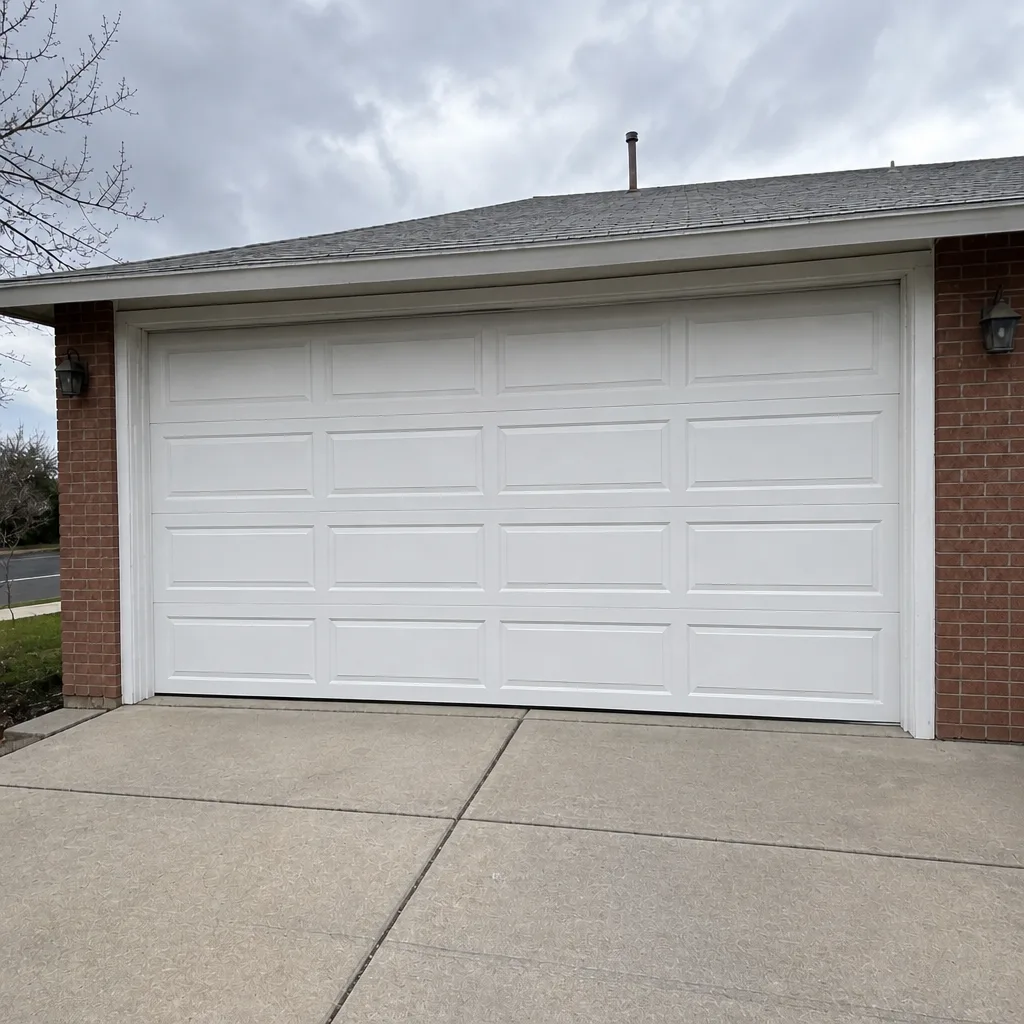 After
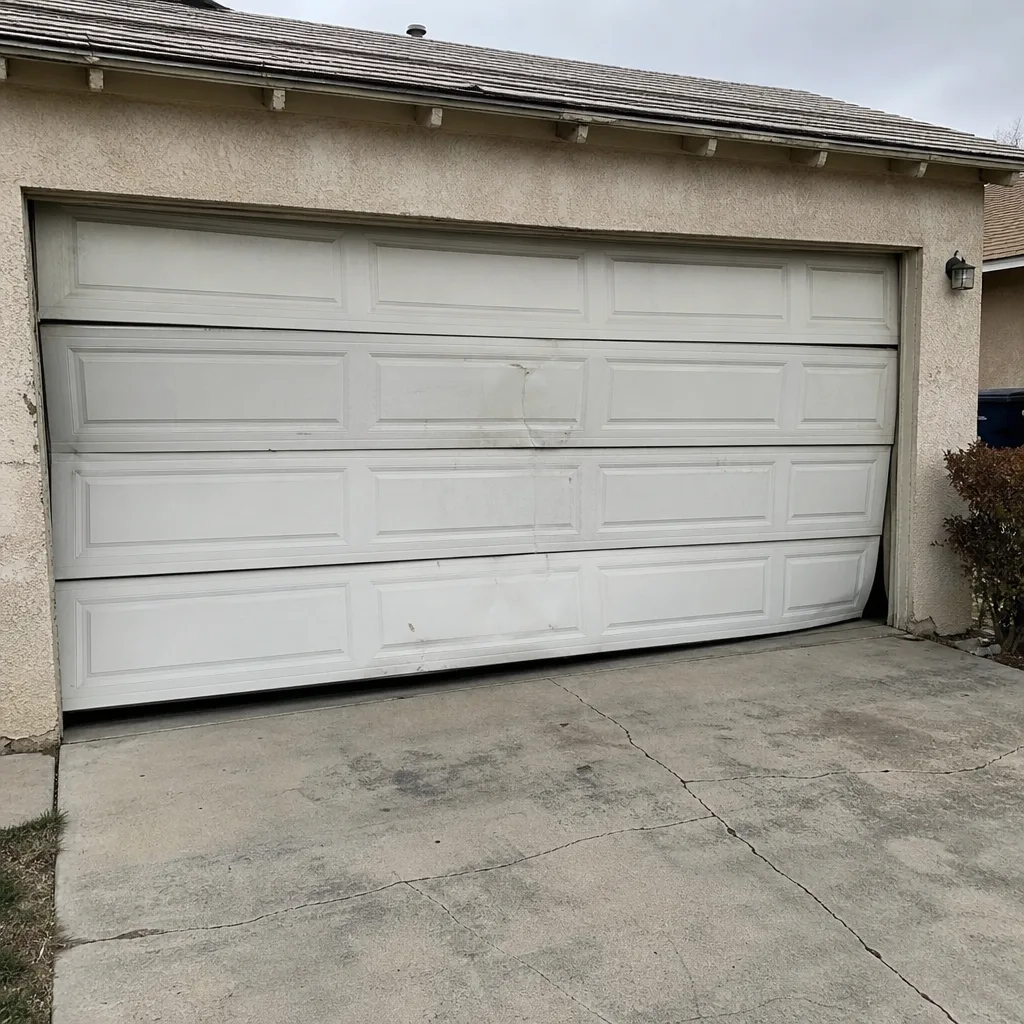 Before
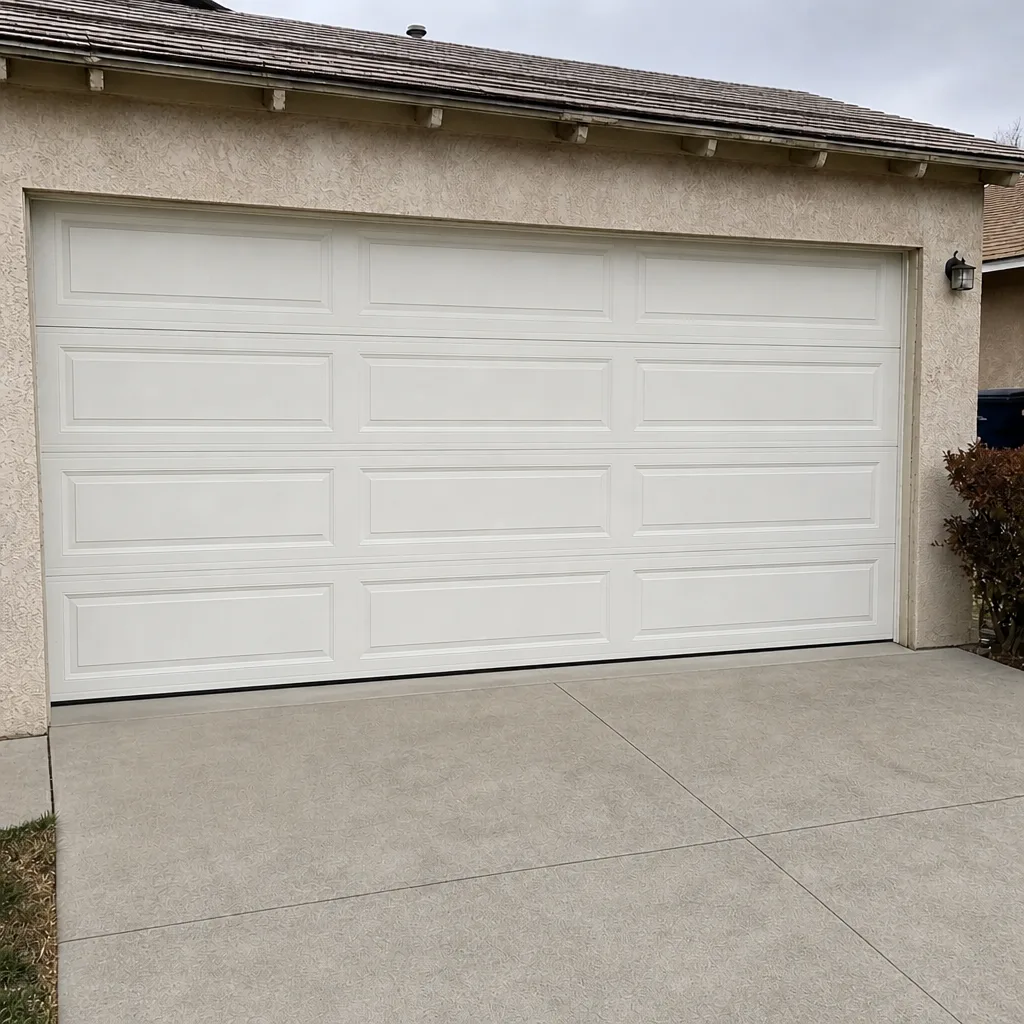 After
When to Call a Professional
Call a professional when the warning sign falls in Tier 2 or Tier 3, when you see or hear anything that suggests a spring or cable problem, when you’re not sure which symptom you’re hearing, or when the door has been running on the original opener for more than a decade without service. Openers are electrical plus mechanical plus spring-loaded, and one wrong adjustment can create a safety hazard that wasn’t there before. Mainspring Garage Door Co. Whitney offers free estimates in Whitney, and we’re factory-familiar with LiftMaster, Chamberlain, Genie, Clopay, Amarr, Wayne Dalton, Craftsman, and Raynor. Call (844) 797-9248 and a live person answers, day or night. The flat price is quoted and agreed before any work starts, so there are no surprises on the bill.
Frequently Asked Questions
Metal grinding on the upstroke is the most serious warning sign, because it usually means the drive gear is stripping and every cycle makes it worse. Stop using the opener and call for service. In Whitney, we see this most often on LiftMaster and Craftsman units that haven’t been tuned up in years. Call (844) 797-9248 for a free estimate.
That’s usually the opener doing what it’s designed to do. Two inches of reversal is the safety threshold that confirms the door met the floor and released. A door that reverses six inches before ever reaching the floor is the one with a problem. Call us with the exact measurement and we can usually tell you which part to check.
Remote-only failure points to the remote or the signal path, not the motor. Check the battery first, then confirm the wall button still closes the door cleanly. If the door runs fine from the wall, the remote is the culprit. If the wall button is also finicky, it’s usually the wall station wiring. Our team can diagnose either situation on a single visit.
Yes, in a couple of specific ways. Summer heat stresses motor housings and capacitors more than in mild climates, so heat-related final failures tend to cluster in July and August. Cold-morning hesitation shows up on our winter mornings with older lubricant thick with age. West-facing garages get afternoon sun on the photo-eyes, which can cause intermittent reversal. Each of these is a real diagnostic signal, not background noise.
No. We quote the flat price before any work starts, and that’s the price on the bill. If we find something else that needs attention mid-job, we stop and get your approval before continuing. The 90-Day Done Right Promise covers the work either way.
Yes. Every job is handled by background-checked technicians who are licensed and insured. Our technicians have up to 10 years of experience, and they’re trained as journeymen under our K.E.Y.S. values code. If something isn’t right, we come back and make it right under the 90-Day Done Right Promise.
The Bottom Line
An opener that gives you warning signs is doing you a favor. Grinding means the gear, slow travel means the force setting or belt, remote-only failure means wiring or a battery, and cold-morning hesitation means lubricant or a capacitor. Sorting each symptom into watch, schedule, or stop tells you exactly what to do next. The homeowners in Whitney who catch these signs early spend a fraction of what the ones who wait spend on a full replacement. If you’re not sure which tier your symptom belongs in, call. A live person at Mainspring Garage Door Co. Whitney answers around the clock, and the price is quoted before anything starts. Call (844) 797-9248 for a free estimate today.
Written by the team at Mainspring Garage Door Co. Whitney.