
Last updated November 17, 2026
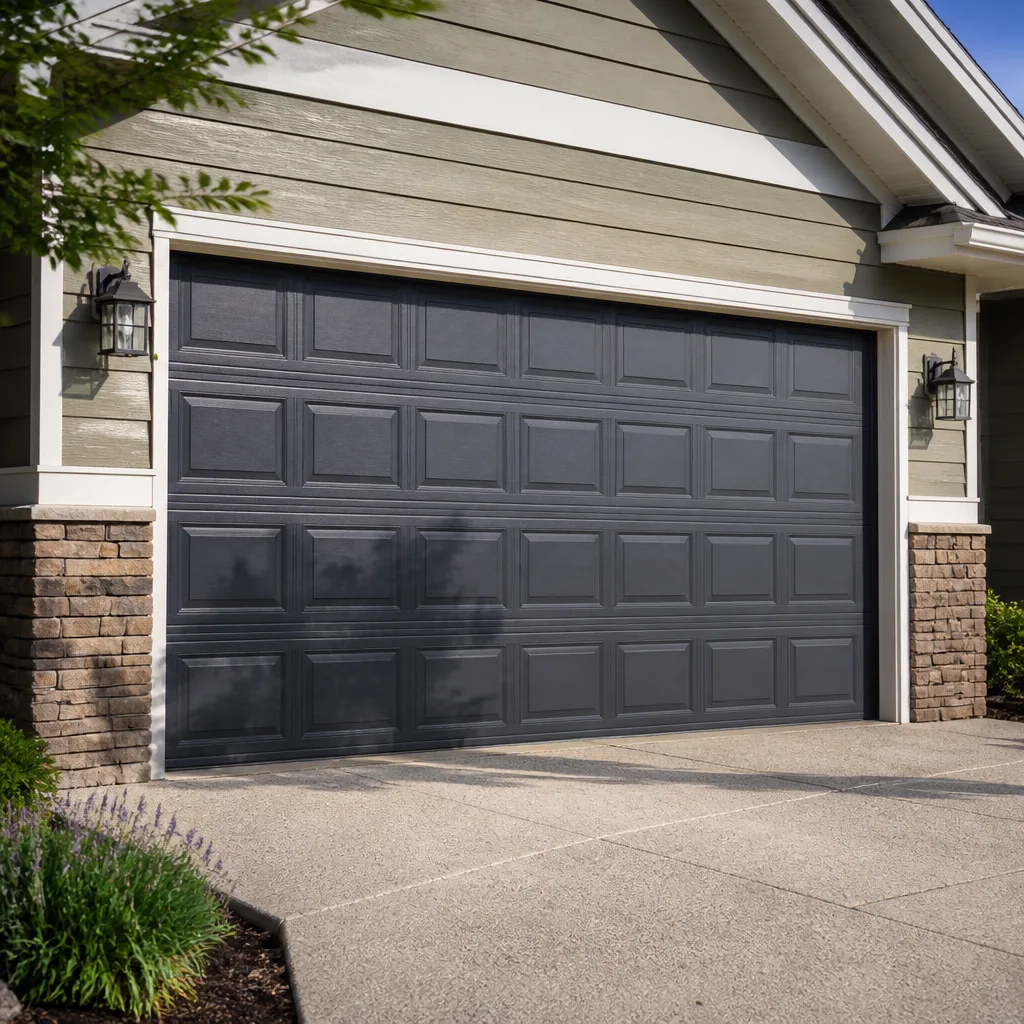 Raised-panel steel
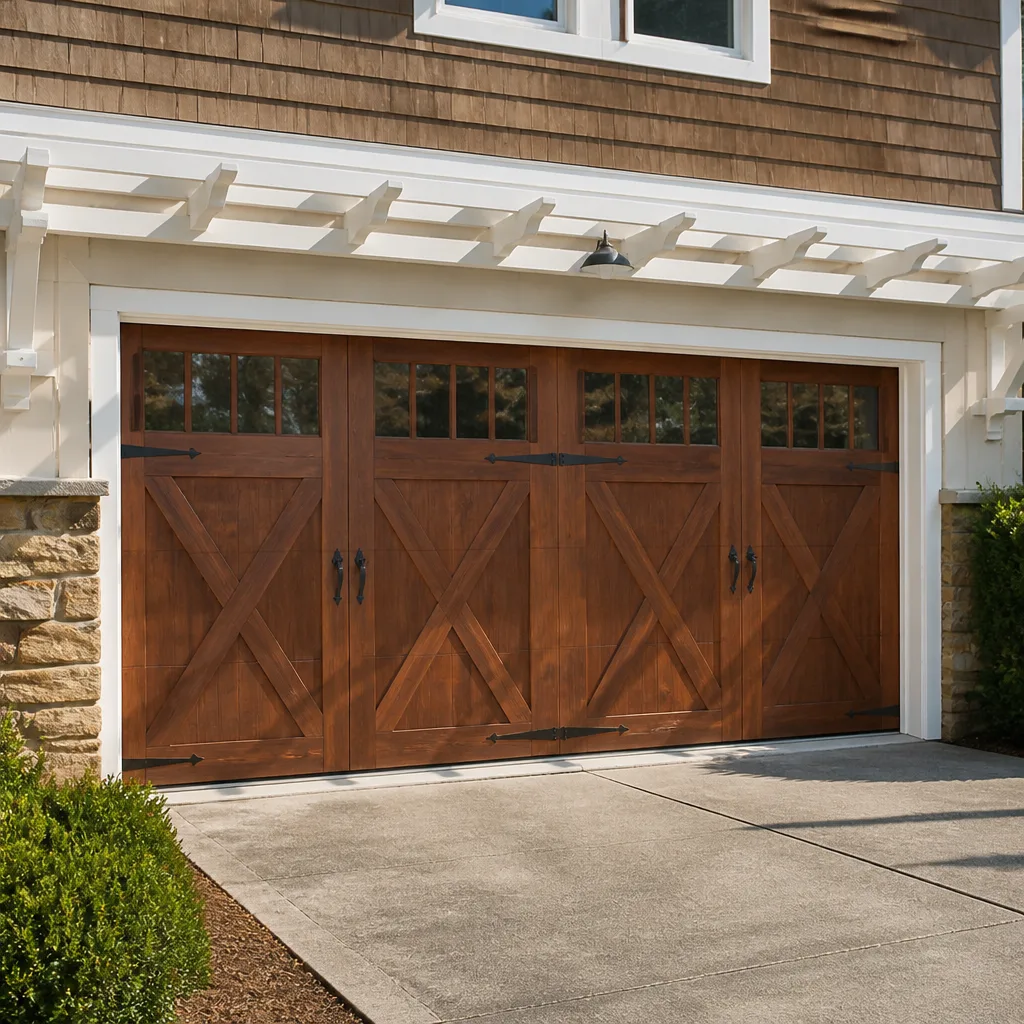 Carriage house
 Modern flush
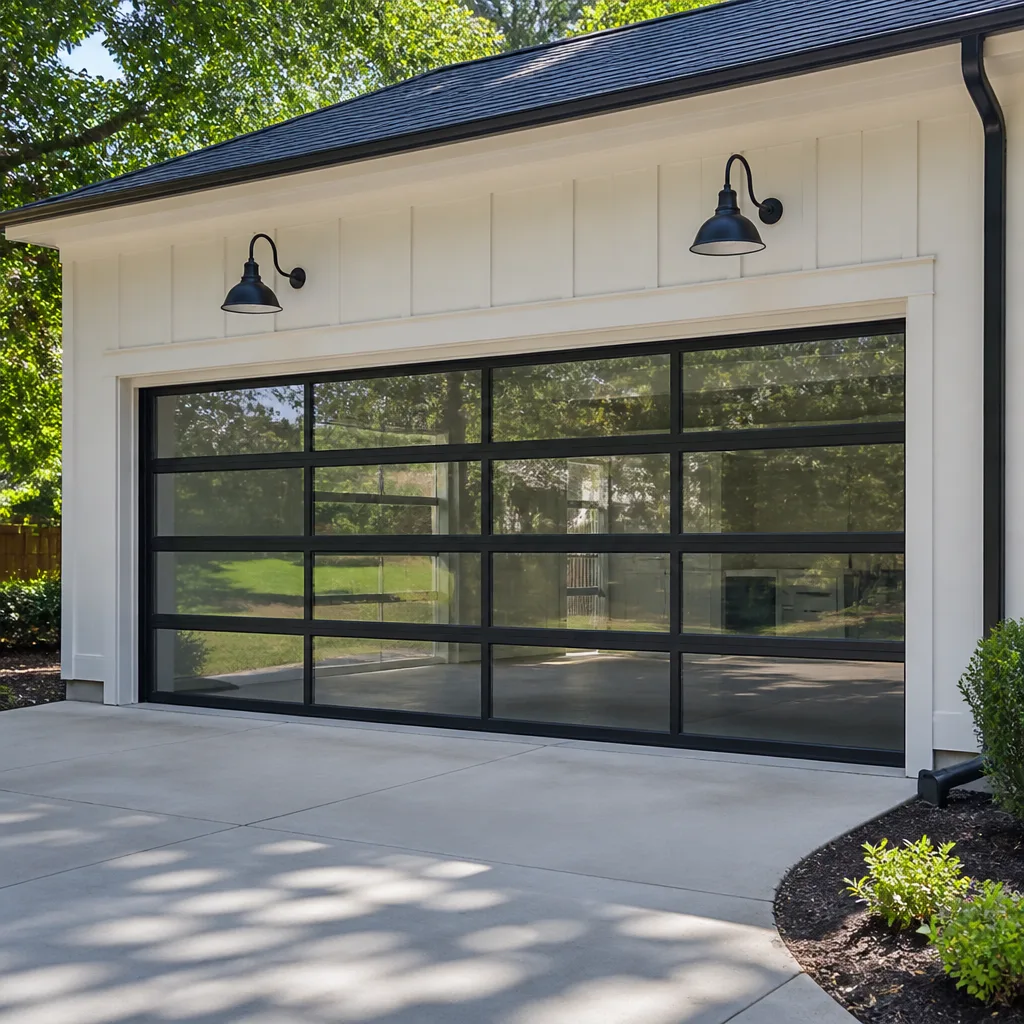 Full-view glass
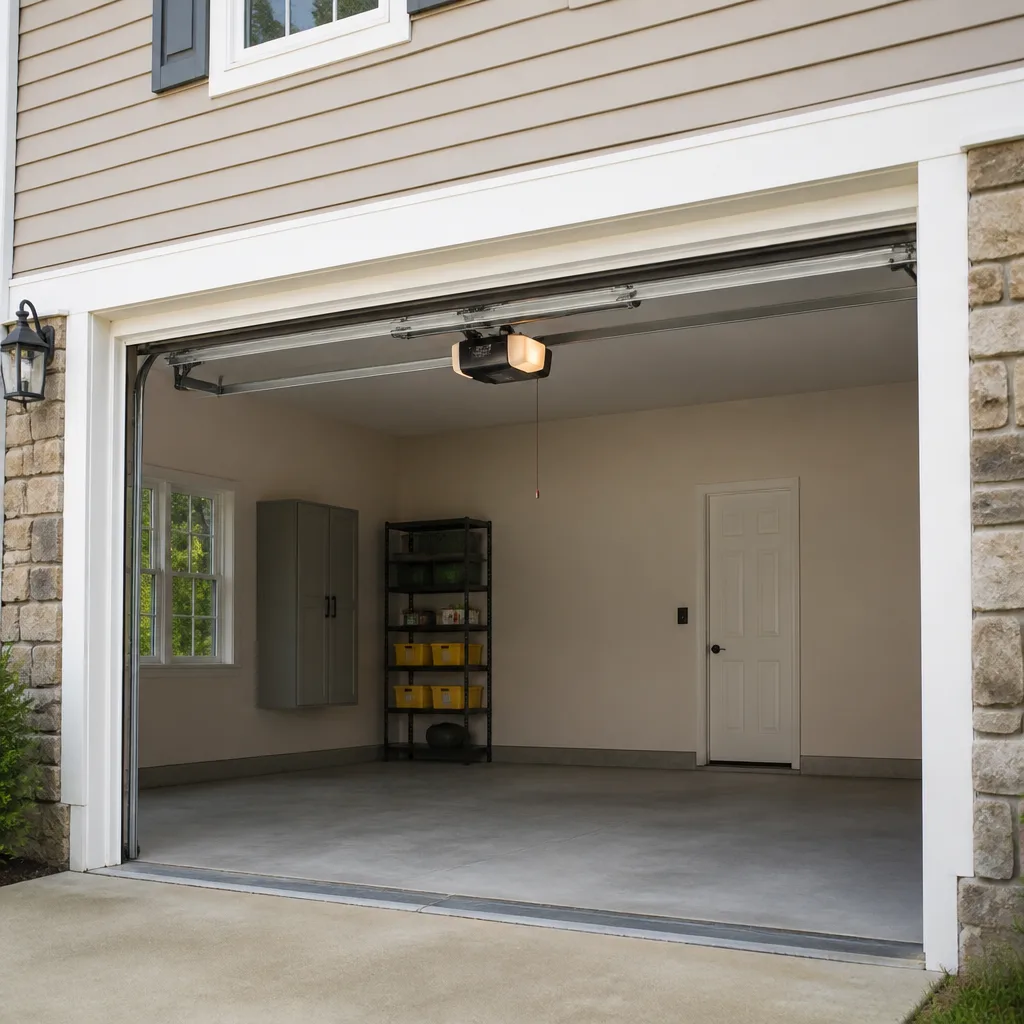 LiftMaster openers
 Chamberlain openers
Full 25-point door and opener safety check with every visit - springs, cables, rollers, tracks, and your LiftMaster or Chamberlain opener included
You get a price before we start. It does not change when the pro arrives.
Get your free estimateGarage Door Parts Warning Signs Every Homeowner Should Know
When a homeowner tells us “it’s been slow for a couple of months,” that’s not a minor complaint. It’s usually a torsion spring that has been failing in slow motion, and the final break just made it visible. Most garage door failures announce themselves two to six weeks in advance. The problem is the warning signs don’t look like danger. They look like small inconveniences you learn to work around: a door that hesitates, a remote that needs a second push, a rattle you stop hearing because it became background noise. This guide maps each symptom to the part behind it, so you can tell the difference between normal wear and a failure in progress. We’ll cover what you can safely check in Whitney in under three minutes, and what you should never touch.
Quick Answer
The most common warning signs of a failing garage door part are a door that reverses before closing, a loud bang from above the door, visible fraying on the lift cables, grinding or popping sounds during travel, and a remote that works only up close. Each points to a specific part: springs, cables, rollers, or opener logic. Catch them early and most repairs stay small. Ignore them and the same part usually fails completely, often with the door stuck halfway.
Styles & brands we work with
- Raised-panel steel
- Carriage house
- Modern flush
- Full-view glass
- LiftMaster openers
- Chamberlain openers
Table of Contents
- Spring Warning Signs: The Slow Failure You Can Hear
- Cable Warning Signs: Why “It Needs a Little Help” Is Not an Opener Problem
- Roller and Track Warning Signs: The Grinding You Learn to Ignore
- Opener Logic Board Warning Signs vs. False Alarms
- The Sound Map: Which Noise Means Which Part
- The Three-Minute Visual Inspection (Touch Nothing Under Tension)
- Why Whitney Doors Wear Differently
- From Symptom to Failure: The Two-to-Six-Week Timeline
Spring Warning Signs: The Slow Failure You Can Hear
Torsion springs carry the entire weight of the door. That’s the whole reason our company is named Mainspring: the spring is the part that does the real work, and when it starts to go, it goes quietly for a while before it goes loudly. In our experience, a spring rarely snaps without warning. It fatigues first. The metal winds tighter over thousands of cycles, develops hairline stress at the coil, and loses lifting force gradually.
What that looks like from the driveway:
- The door feels heavier when you disengage the opener and lift it by hand (only do this with the door closed and the opener released, and never with your fingers near the hinges).
- The door opens a foot or two and stops, or reverses back down.
- You hear a sharp metallic pop or a sound like a gunshot from above the door. That’s the sound of a spring breaking, not a warning sign of one – by then it has already failed.
- A visible gap in the coil of a torsion spring above the door, or two springs where one is clearly compressed differently from the other.
In Whitney, we regularly see spring fatigue show up earlier than homeowners expect because the door cycles more than they realize. A household that leaves and returns three or four times a day puts a door through well over a thousand cycles a year, and most torsion springs are rated for somewhere in the neighborhood of ten thousand cycles. Do the math and a spring that’s been on the door since the house was built has probably lived its full life.
A failing spring is a genuine safety hazard. Never try to wind, unwind, or adjust a torsion spring yourself. The stored energy in a wound spring can cause serious injury in an instant, and this is not a job for a homeowner with a YouTube video. A trained technician with the right winding bars and the right size replacement is the only safe path.
Cable Warning Signs: Why “It Needs a Little Help” Is Not an Opener Problem
Here’s the most common misdiagnosis we see: a door that closes most of the way and then needs a nudge, or one side that lags behind the other. Homeowners assume the opener sensitivity needs adjusting. It almost never does. The opener is a motor, not a lifting mechanism. When the door needs help, the lift system is telling you something. Usually that something is cable tension.
Lift cables run from the bottom corners of the door up to the drum above. They spool and unspool in sync with the spring. When a cable stretches, frays, or slips off its drum, the door goes out of balance. Adjusting the opener’s force settings to push through that resistance is the wrong fix, and it puts more strain on the motor and the springs at the same time.
What to look for, with the door fully closed and the opener disengaged:
- Frayed or kinked cable along the straight run on either side. A single broken strand means the cable is compromised.
- Cable that has jumped the drum or is sitting loosely instead of spooled tight.
- A door that hangs visibly crooked when closed, with one corner lower than the other.
- Slack on one side and tension on the other when the door is halfway up.
Cables are under the same tension as springs. Do not touch them while the door is up, and do not try to re-spool one by hand. This is another repair for a trained technician. A snapped cable can whip with enough force to break a window or worse.
Roller and Track Warning Signs: The Grinding You Learn to Ignore
Rollers are the least dramatic part on the door and the easiest to postpone. They’re also the source of the noise most homeowners describe as “it’s just always been a little loud.” Plastic rollers flatten and develop flat spots over time. Steel rollers wear at the bearing. Either way, the symptom is the same: a rumble or grind that gets a little worse each month, until the door sounds like it’s dragging over gravel.
Roller warning signs:
- Grinding or rumbling during travel, louder on one side than the other.
- Visible flat spots or cracks on the roller wheels (look at the hinges when the door is closed).
- Rollers that wobble in the track instead of rolling smoothly.
- Track sections that have loosened from the wall or been bent out of line.
If a roller seizes completely, the door drags against the track and the opener motor absorbs the strain. On a Wayne Dalton or Amarr door with a heavier gauge steel panel, that extra drag wears the opener gear and the springs faster. Replacing a set of rollers is a small repair. Replacing a seized roller’s collateral damage is not.
Track alignment is the one item on this list you should not try to fix by bending the track with a hammer. Track that’s been forced back into shape rarely stays true, and a door that jumps the track is a genuine hazard to anyone standing near it.
Opener Logic Board Warning Signs vs. False Alarms
Before you call anyone about a remote that’s acting up, check the small things. We get a surprising number of service calls in Whitney where the actual problem was a dying remote battery or an antenna wire that had come loose from the opener head. That’s the false positive on this list, and it’s worth ruling out first.
Real logic board warning signs look different:
- The door reverses immediately, every time, even with nothing in the safety sensor path.
- The opener runs but the door doesn’t move, or the motor hums and stops.
- Lights flash in a specific pattern and the door behaves inconsistently rather than not at all.
- The wall button works but the remote doesn’t, or vice versa, and the behavior changes without any pattern.
If the door only reverses sometimes – on one remote but not another, or only from the driveway and not from inside – suspect the safety sensors or a weak signal before suspecting the board. A Craftsman or LiftMaster unit whose sensor lights won’t hold steady usually has an alignment or wiring issue, not a dead board. On a Raynor or Chamberlain unit that’s more than a decade old, the logic board is a more likely candidate. Knowing the difference saves you the cost of a part you didn’t need.
The Sound Map: Which Noise Means Which Part
You can narrow down a problem without opening the toolbox just by listening carefully. Each failing part has a distinct acoustic signature, and they don’t overlap much once you know what to hear.
- Grinding or rumbling during travel: rollers or track. Usually a constant sound that rises and falls with door speed.
- A sharp pop from above the door, followed by silence and a door that won’t lift: a torsion spring that has just broken. Not a warning sign, a failure.
- A loud bang, sometimes described as a gunshot, then a door that slams down: a broken spring or a cable that has let go. Stop and call.
- A scraping or dragging sound at one side: a cable that has jumped its drum or a roller that has come off the track.
- A rhythmic click that repeats with the door’s travel: a hinge that’s loose or a panel that’s working against its neighbor.
- Humming with no movement, or repeated clicking from the opener head: opener logic, gear, or capacitor issue.
Muffled or intermittent versions of these sounds are the ones to take seriously. A grinding roller that only grinds occasionally is still a grinding roller, and the interval between grinds shrinks over time.
The Three-Minute Visual Inspection (Touch Nothing Under Tension)
You can check the most important items on this list in under three minutes, from the ground, without putting your hands anywhere near a moving part. Do this with the door fully closed and the opener disengaged. If you can’t safely disengage the opener, skip that step.
- Look up at the springs. See a gap in the coil, or two springs that look different from each other? Note it and call.
- Look at the cables on both sides. Frayed strands, kinks, or a cable that’s jumped its drum? Do not touch. Call.
- Look at the rollers. Flat spots, cracks, or wobble? That’s a roller replacement, not an emergency.
- Look at the tracks. Any bend, separation from the wall, or visible gap where the roller sits? Call.
- Test the door’s balance from outside. With the opener disengaged, lift the door about halfway by the handle, then let go. A balanced door stays put. A door that drops or rises on its own is out of balance and points at spring or cable problems.
- Check the safety sensors. Both lights should be steady. Flicker or darkness means alignment or wiring.
Anything you spot on steps one, two, four, or five is a call-now item. Steps three and six are call-when-convenient, but don’t put them off past the next month or two.
Why Whitney Doors Wear Differently
Whitney’s climate puts a specific kind of stress on garage door hardware. The summer heat expands the steel and the door’s panels, which puts additional load on springs and cables at exactly the time of year most doors are cycling the most. The dry air works the other direction on cables and rollers, drying out lubricant and letting dust settle into the hinges and track. In Whitney, we see rollers and hinges wear faster than the manufacturer’s service interval because the season swings between heat and dry cold do the same job on the door that they do on everything else in the yard.
The practical takeaway: a Whitney door that’s more than eight years old should get a seasonal tune-up, not just an annual one, and the fall months are the right time. Get the moving parts cleaned and lubricated before the cold snaps hit. That’s the visit where a small problem gets caught before it becomes a Sunday night call with a car stuck in the driveway.
From Symptom to Failure: The Two-to-Six-Week Timeline
Here’s how the most common failure sequence plays out. A tired spring starts losing force. The door gets heavier. The opener works a little harder to close it. The safety sensor, seeing resistance, reverses the door. The homeowner adjusts the opener force setting to push through. Now the spring is failing faster, the door is out of balance, and the cable tension climbs. The break, when it comes, is fast and total.
The pattern holds for the other parts too. A worn roller seizes, the door drags, the cable stretches, the drum slips. A loose pulley or cable gets caught in the opener gear, and the board burns out. In nearly every case, the cause is the minor symptom that went unaddressed for weeks.
The good news: a technician can catch most of these early. A spring replacement done in response to a failing spring costs less than the same spring plus a cable plus a new opener that a cascade failure often requires. That’s the reason we take the “slow for a couple of months” complaint seriously, and why it’s worth a look even if the door still works.
Common Mistakes to Avoid
- Adjusting the opener force to make the door close. The force setting is a safety feature. Turning it up masks the symptom and accelerates wear on the spring, cable, and motor at the same time.
- Spraying WD-40 on the springs and cables. It removes the factory lubricant and attracts dust. The right product is a proper garage door lubricant, on the hinges, rollers, and track – never on the springs.
- Trying to re-spool a cable by hand. The stored energy in the system is enormous, and cable failures are among the most common serious injuries on a garage door. Leave this one alone.
- Shimming a crooked door by adjusting the panels. A crooked door is almost always a lift system problem, not a panel problem. Shim one panel in Whitney and you’ll be fixing the same symptom again next spring.
- Ignoring a broken spring because the door “still works.” On a two-spring system, one broken spring leaves the door lifting on half its rated capacity. The second spring is now doing double work and will fail sooner.
- Bending a bent track back into shape. It rarely stays true. A door that jumps a bent track can come off the rails entirely.
- Replacing the opener when the door needs a rebuild. The most common wasted purchase we see is a new opener on a door with worn rollers and a failing spring. The door still needs the rebuild, and now you’ve paid for the opener too.
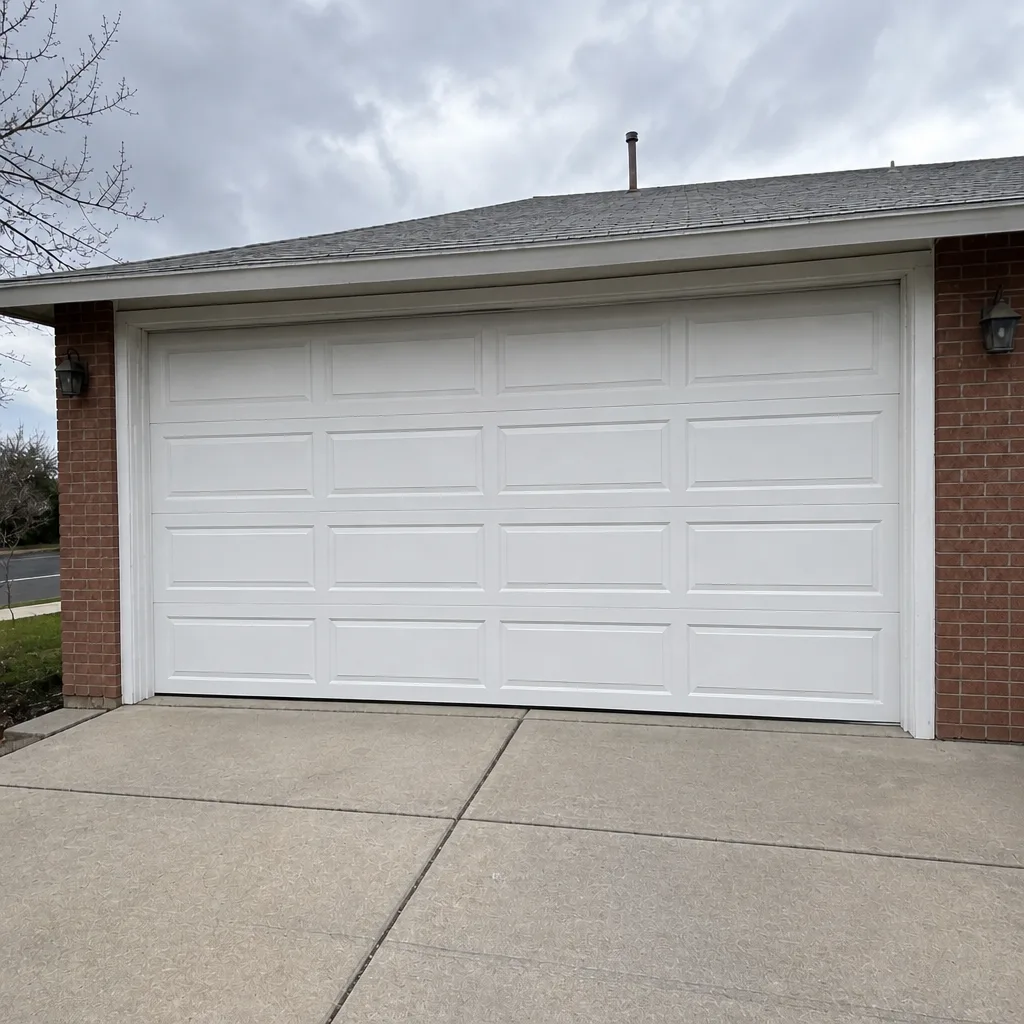
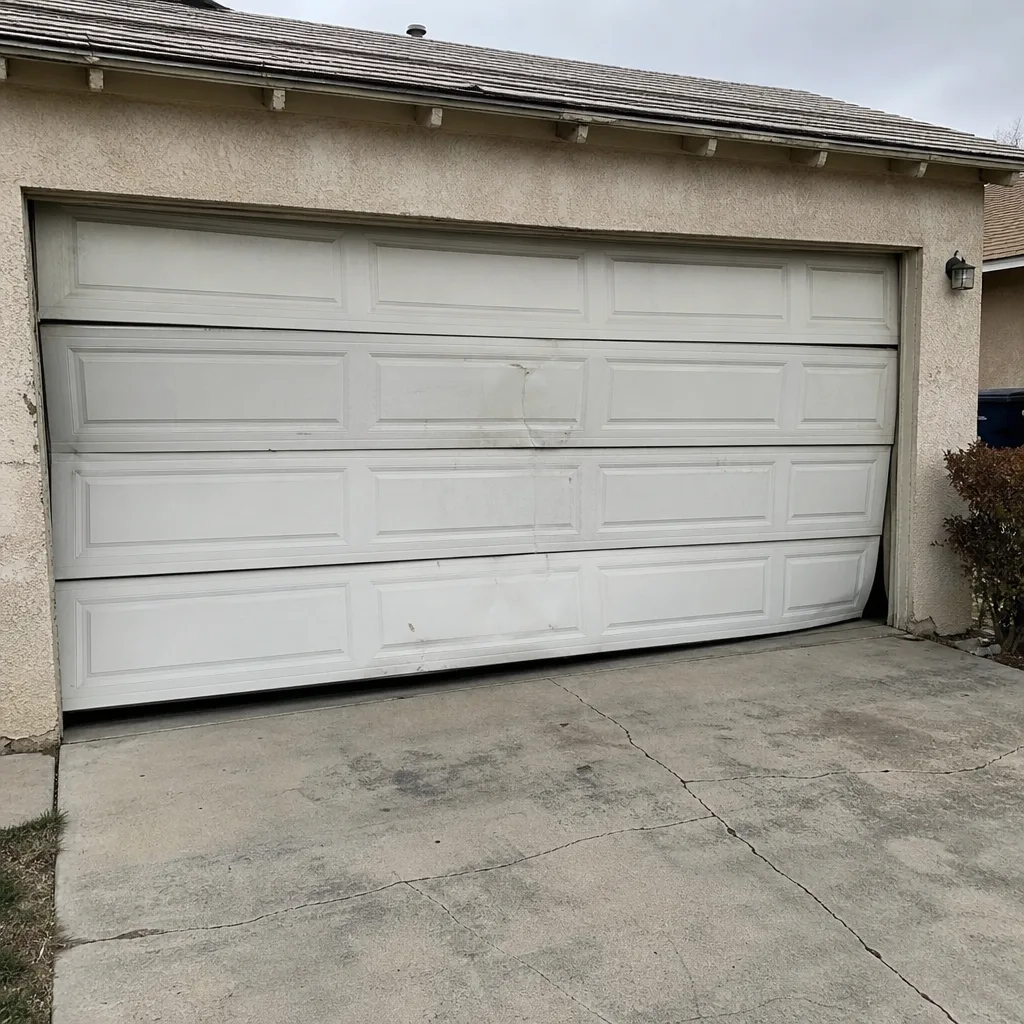
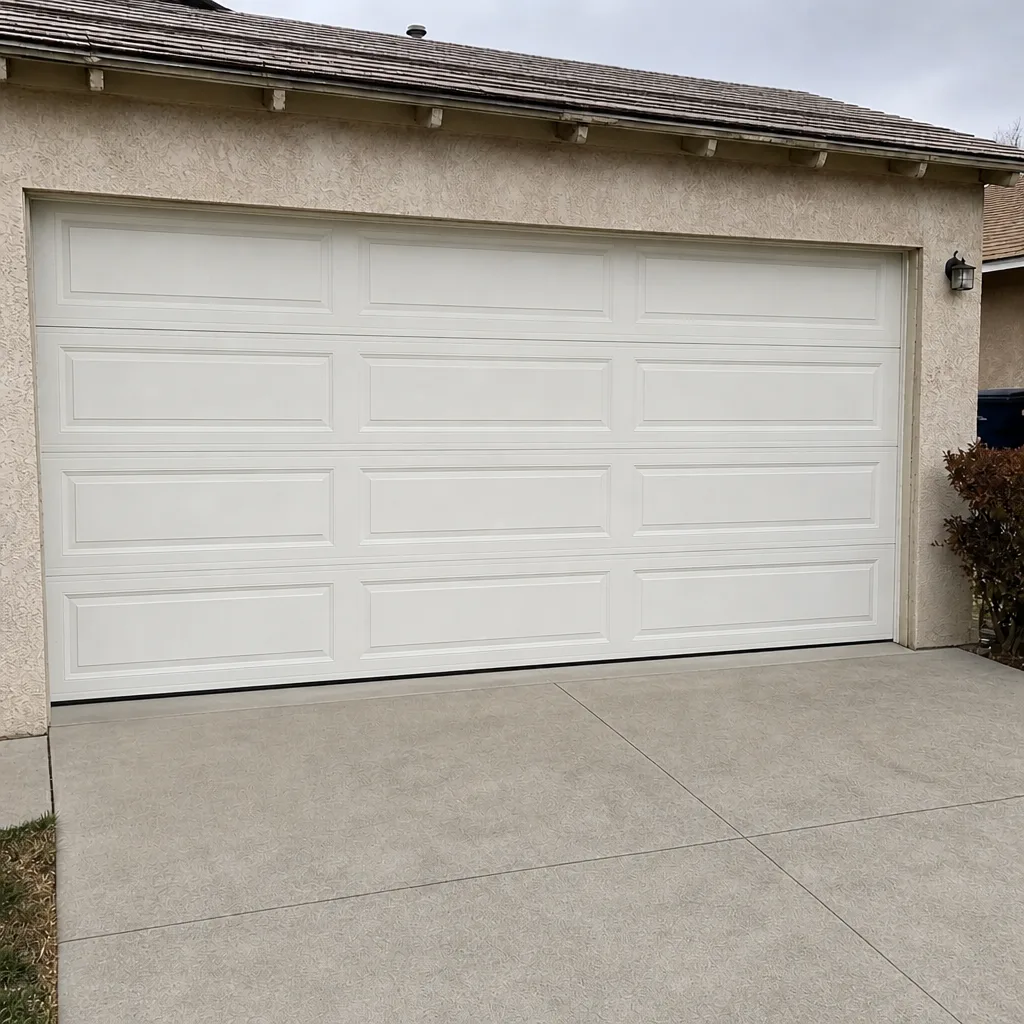
See the difference
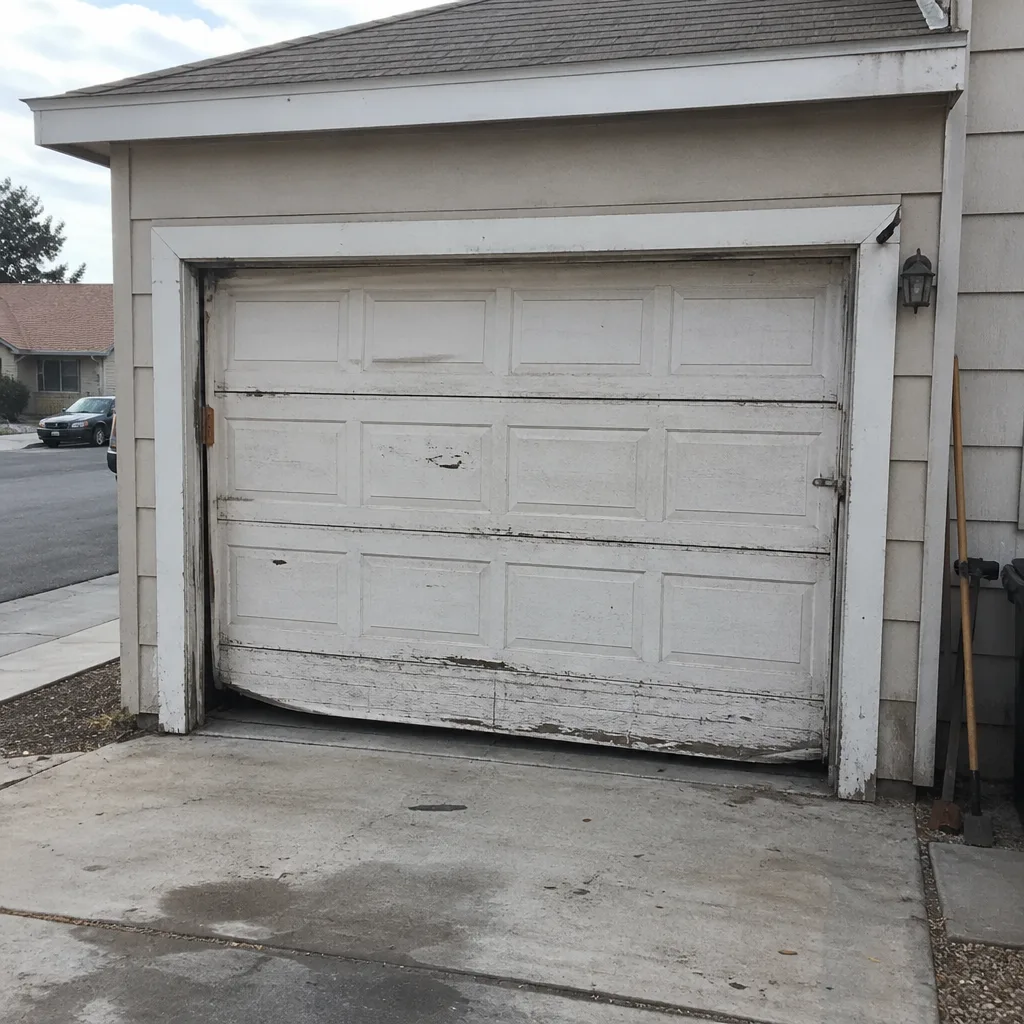 Before
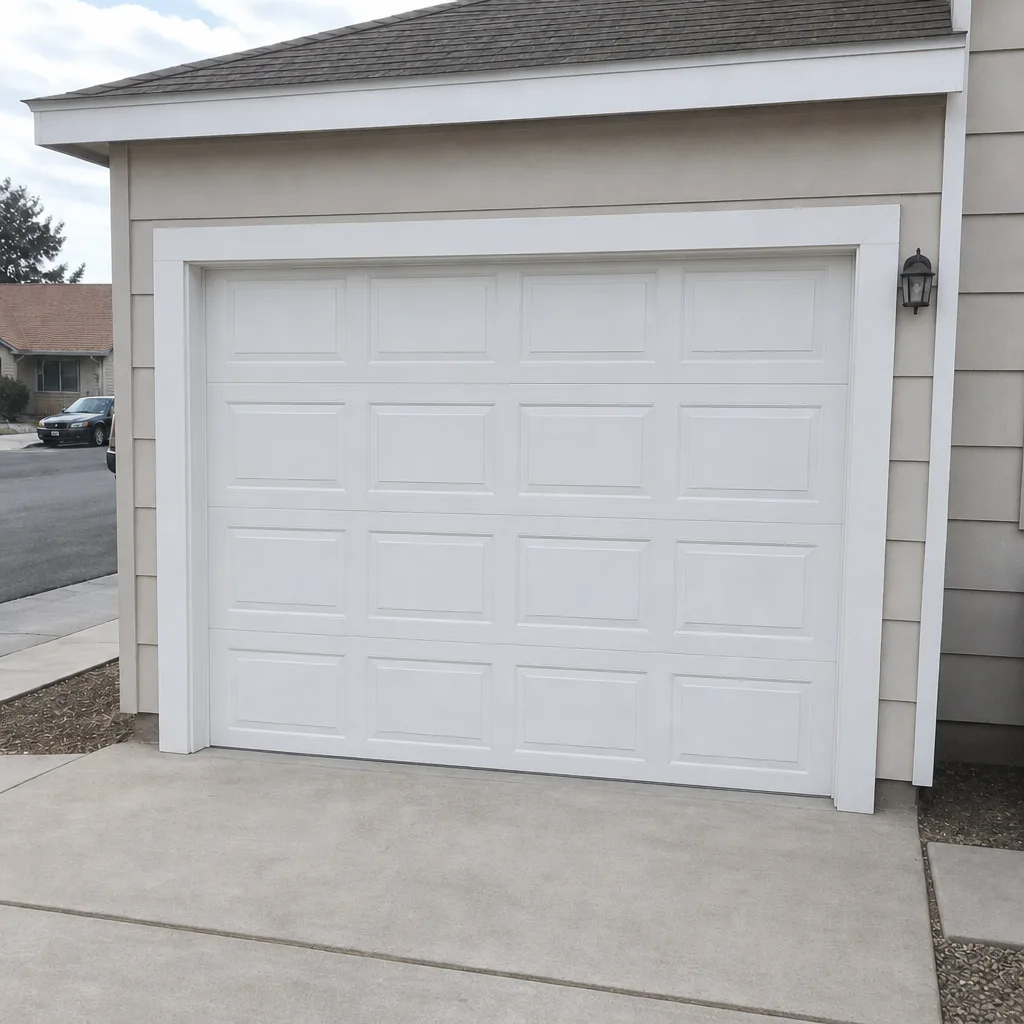 After
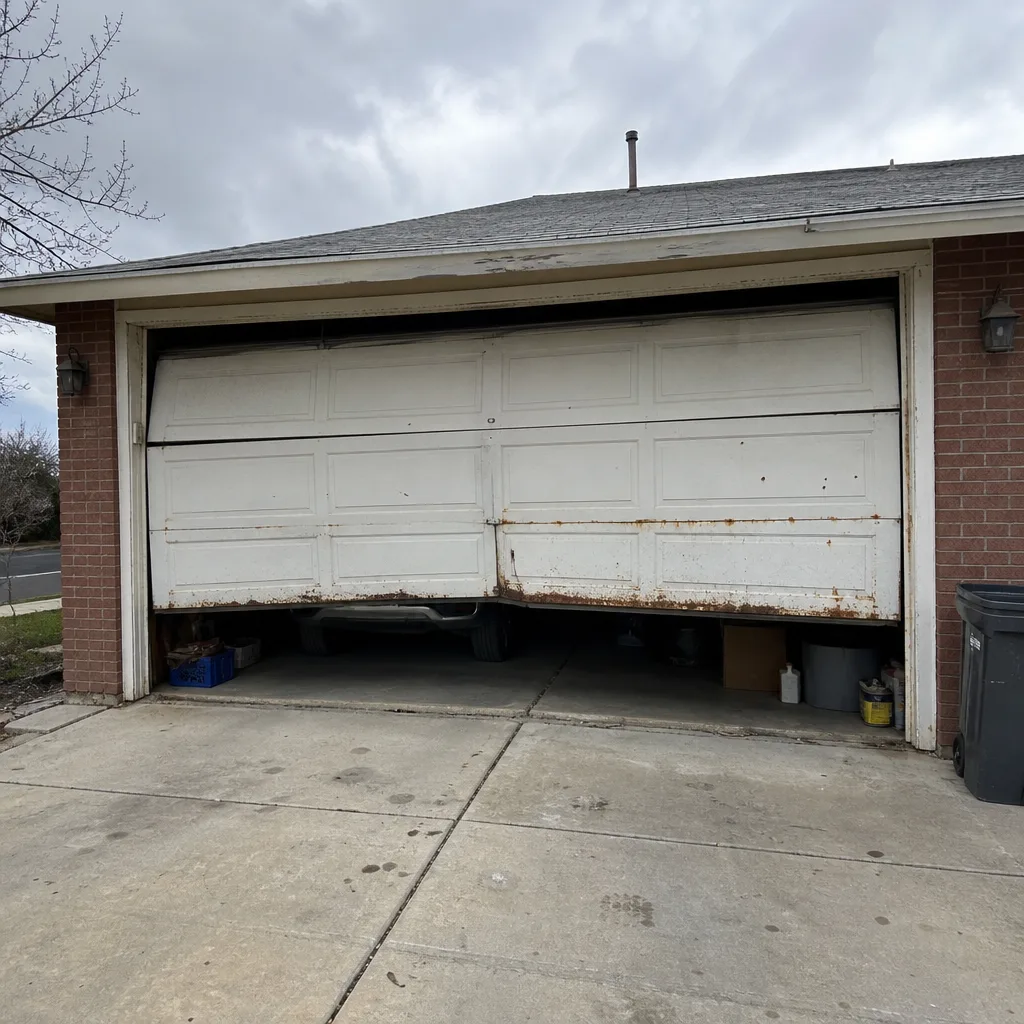 Before
 After
 Before
 After
When to Call a Professional
Call a professional if you can see a gap in a spring coil, a frayed or kinked cable, a track that’s bent or separated, a door that drops on its own during the balance test, or a door that reverses before it closes with nothing in the sensor path. Call immediately if you hear a bang from above the door and the door won’t lift – that’s a broken spring, and the door is unsafe to operate. Do not stand under it and do not try to force it open. Also call if the door goes up crooked, if the opener hums without moving the door, or if the safety sensors won’t hold a steady light. Mainspring Garage Door Co. Whitney offers free estimates in Whitney – call (844) 797-9248 and a live person answers, day or night.
Frequently Asked Questions
A failing torsion spring often makes no sound at all until it breaks, and then it makes a sharp pop or a bang that sounds like a gunshot. Before that, the sound is a slight lift that feels heavy or a door that doesn’t open all the way. The absence of sound isn’t reassurance; the visual check matters more than the sound.
No. Torsion springs store enough energy to cause serious injury in an instant, and winding or unwinding one without the proper bars and training is genuinely dangerous. This is the one garage door repair we tell every homeowner to leave to a trained technician. Call (844) 797-9248 for an exact quote – estimates are free.
In Whitney, the most common cause is resistance from a failing spring or a dragging roller, not a sensor problem. The door is heavier than the opener expects, so it reads the resistance as an obstruction and reverses. Check the safety sensors first, then have the balance tested by a technician before touching the opener’s force settings.
Once a year for a door under eight years old, and twice a year once it’s past that in Whitney’s heat-and-dry cycle. The fall tune-up is the most important one because it catches small problems before the cold arrives. Call (844) 797-9248 to skip the guesswork – estimates are free.
Probably not on its own, but it’s the earliest stage of a problem that becomes serious. Grinding usually means worn rollers or a loose track, and both are inexpensive to fix if caught early. Left alone, a seized roller strains the opener and the springs, and the eventual repair costs more.
Most spring replacements land in the range homeowners expect for a same-day repair, and the exact price depends on the door’s weight, the spring configuration, and the brand. We quote the flat price before any work starts, so the number you hear on the phone is the number on the bill. Call (844) 797-9248 for an exact quote – estimates are free.
The Bottom Line
Most garage door failures don’t happen without warning. They happen after weeks of small symptoms that were easy to dismiss: a door that hesitates, a rolling rumble, a remote that needs a second push. Springs, cables, rollers, and opener logic each send their own signals, and each signal points to a specific part. The habit that saves the most money is the three-minute visual check and the willingness to call when something doesn’t look right. We’ve been answering the phone for Whitney homeowners for the better part of four decades, and the pattern almost never changes. Catch it early, and most jobs finish in a single visit with the price quoted before the wrench comes out.
Ready to get the door checked or get a flat price before anything else happens? See our Mainspring Garage Door Co. Whitney home page, our Garage Door Repair in Whitney page, or our Garage Door Installation in Whitney page for the full picture. If the warning signs point at the opener, our Garage Door Opener in Whitney page covers that side of the system. Call (844) 797-9248 for a free estimate – a live person answers, day or night, and the flat price is stated before any work begins.
Written by the team at Mainspring Garage Door Co. Whitney.