
Last updated November 17, 2026
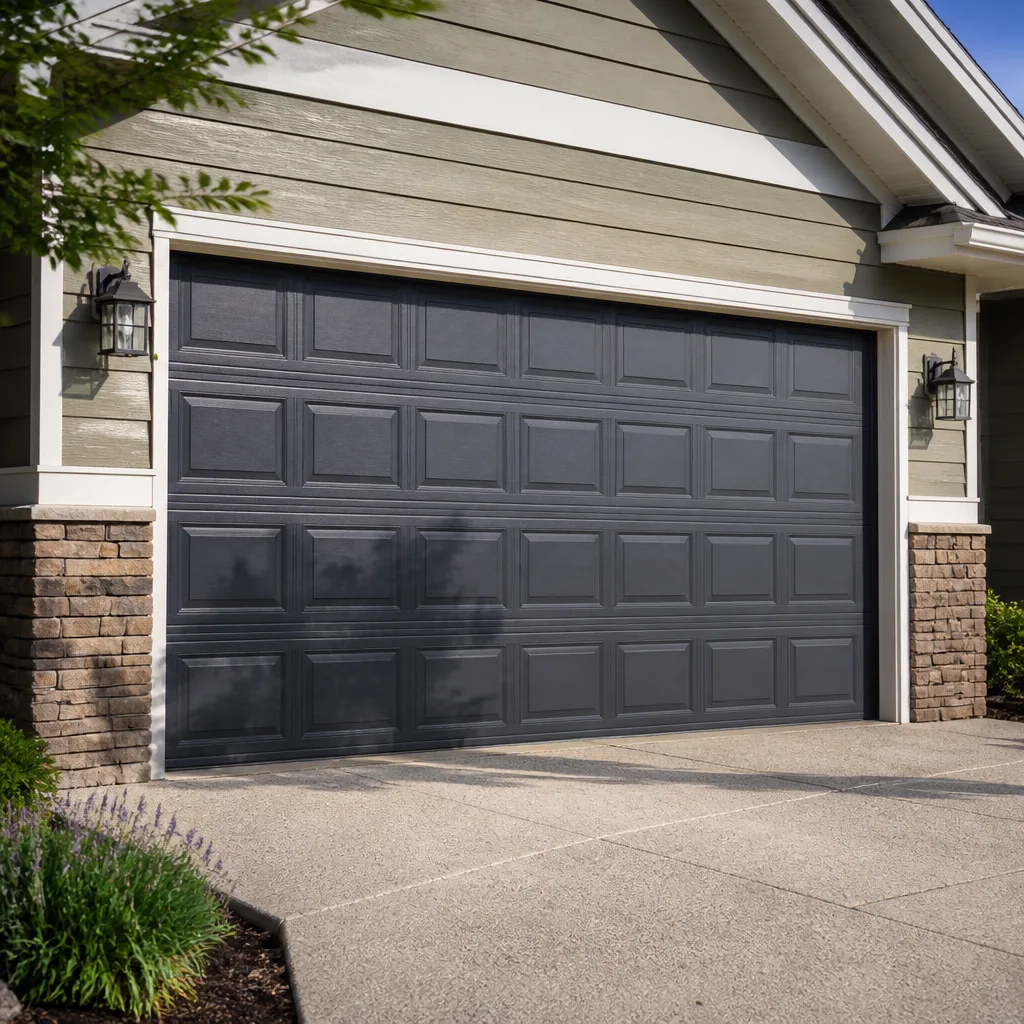 Raised-panel steel
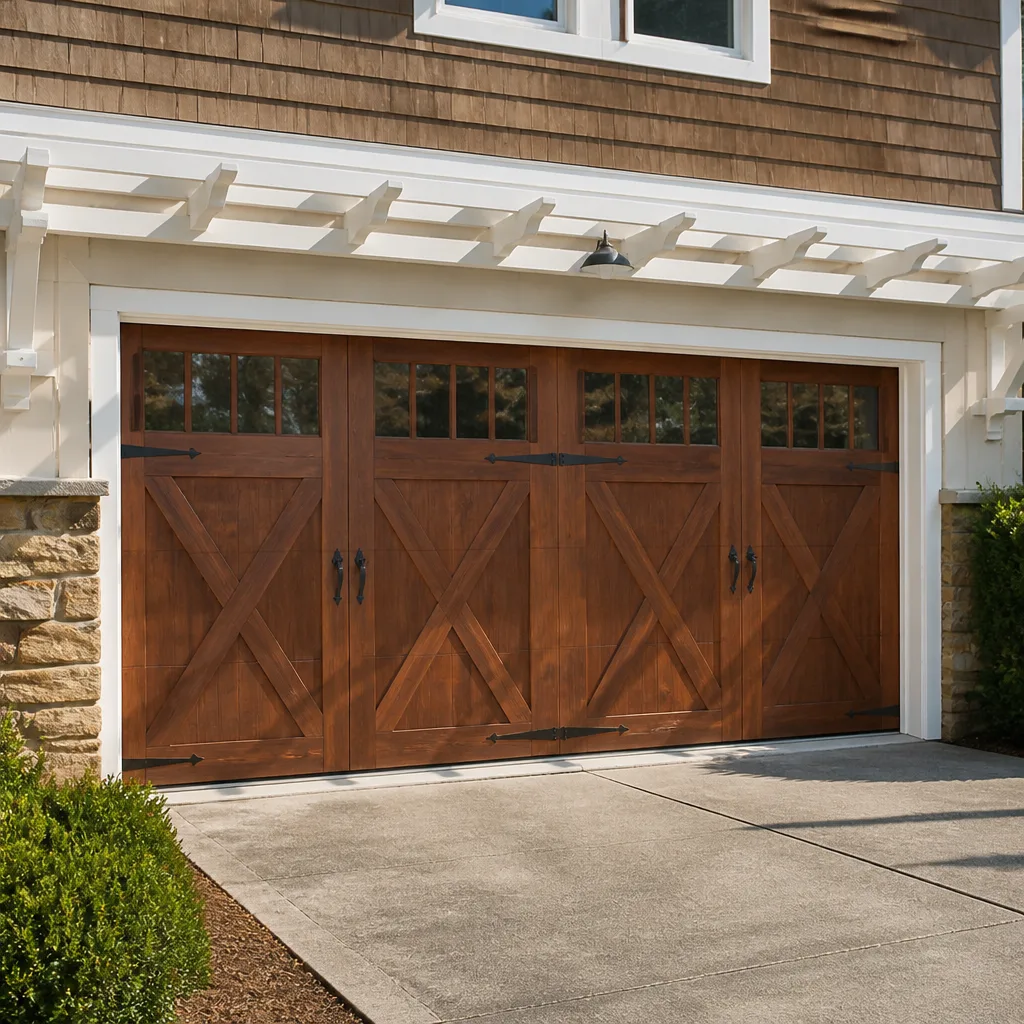 Carriage house
 Modern flush
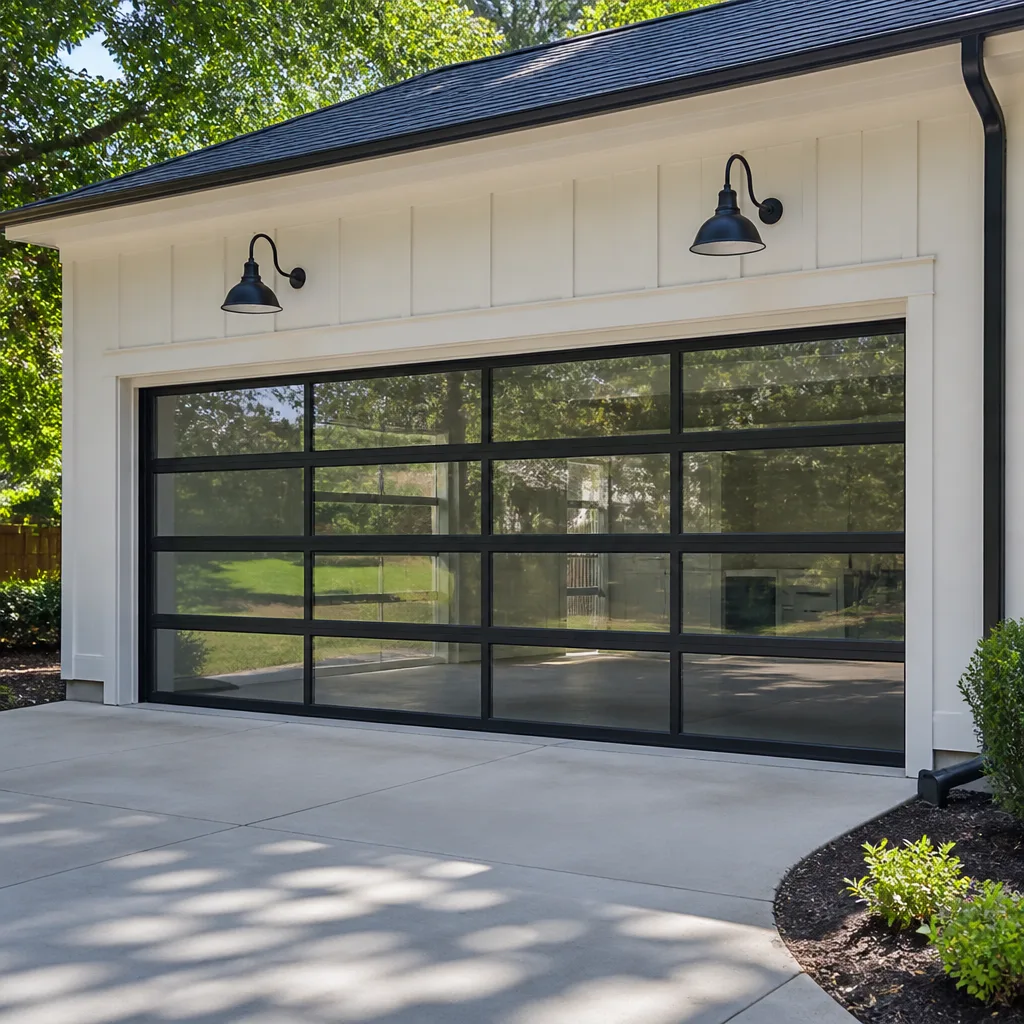 Full-view glass
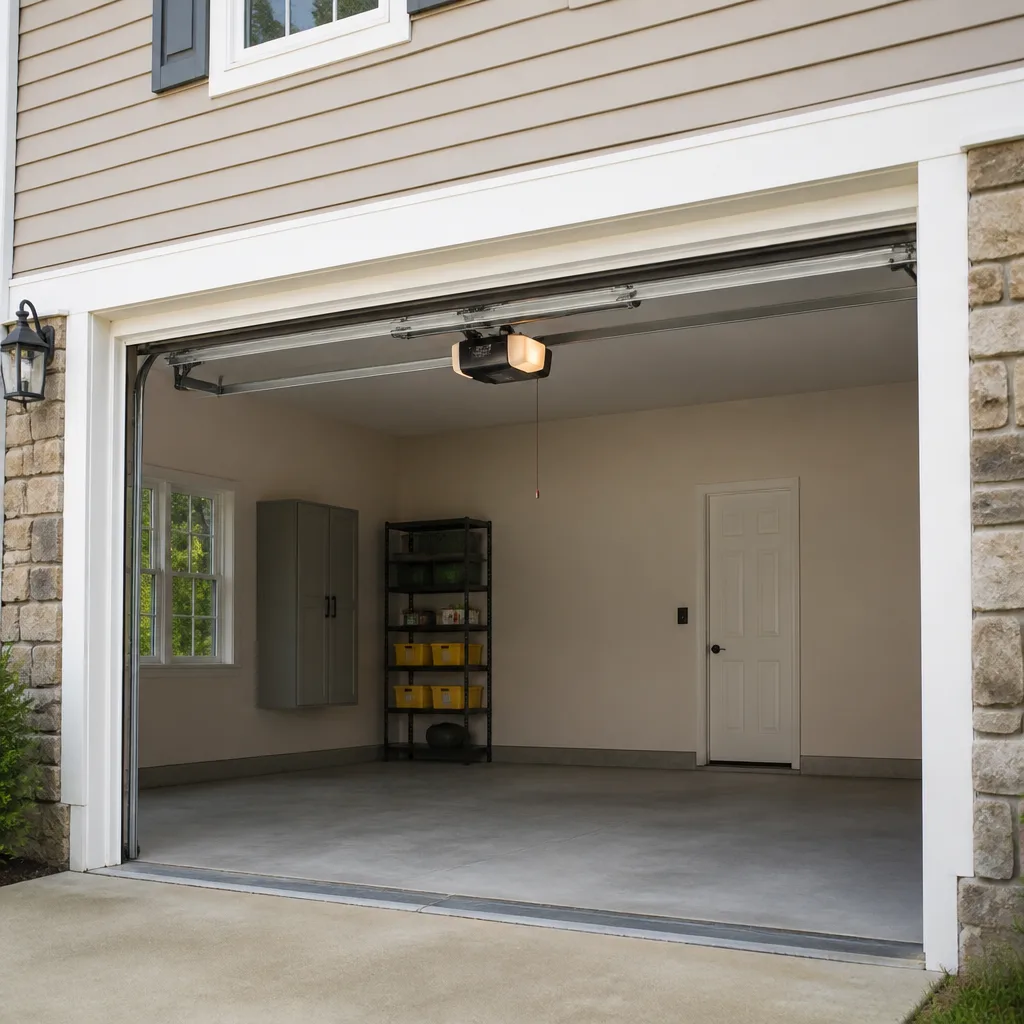 LiftMaster openers
 Chamberlain openers
Full 25-point door and opener safety check with every visit - springs, cables, rollers, tracks, and your LiftMaster or Chamberlain opener included
You get a price before we start. It does not change when the pro arrives.
Get your free estimateGarage Door Repair Maintenance Schedule: What to Do and When
Lubricating your garage door springs in August is mostly wasted work. In Whitney, summer heat thins the lubricant before it can work into the coils, and it cooks off the steel within a week. The job belongs in October, right before the temperature swings arrive and cold metal starts cracking dry coils. Most maintenance advice treats every month the same, and that’s why it so often fails. A garage door wears with the seasons, and in Whitney the seasons are hard on it: triple-digit summers, dry air, and winter nights that drop fast enough to contract steel. This guide lays out a task calendar built around that actual cycle, so each service action lands when it does the most good.
Quick Answer
The short version: give your door a ten-minute visual inspection and a lube of the moving parts each fall and spring, test the balance twice a year, and run a full tune-up once a year. In Whitney’s climate, the two dates that matter most are October (lubricate and inspect before the cold) and April (check fasteners and alignment after a winter of contraction and expansion). Everything else fits around those two anchors.
Styles & brands we work with
- Raised-panel steel
- Carriage house
- Modern flush
- Full-view glass
- LiftMaster openers
- Chamberlain openers
Table of Contents
- Why a Seasonal Schedule Beats a Generic One
- The Month-by-Month Task Calendar for Nevada
- Which Lubricants on Which Parts (and the One That Ruins Rollers)
- The 10-Minute Visual Inspection That Catches Most Problems
- Testing and Documenting Spring Tension Over Time
- The 90-Day Post-Repair Check
- Common Mistakes to Avoid
- When to Call a Professional
Why a Seasonal Schedule Beats a Generic One
A garage door is a balance of opposing forces held by springs, cables, and rollers, and every one of those materials responds to temperature. Generic maintenance guides talk in quarters and say things like “lubricate as needed,” which tells you nothing about when “needed” actually is. In Whitney, the need is specific: our summer heat drives the metal to expand and stresses the spring assemblies, then the sharp winter drops contract the same metal and can crack coils that dried out months earlier.
We’ve watched this play out across Whitney neighborhoods for years. Doors that get lubricated before the cold hold up through the winter. Doors that got a summer lube instead tend to show cracks and pops in January, and those become emergency calls. That’s the whole case for a climate-keyed schedule: the same tasks, done at the right moment, prevent far more repairs than doing them at the wrong moment ever could.
The schedule below is written for a Southern Nevada homeowner who plans to stay put in the house. If that’s you, the calendar is the single most useful thing on this page. If you’d rather hand the annual work to us, Mainspring Garage Door Co. Whitney home lays out what a tune-up covers.
The Month-by-Month Task Calendar for Nevada
Here is the full year, keyed to Whitney weather rather than the calendar quarter. Two of these anchors do most of the work; the rest are quick checks.
- January: Listen for pops or clunks on the first cold mornings. Cold contraction is when a weakening spring shows itself. Note any change in sound.
- February: Check the weather seal along the bottom for cracking from the cold and dry air. Look for daylight showing under the closed door.
- March: Watch for the first heat-driven expansion. Test the door’s balance (details below) after a winter of contraction.
- April: The spring tune-up anchor. Re-check every bolt and hinge for looseness that winter rattled free, lubricate, and test the opener’s safety reverse.
- May: Clean the tracks and wipe out grit before summer dust season. Whitney’s dry, windy stretches push grit into rollers.
- June: Check the opener’s force settings and listen for a straining motor in the heat. Confirm the safety sensors are aligned.
- July: Inspect rollers and hinges for dryness. Skip heavy lubrication in peak heat; it thins before it penetrates.
- August: Watch for heat-related opener strain and noisy operation. This is the month to schedule, not to lube.
- September: Clean tracks again after summer grit accumulation. Note any new squeaks.
- October: The fall tune-up anchor. Lubricate springs, rollers, and hinges now so the lube penetrates before the cold arrives.
- November: Re-check balance and spring tension as temperatures fall. Confirm the door closes flush and the seal sits tight.
- December: Final safety test of the auto-reverse and sensor alignment before the coldest weeks.
Most of these are visual checks that take a few minutes. The two tune-up months, April and October, are when the real work gets done. If you want the whole thing handled in one visit, our Garage Door Repair in Whitney page covers what we check on a call.
Which Lubricants on Which Parts (and the One That Ruins Rollers)
Lubrication is where most homeowners do real harm without knowing it. The right product on the right part keeps a door quiet for a year. The wrong product on the wrong part turns a cheap part into a repair. Here’s the breakdown we give Whitney homeowners who ask.
- Springs and hinges: A silicone-based or white lithium spray works well on the torsion spring coils and the hinge pivots. Apply in October so it can soak in before the cold.
- Rollers (metal): A few drops of light machine oil on the roller bearings. No grease on the roller track surface itself.
- Rollers (nylon): Leave them alone. Nylon rollers are self-lubricating, and most petroleum-based spray products degrade the nylon over time and cause it to crack or bind. This is the one common mistake that quietly destroys rollers.
- Tracks: Clean with a damp cloth and a mild cleaner. Do not lubricate the tracks; grease attracts grit, and grit wears rollers and makes the door drag.
That last point matters more in Whitney than in wetter climates. Our dry, dusty air carries fine grit, and any grease on the tracks turns into an abrasive paste. If a brand-name door like a Clopay or Amarr uses nylon rollers on a track system, keep the track dry and clean instead of greasing it.
If you’re unsure which rollers your door has, we can tell you in a minute on a service call. Replacing worn rollers is quick work and often the difference between a loud door and a quiet one; our Garage Door Opener in Whitney page touches on the opener side of the same system.
The 10-Minute Visual Inspection That Catches Most Problems
Before any repair call, there’s a cheap ten-minute inspection that finds most developing problems while they’re still free to fix. Do this twice a year, in April and October. Work top to bottom, and never reach into the moving mechanism or put your hands near a spring under tension. If something looks off, note it and stop.
- Look at the springs first. A healthy torsion spring is uniform in color. A spring that’s turning dark, showing gaps, or has a visible crack is weakening. Don’t touch it; just note it.
- Check the cables. They should run evenly on both sides. Frayed strands, loose coils, or one cable visibly slack is a flag.
- Inspect roller condition. Metal rollers with flat spots, or nylon rollers with cracks or wobble, are on their way out.
- Run a finger along the hinges. Roughness or grinding at the pivot points means they need lubrication or replacement.
- Look at the track alignment. Stand back and eyeball both tracks. They should be parallel and clean; dents or bends cause the door to bind.
- Test the safety reverse. Put a piece of wood flat under the door and close it. It should reverse on contact. If it doesn’t, stop using the door until it’s adjusted.
- Check the sensors. Confirm the small lights on the safety sensors on each side of the door are steady, not blinking. Wipe the lenses clean.
That list catches roughly four out of five developing problems before they become repair calls, because most failures announce themselves first as a cracked spring, a frayed cable, or a worn roller. If any of those flags appear, don’t keep cycling the door. A closed door is a locked door; opening it on a failing spring only risks more damage.
Testing and Documenting Spring Tension Over Time
Springs are the part of a garage door that carry the entire weight, and they fail without much warning unless you’re tracking them. The trick is to record a simple balance test a couple of times a year so you can see a spring losing strength slowly rather than discovering it the morning it breaks.
Here’s the test, done without touching the springs. With the door fully closed and the opener disconnected (pull the release cord), lift the door halfway by hand and let go. A balanced door stays where you leave it. A door that slams down or wants to rise on its own is out of balance, and that means the springs are weakening or the tension is off. Never try to adjust the tension yourself; the springs are under extreme tension and can cause serious injury. This is the one task that’s genuinely dangerous to handle without training.
Do this test in April and October and keep a note of the result and the date. If in April the door stays put, and by October it wants to drop, you’ve caught a weakening spring months before it snapped. That lets you plan a repair rather than waking up to an emergency. We track the same signal across Whitney doors we service, and the pattern is consistent: springs that pass in fall and fail the balance test by spring are the ones that break the following year. Predicting the break is the whole point of documenting it.
The 90-Day Post-Repair Check
Whatever gets repaired, the weeks afterward are when you find out if the work held. That’s why we build a 90-day check into every job: it gives the repair time to settle, so we can confirm it’s holding before we call it done. Here’s what that check should include, whether you do it yourself or we come back to walk through it.
- Re-test balance and travel. The door should still sit level and stop at the same points after 90 days of daily use.
- Look for new wear. A fresh roller or hinge showing premature wear suggests an alignment issue worth catching now.
- Listen for new noise. A repaired door that’s getting louder is telling you something still isn’t right.
- Confirm the safety reverse still works. It should be tested again after any adjustment.
- Check fasteners. A new part will settle; a loose bolt after 90 days should be tightened before it becomes a rattle or a bind.
If the repair didn’t hold, the fix is on us. That’s the 90-Day Done Right Promise: in writing on every job, no paperwork to chase, no arguing. We stand behind the work, and if it’s not right, we come back.
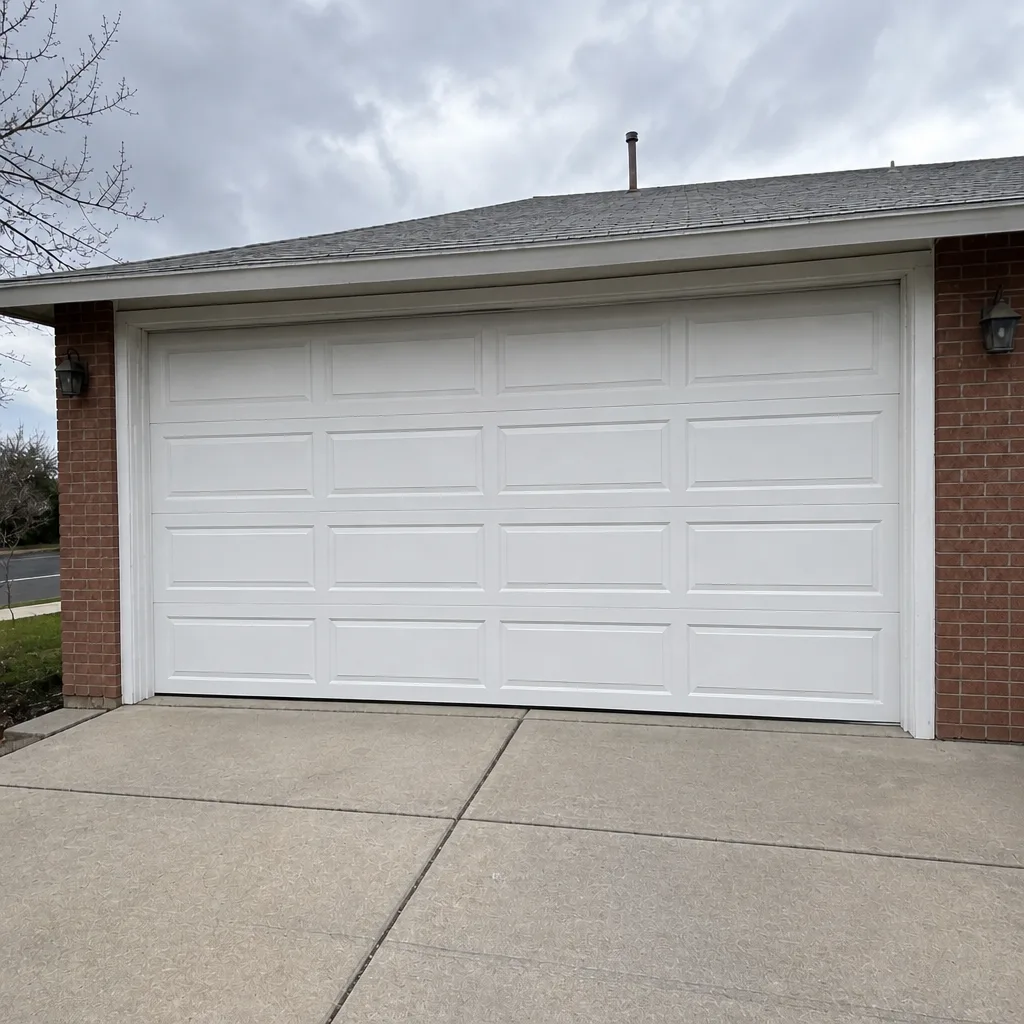
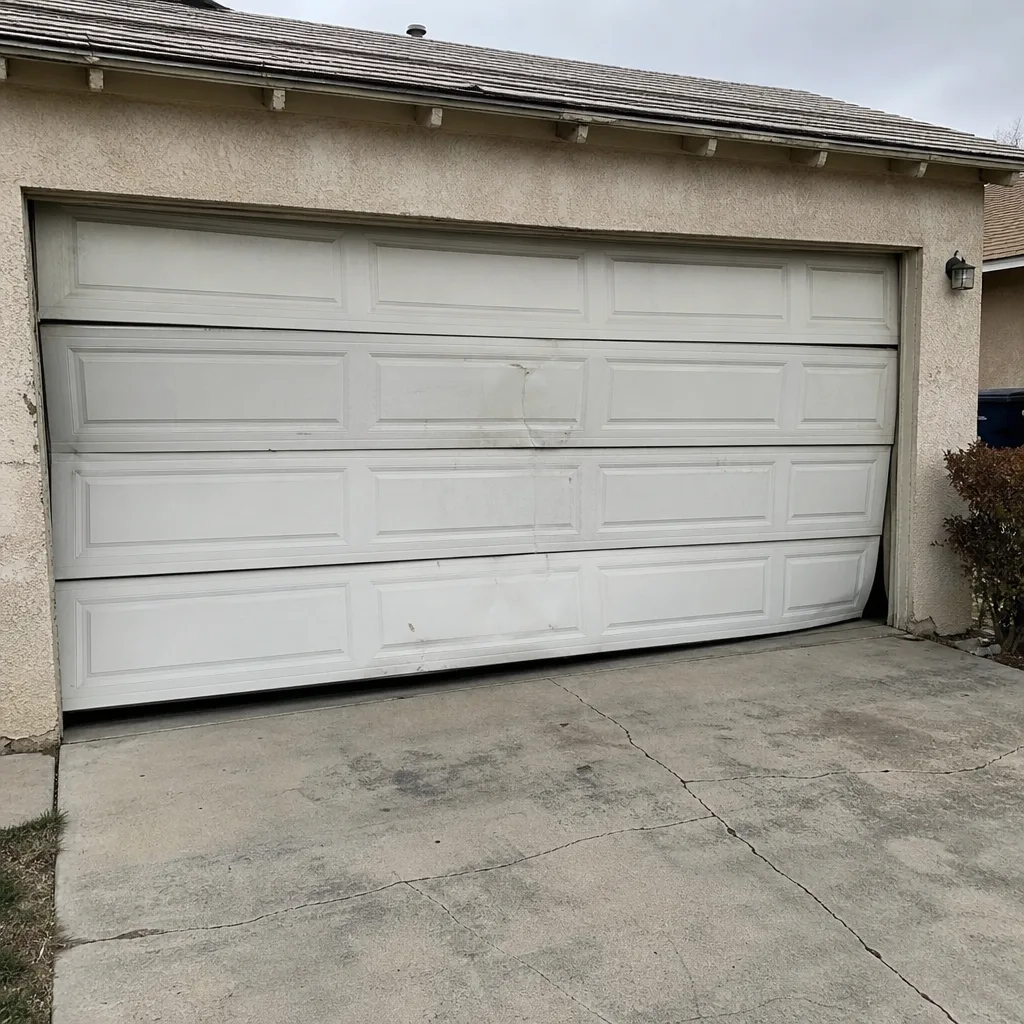
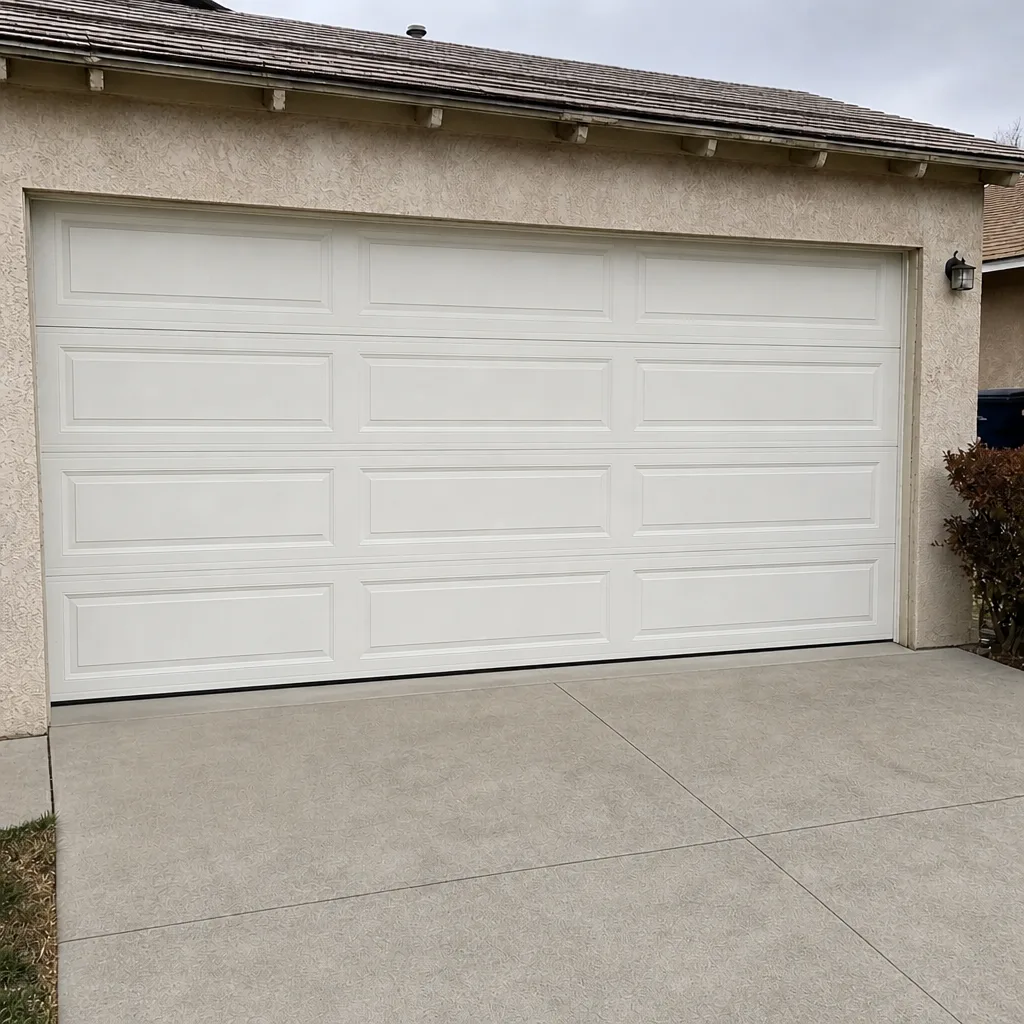
See the difference
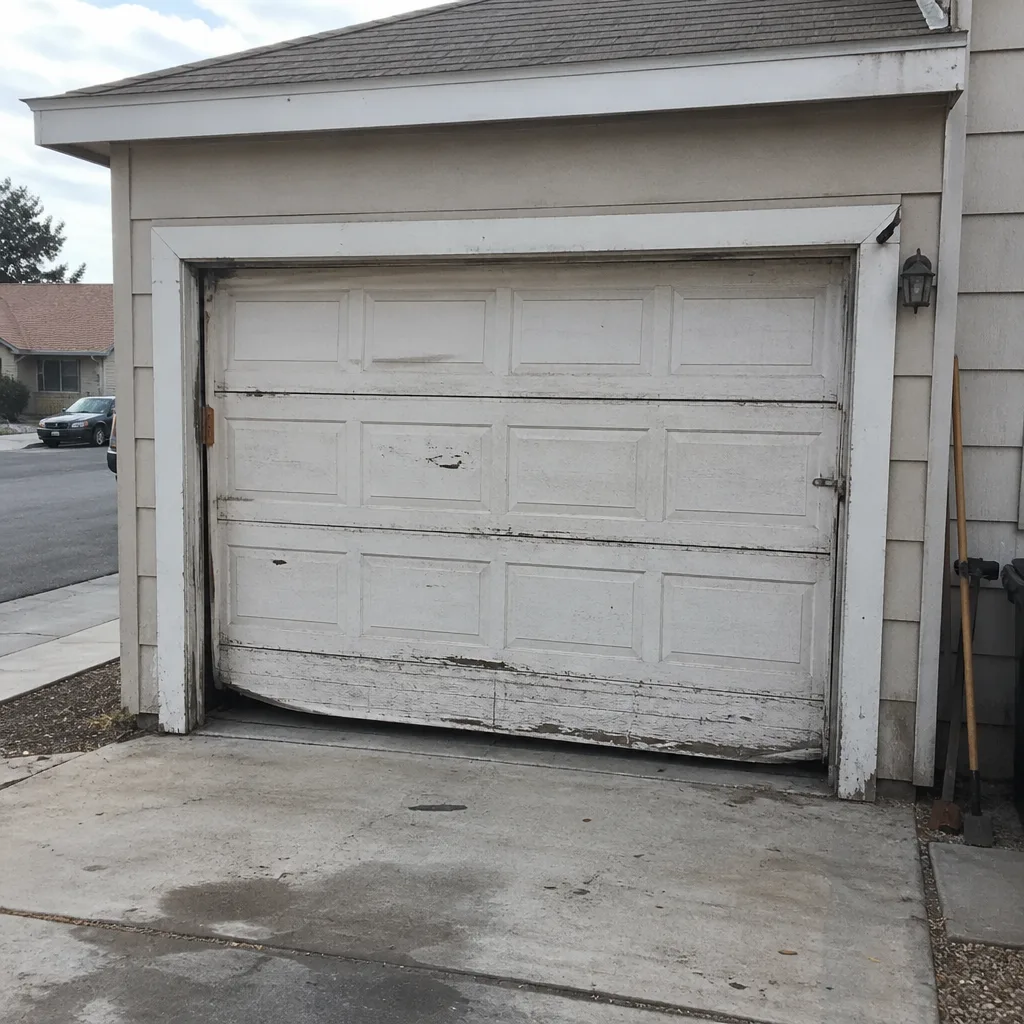 Before
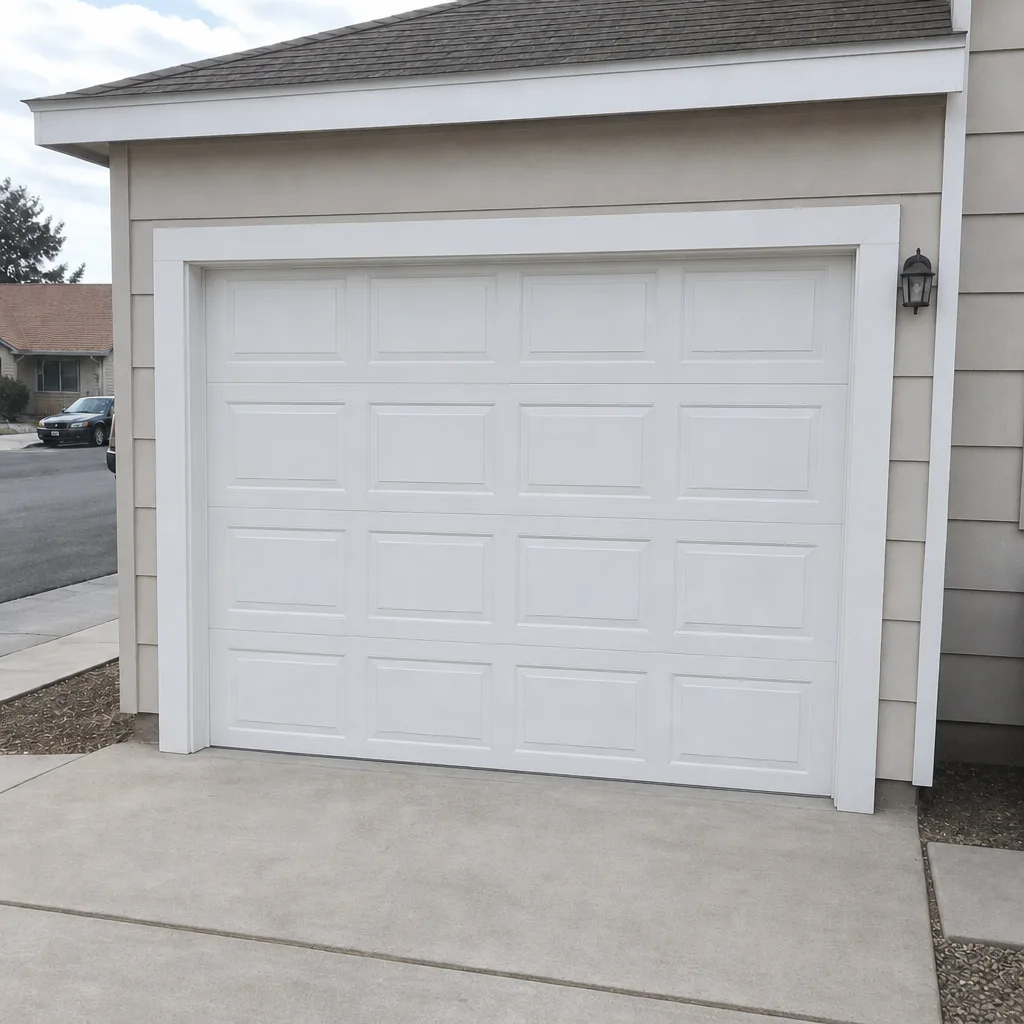 After
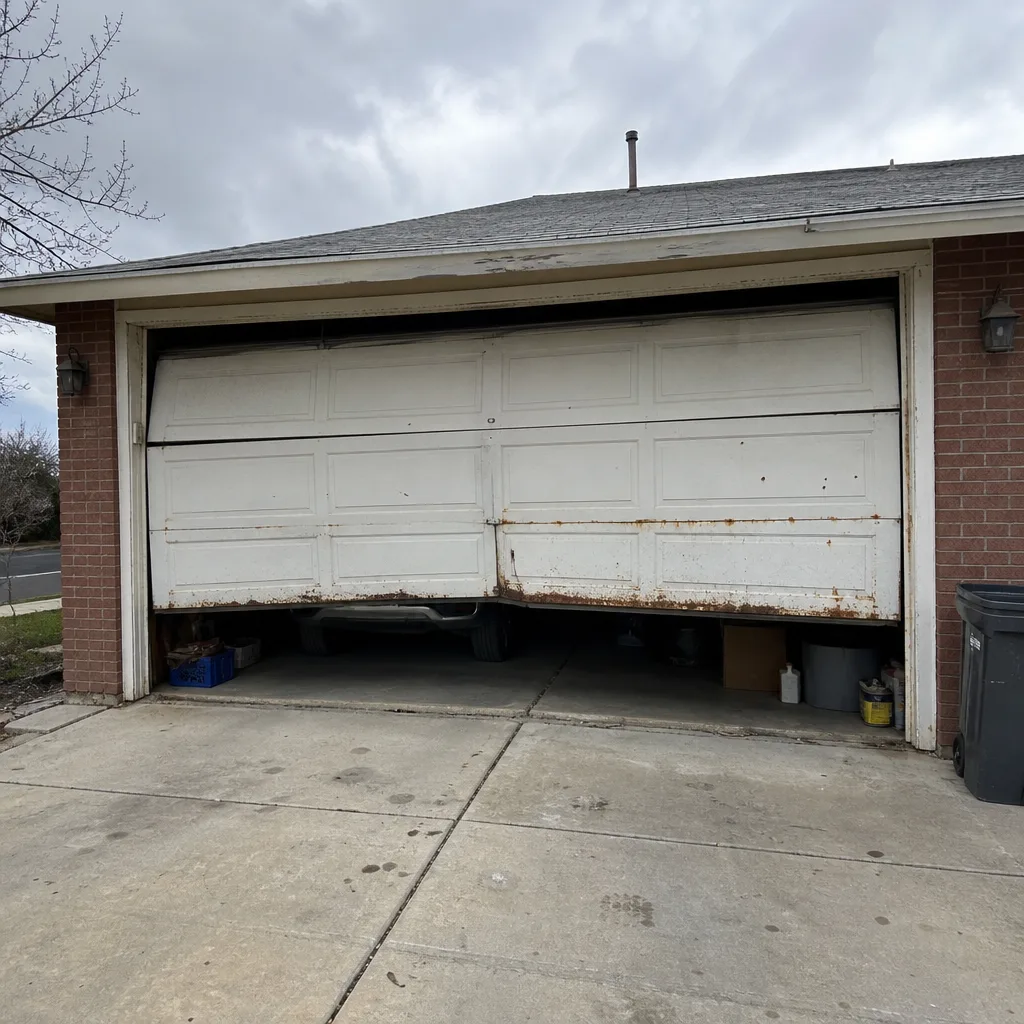 Before
 After
 Before
 After
Common Mistakes to Avoid
- Lubricating in peak summer heat. In Whitney’s August, lube thins before it penetrates, and the job is wasted. Save it for October.
- Greasing the tracks. It feels helpful, but grease plus desert grit becomes an abrasive paste that wears rollers faster. Keep tracks clean and dry.
- Spraying nylon rollers with petroleum products. It degrades the nylon and causes cracking and binding. Nylon rollers stay dry.
- Ignoring the balance test. Homeowners skip it because it’s a little awkward, and it’s the single best early warning of spring failure.
- Trying to adjust spring tension yourself. This is the most dangerous mistake on the list; the springs are under extreme load and can injure you severely.
- Skipping the post-repair check. Three months of real use is the only honest test of whether a repair held.
- Waiting for a failure before doing anything. A door that’s been quiet for years is due for a check, because the parts that carry the weight are wearing the whole time.
When to Call a Professional
Most of the schedule above is safe DIY work. Some of it isn’t. Call us if you see a cracked or gaping spring, a frayed cable, or a door that’s off balance; those parts are under enough tension to cause serious injury, and we don’t advise touching them yourself. Call if the door reverses without reason, closes unevenly, or the opener strains, because those signal a failing part. Call if the door won’t close all the way, which on a Whitney door often means the seal or the spring, and call after an accident like a car backing into the door, since damage underneath isn’t always obvious. Mainspring Garage Door Co. Whitney offers free estimates in Whitney. Call (844) 797-9248 and we’ll take a look.
Frequently Asked Questions
Twice a year for the climate-keyed tasks (April and October in Whitney), plus a full professional tune-up once a year. The safety reverse test should be part of both dates. If you want a single annual visit, our $89 seasonal tune-up covers the full checklist.
October, right before the cold arrives. Summer lubrication thins in the heat before it works into the coils, and the cold then cracks dry metal. A light fall touch-up in November is fine too, but the anchor is October. Call (844) 797-9248 if you’d rather have us handle it.
No. Nylon rollers are self-lubricating, and most petroleum-based sprays degrade the nylon and cause cracking or binding. Leave them dry and keep the track clean instead.
Run the balance test twice a year and document the result. A door that starts dropping when released mid-travel is showing weakening springs, often months before a break. If the balance test fails, don’t keep using the door; call (844) 797-9248.
A re-test of balance and travel, a look for new wear on replaced parts, a listen for new noise, a safety reverse test, and a check that fasteners are still tight. It confirms the repair held under real use. If it didn’t, the 90-Day Done Right Promise covers it.
It can be. A weakened spring, a frayed cable, or a failed safety reverse are all hazards a routine check would catch. The ten-minute inspection and the spring test are the two things worth doing even if you do nothing else. Call (844) 797-9248 for a free second opinion on any written estimate.
The Bottom Line
A garage door’s wear follows the seasons, and in Whitney those seasons are unforgiving: summer heat and winter cold work on the same metal all year. The schedule that works is simple. Anchor your real work to April and October, when the temperature swings between them do the most damage. Lubricate the right parts with the right products, and keep nylon rollers dry. Run the ten-minute visual inspection and the balance test twice a year, and document the spring test so you can predict a break rather than wake up to one. Do those things and the door stays quiet and safe. If anything on the list looks off, our team has up to 10 years of experience on every job. Call (844) 797-9248 for a free estimate, and we’ll be there when we say. If your door needs repair now, our repair service in Whitney gets you on the schedule, and if you’re weighing a garage door installation in Whitney, we’ll measure, order, and schedule at a written price before any work starts.
Written by the team at Mainspring Garage Door Co. Whitney.