
Last updated November 17, 2026
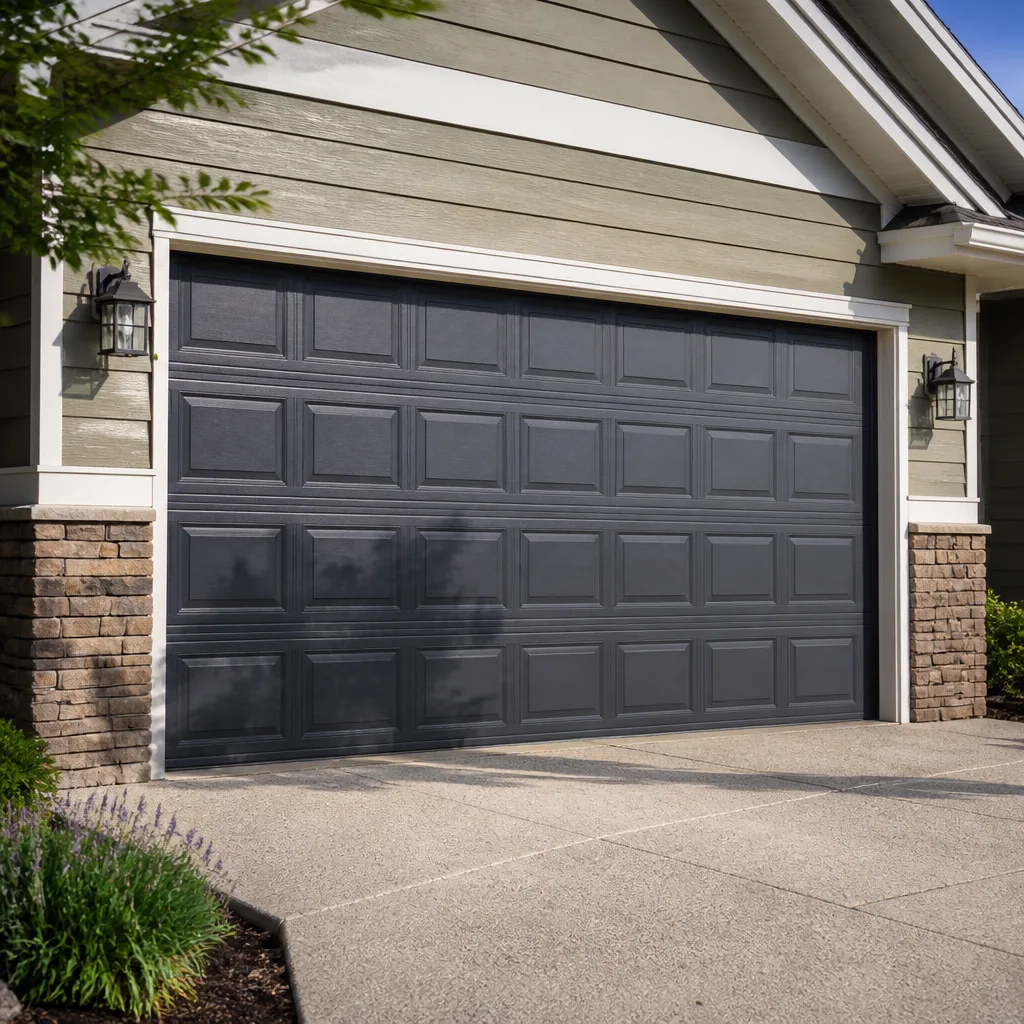 Raised-panel steel
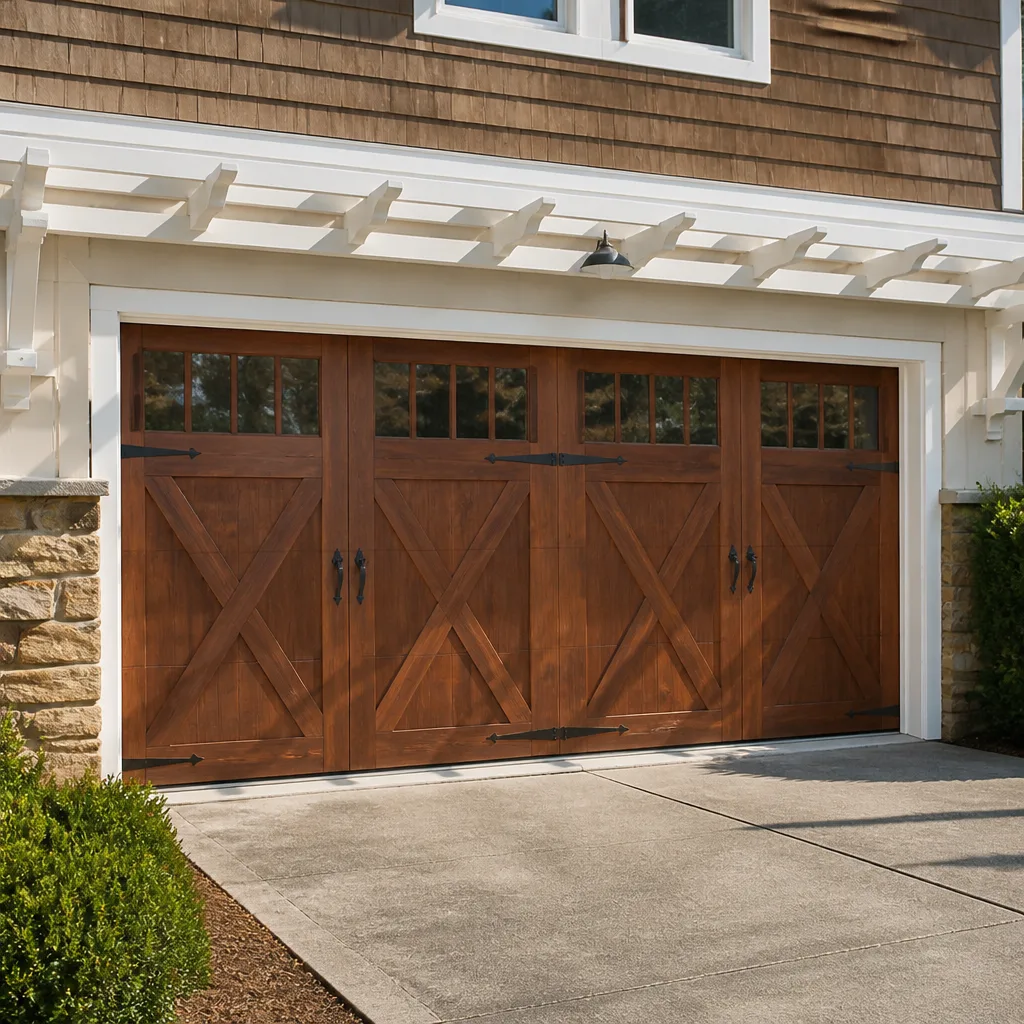 Carriage house
 Modern flush
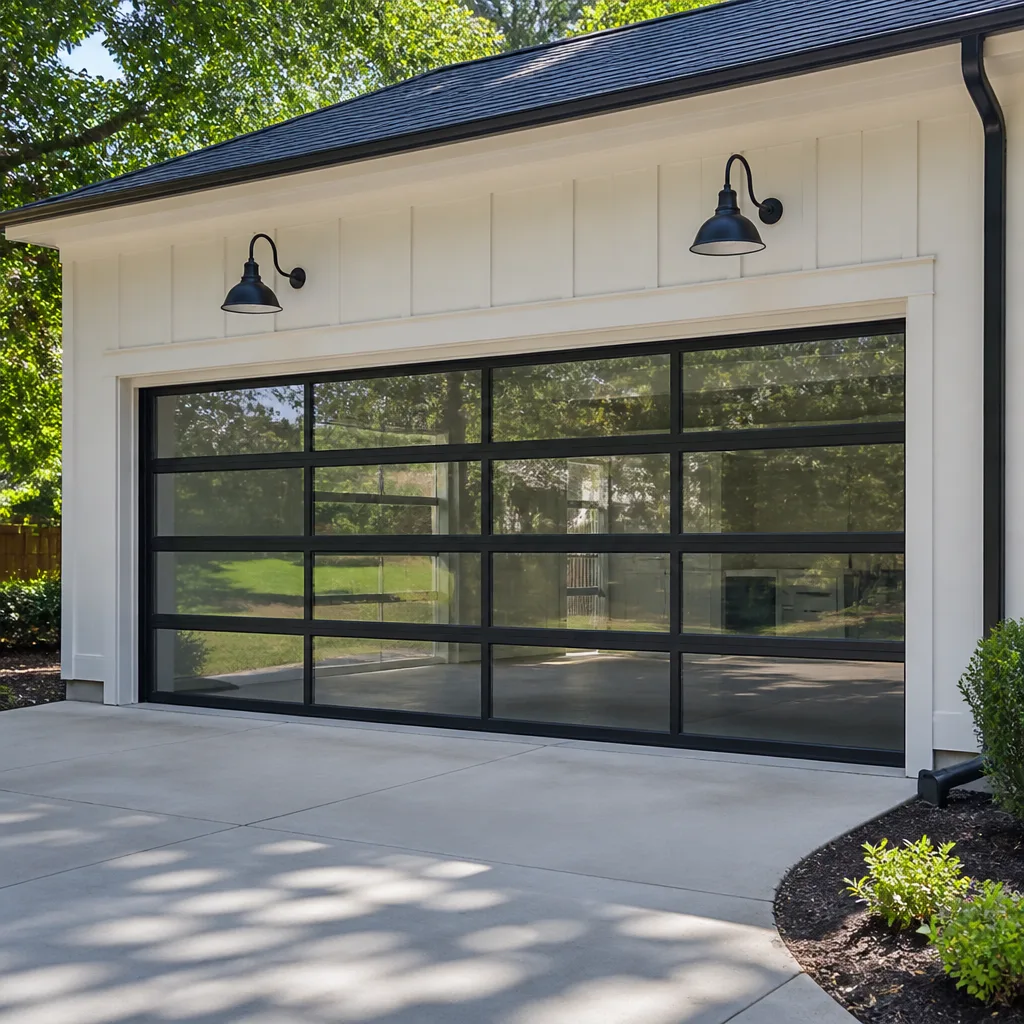 Full-view glass
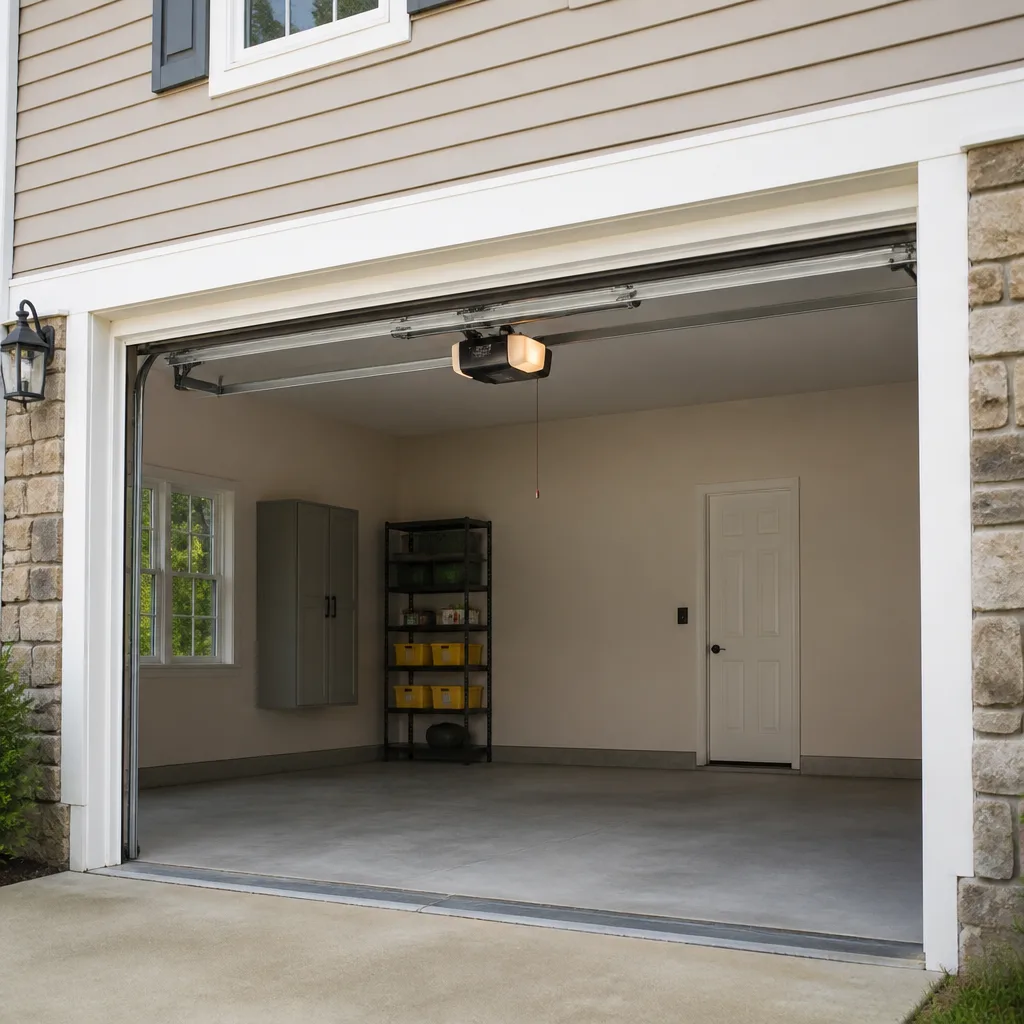 LiftMaster openers
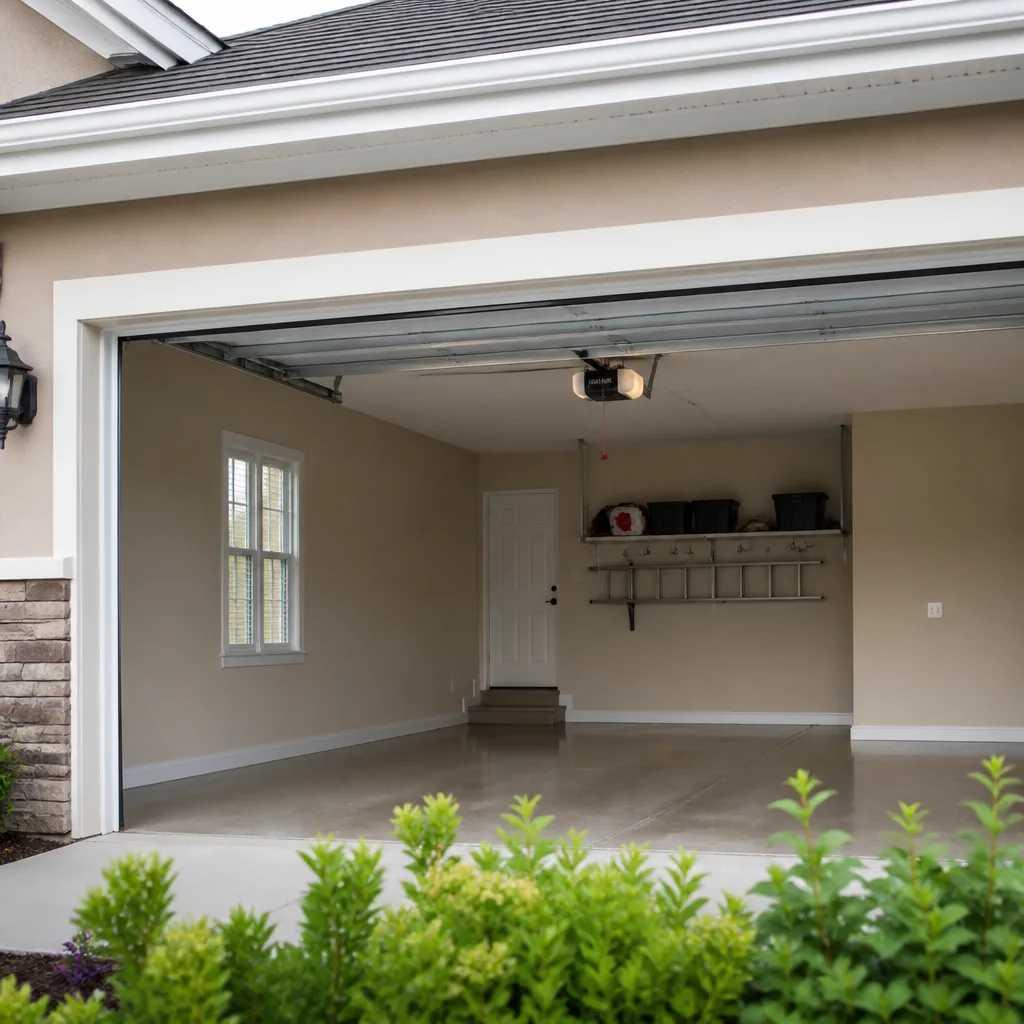 Chamberlain openers
Full 25-point door and opener safety check with every visit - springs, cables, rollers, tracks, and your LiftMaster or Chamberlain opener included
You get a price before we start. It does not change when the pro arrives.
Get your free estimateGarage Door Repair Troubleshooting: Common Problems and How to Fix Them
A door that reverses before it closes is almost never a sensor problem. In roughly 60% of the service calls we run, the real culprit is a torsion spring that has quietly lost tension, and the opener is simply giving up under a load it was never built to carry. The sensor gets blamed because it’s the part you can see blinking. The spring is the part doing the work, and it fails out of sight. This guide follows the force chain in a garage door, from spring to cable to track to hinge to opener, so you can trace a symptom back to its mechanical origin instead of treating whatever part happens to be complaining loudest. We’ll cover the tests you can run safely in Whitney, which failures can wait a week, and how to describe a problem so your first phone call gets you a real number.
Quick Answer
Most garage door problems trace back to one of four causes: a spring that has lost tension or broken, a cable that has slipped or snapped, a track that has bent or collected debris, or an opener that is straining against a door it can no longer lift. Troubleshoot by disconnecting the opener and testing the door by hand first. If it won’t stay halfway open or feels heavy, the problem is in the spring or balance system, not the opener. If it binds or scrapes, the problem is in the track or hardware.
Styles & brands we work with
- Raised-panel steel
- Carriage house
- Modern flush
- Full-view glass
- LiftMaster openers
- Chamberlain openers
Table of Contents
- The Force-Chain Method: Why Your Symptom Isn’t Where the Problem Is
- Three Safe Tests to Isolate Spring vs. Track vs. Hardware
- Spring Problems: The Most Common and Most Dangerous Failure
- Track, Roller, and Hinge Problems
- Opener Problems: When the Motor Is the Victim, Not the Villain
- Why an Intermittent Problem Gets More Expensive Every Week
- How to Describe the Problem So You Get an Accurate Phone Estimate
- Which Symptoms Can Wait a Week and Which Need Same-Day Attention
The Force-Chain Method: Why Your Symptom Isn’t Where the Problem Is
A garage door is a balance system, not a simple lifting machine. The torsion spring (or springs, on a two-spring door) carries the entire weight of the door. The cables transfer that lifting force to the bottom corners. The tracks guide the door. The hinges and rollers keep it moving smoothly. The opener does almost nothing on a properly balanced door. It just gives the door a nudge and lets the spring do the work.
That’s why troubleshooting alphabetically by symptom wastes your time. A door that reverses before closing looks like a safety-sensor fault. A door that opens six inches and stops looks like an opener fault. A door that slams down looks like a track fault. In practice, all three can share the same root cause: a spring that has lost some of its tension. When the spring weakens, the opener has to lift weight it wasn’t designed to lift, and it hits its travel limits or overload protection. The motor isn’t broken. It’s overwhelmed.
The force chain runs in one direction: spring, then cable, then track and hardware, then opener. When you have a symptom, work backward along that chain until you find the first component that’s out of spec. If the spring is carrying the door correctly, move to the cable. If the cable is intact, check the track. Only after those three are cleared should you suspect the opener itself.
We see this constantly in Whitney, where the dry desert air and summer heat cycling push springs through more expansion and contraction than most of the country. A door that worked fine in April starts reversing in July, and the homeowner is sure it’s the sensor. Nine times out of ten, it’s a torsion spring that has been slowly giving up since the first hot week.
Three Safe Tests to Isolate Spring vs. Track vs. Hardware
You can narrow down almost any garage door problem with three tests, all done with the door disconnected from the opener. Disconnecting is important. With the opener engaged, you can’t tell what’s actually wrong because the motor masks the problem. Pull the red emergency release handle (it hangs from the opener rail) to disengage the door. Then work through these in order.
- The half-open test. Lift the door by hand to about waist height, then let go. A properly balanced door should stay roughly where you left it, maybe drift a few inches. If it sinks to the floor, the springs have lost tension. If it flies up on its own, the springs are too tight. Either way, the balance system is your problem and you should stop here.
- The travel test. With the door staying put at waist height, push it slowly through a full open-and-close cycle. Listen for scraping, grinding, or popping. Feel for spots where the door binds or resists. If it moves smoothly but feels heavy, go back to the spring. If it catches or binds at specific points, the problem is in the track or hardware.
- The visual track test. With the door closed, sight down each vertical track from the floor up. The gaps between track and door should be even and the track should be straight. Run your hand along the inside face (carefully, no fingers into moving hardware). Any bend, kink, or dent in the track, or any loose lag bolt at the track brackets, points to a track problem.
If all three tests pass and the door moves freely by hand, the problem is almost certainly in the opener itself, the wiring, or the safety sensors. That’s the only case where sensor replacement or opener service is the right next step. For the other 60% of the time, this test sequence will redirect you toward the spring before you spend money on the wrong part.
Spring Problems: The Most Common and Most Dangerous Failure
Torsion springs are the single most common failure point on any residential garage door. A standard torsion spring is rated for a set number of cycles (usually 10,000 for a builder-grade spring), and once it reaches that number, it breaks. Doors in Whitney that run twice a day, seven days a week, hit 10,000 cycles in about seven years. Doors that run more often hit it faster. When the spring breaks, the door becomes dangerously heavy and the cables can go slack.
We can’t say this strongly enough: torsion spring repair is not a homeowner job. The spring is under enormous tension even when the door is closed, and releasing that tension wrong can cause serious injury. There are dozens of videos online that walk through a DIY spring swap. Ignore them. This is a job for a trained technician with the right winding bars, and it’s one of the few garage door repairs where the danger is genuine and immediate.
Symptoms that point to a spring problem:
- The door is heavy to lift by hand (the half-open test fails).
- The door opens a few inches and stops, or reverses before closing.
- You hear a loud bang from the garage at some random moment (that’s the spring breaking).
- The door opens crooked or looks unlevel from outside.
- The opener strains, hums, or trips its breaker.
In Whitney, we regularly see spring failures hit in late spring and early fall, when the temperature swings between hot afternoons and cool nights stress the metal hardest. Springs don’t fail gracefully; they either hold their tension or they snap. If any of the symptoms above are present, the door shouldn’t be operated until a technician has looked at it. In many cases, an honest spring replacement costs less than the opener repair you’d pay for if you kept running the door on a broken spring and burned out the motor. If the door is beyond balancing and needs a fresh unit, our Garage Door Installation in Whitney team can walk through the options.
Track, Roller, and Hinge Problems
Track problems are the second most common category and the one homeowners most often mistake for opener problems. A bent track, a worn roller, or a loose hinge makes the door bind as it travels, and the opener fights that bind until it reverses on its own safety setting. The door looks like it’s malfunctioning because the opener keeps stopping. The real fix is in the track and hardware.
Common track and hardware issues we see in Whitney:
- Bent vertical or horizontal track. Usually caused by a car bumper, a bike, or a door that hit something on the way down. A bend in the vertical track is fixable; a bend in the curved transition section often means replacing that track section.
- Worn nylon rollers. Rollers wear flat spots over time, and a flat-spotted roller will thump or grind through a section of the track. Steel rollers last longer than nylon but run louder.
- Loose hinges. Hinges are riveted or bolted to the door panels, and over years of cycles they loosen. A loose hinge lets the roller wander in the track, which causes binding.
- Debris in the track. Whitney’s desert wind brings grit and dust, and a small pebble or a bit of hardened grease in the track can cause a door to bind at the same spot on every cycle.
Most of these are straightforward fixes. Track straightening, roller replacement, hinge tightening, and track cleaning can often be done in a single visit if the technician arrives with the right parts. That’s part of why we run stocked trucks: when a Wayne Dalton or Clopay door needs a specific roller or hinge, we’d rather not schedule a second trip for a $12 part. If your door has been making the same noise for a while, or if it thumps in the same spot on every open, Garage Door Repair in Whitney is the right call to make before the noise becomes a broken part.
Opener Problems: When the Motor Is the Victim, Not the Villain
By the time a homeowner calls us about the opener, they’ve usually already decided the opener is the problem. Most of the time it isn’t. An opener that reverses, strains, or stops partway through a cycle is often doing exactly what it’s designed to do: protecting itself from a load it can’t handle. The safety system is working. The door underneath it isn’t.
That said, openers do fail. Common genuine opener failures include:
- Safety sensor misalignment or failure. The two sensors at the bottom of the track need a clear line of sight between them. A bumped sensor, a spider web, or a dusty lens can trip the safety reversal. Look for a solid indicator light on both sensors (usually green or amber, depending on brand). A blinking light means the sensors aren’t communicating.
- Limit switch problems. The opener uses limit switches to know where “fully open” and “fully closed” are. If those drift, the door either doesn’t close fully or tries to overtravel. Limit adjustment is a technician job on most modern units.
- Capacitor failure. Particularly on older Genie and LiftMaster units, a failed capacitor makes the motor hum without moving. This is a real repair, and it’s often cheaper than replacing the whole opener.
- Wall button or remote issues. If the wall button works but the remote doesn’t, the problem is the remote or its battery. If neither works, the problem is the opener logic board or the wiring.
Older openers, particularly chain-drive units that are 15 years or older, often reach the point where repair costs approach replacement costs. When that’s the case, a modern belt-drive unit runs quieter and puts less strain on the door’s hardware. For questions about whether to repair or replace, our Garage Door Opener in Whitney page has the full breakdown on what to expect.
Why an Intermittent Problem Gets More Expensive Every Week
An intermittent garage door problem is almost always a failing component that hasn’t fully failed yet, and the cost of ignoring it climbs every week. A door that reverses once a week in June will reverse every day by August, and the repair bill in September is rarely the same as the repair bill in June.
Here’s the cascade we see most often in Whitney:
- Week 1-4: A spring loses a small amount of tension. The door feels slightly heavier but still works. The opener compensates by drawing a bit more current.
- Week 4-8: The opener’s motor starts working harder than it was built to. Travel limits drift. The door starts reversing occasionally, especially on cold mornings.
- Week 8-12: The motor’s thermal protection kicks in. The door stops partway and won’t reopen for a few minutes. The homeowner resets it and it works again, which masks the problem.
- Week 12+: The opener’s motor, gear set, or logic board fails from sustained overload. Now you need both spring replacement and a new opener.
The spring replacement is a modest repair. Adding the opener to it roughly doubles the bill. That’s why an intermittent problem deserves a diagnostic visit even when it seems to be working. The moment a door starts reversing unpredictably, treat it as a spring or balance issue and get it looked at. Background-checked technicians on every job mean you’re not letting a stranger near the door that faces the street.
How to Describe the Problem So You Get an Accurate Phone Estimate
The single biggest reason phone estimates are wrong is vague descriptions. “My door is broken” tells a technician nothing. “My door goes up about a foot and then stops and the motor hums” tells us almost everything. The more precisely you can describe the symptom, the more accurate the number you get before anyone rolls a truck.
When you call, have these details ready:
- What the door does, exactly. Where does it stop, reverse, or make noise? Count the inches if you can.
- When it started. A week ago? After a storm? After someone backed into the door? After a loud bang?
- What the opener does. Does the motor hum without moving the door? Does the light blink? Does it click and then nothing?
- Whether the door is heavy by hand. Disconnect the opener and try lifting the door. “Heavy” versus “light” points to spring versus opener.
- Brand and age. LiftMaster, Chamberlain, Genie, Clopay, Amarr, Wayne Dalton, Craftsman, Raynor – tell us what you have. Age matters too.
- Any recent work. A new opener, a recent paint job, a track that got bumped.
A technician can usually give a solid ballpark on the phone when you can answer those questions. The flat price is then confirmed in person before any work starts, and it doesn’t change once the wrench comes out. That’s the no-surprises promise, and it holds whether the job turns out to be a five-minute adjustment or a full spring swap.
Which Symptoms Can Wait a Week and Which Need Same-Day Attention
Not every garage door problem is an emergency. Some things genuinely can wait until next week. Others need someone on site today, because continuing to operate the door makes the problem worse or creates a safety issue.
Can wait a week (but schedule it):
- A door that grinds or squeaks but still opens and closes fully.
- A remote that works intermittently, when the wall button works fine.
- A door that runs slightly louder than usual, with no reversing or stopping.
- Cosmetic dents in a panel that don’t affect travel.
- Weatherstripping that has dried out or pulled loose.
Needs same-day attention:
- A door that reverses before closing, every time.
- A door that opens six to twelve inches and stops, or that won’t reopen once it’s stopped.
- Any door that is heavy to lift by hand (possible spring failure).
- Any door with a visibly broken spring (you’ll see a clear gap in the coil).
- Any door with a snapped or slack cable (the cable will be visibly off its drum or hanging loose).
- Any door that won’t close at all – the home isn’t secured.
A door stuck open is a security problem, and it’s also a liability if a child or pet is nearby. Our Mainspring Garage Door Co. Whitney home team runs emergency response around the clock for exactly that scenario, and a live person answers every call. If you’re not sure which category your problem falls into, call and describe it. We’d rather tell you it can wait than have you pay for an emergency visit you didn’t need.
Common Mistakes to Avoid
- Replacing the opener before the door has been tested. Most “opener problems” are actually door problems. Replacing the opener without fixing the spring or track just puts a new motor on the same broken door.
- Ignoring a reversing door because it “usually works.” An intermittent reversal in Whitney’s summer heat becomes a daily reversal within a month, and the fix gets more expensive as the opener wears.
- Spraying lubricant on the torsion spring coils. Spring coils are packed with grease from the factory. Adding spray lubricant attracts grit and dust, and in Whitney’s desert environment that grit accelerates wear. Lubricate rollers and hinges, not the spring.
- Adjusting the opener’s travel limits to force a door to close. If the door needs the force adjusted to close, something else is wrong. Forcing it closed overrides the safety system and can damage the door or, worse, fail to reverse on an obstruction.
- Trying a DIY torsion spring replacement. This is the single most common serious injury in garage door work. The springs are under tension even when the door is down, and releasing that tension wrong causes hand, arm, and facial injuries. This is a job for a trained technician, full stop.
- Hiring the first bid without comparing written estimates. A verbal quote and a written estimate are two different things. Ask for the price in writing before work starts, and compare like-for-like. We offer a free second opinion on any written estimate, and we mean it.
- Assuming a door that’s 15+ years old just needs “one more fix.” At some point the repairs stack up faster than a replacement. A technician can tell you honestly when a repair is worth it and when a new door or opener is the better call.
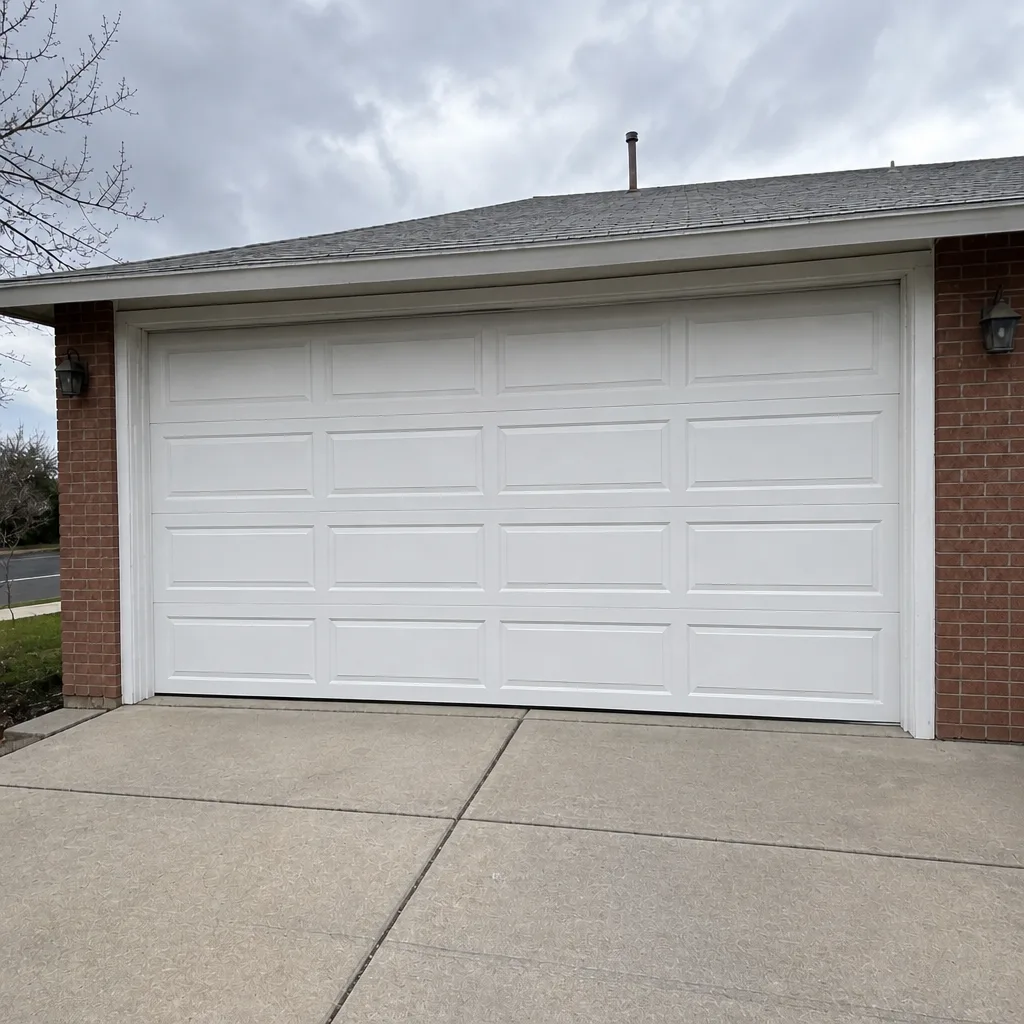
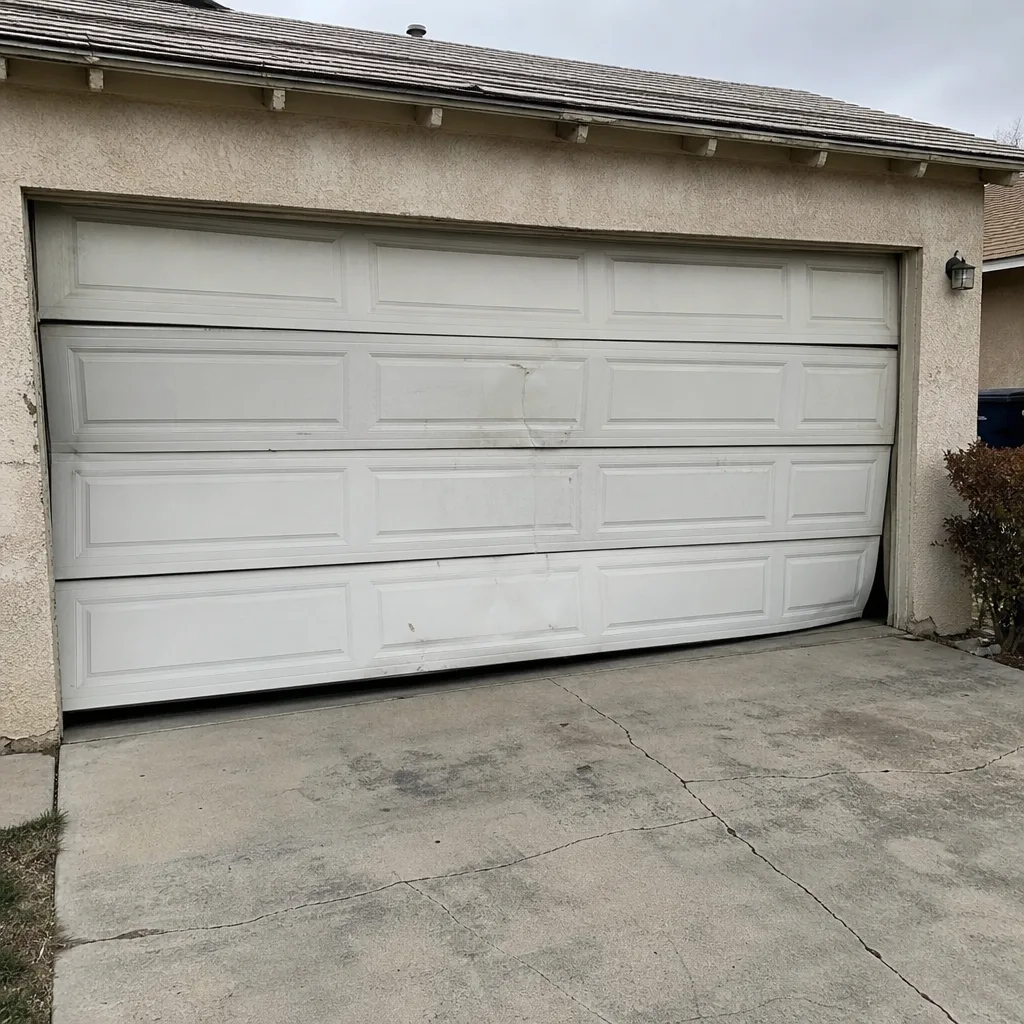
See the difference
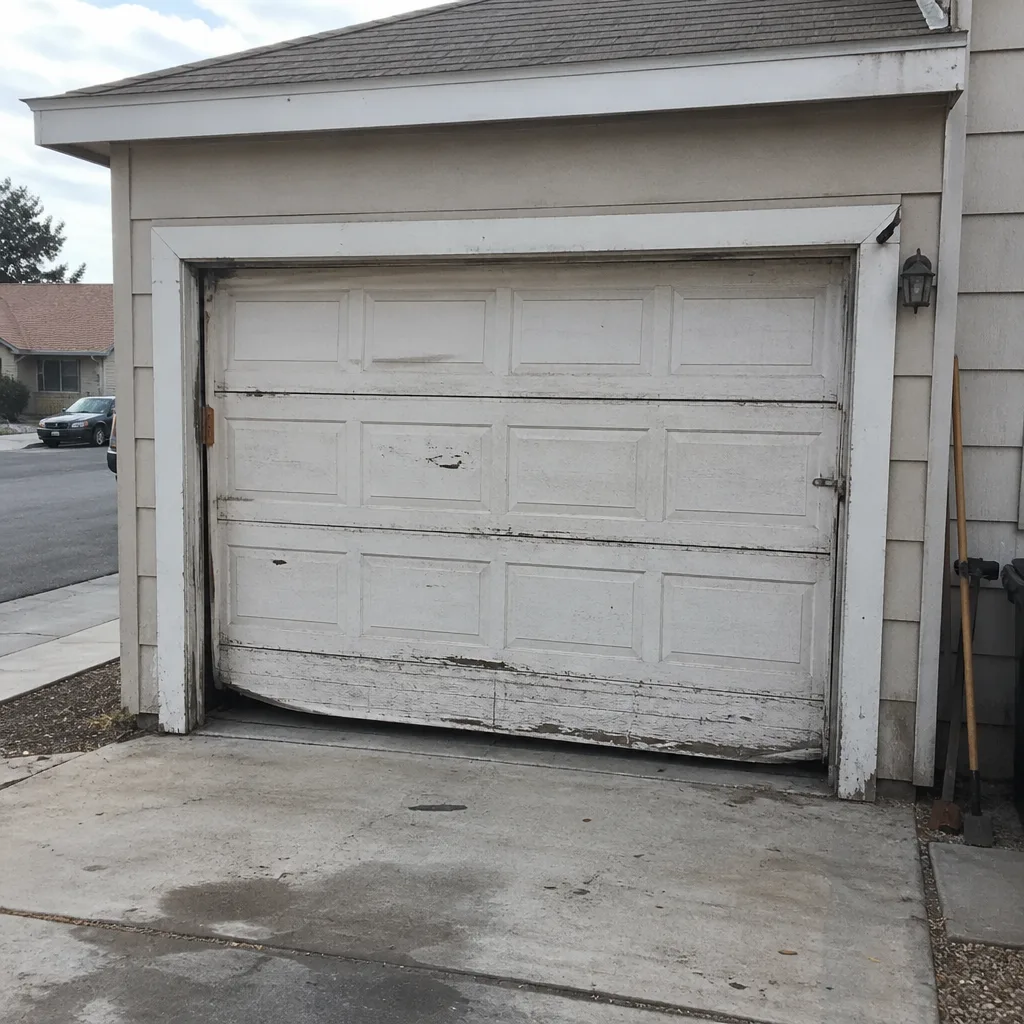 Before
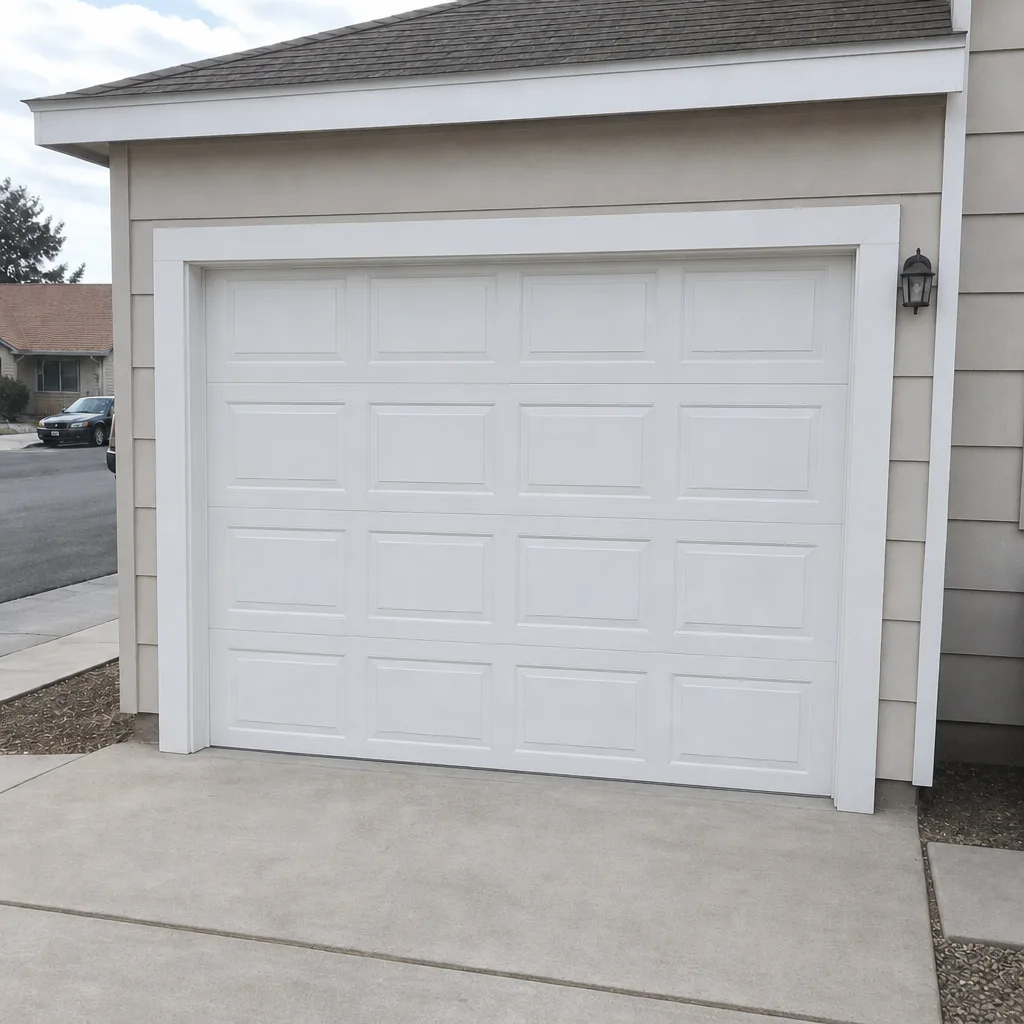 After
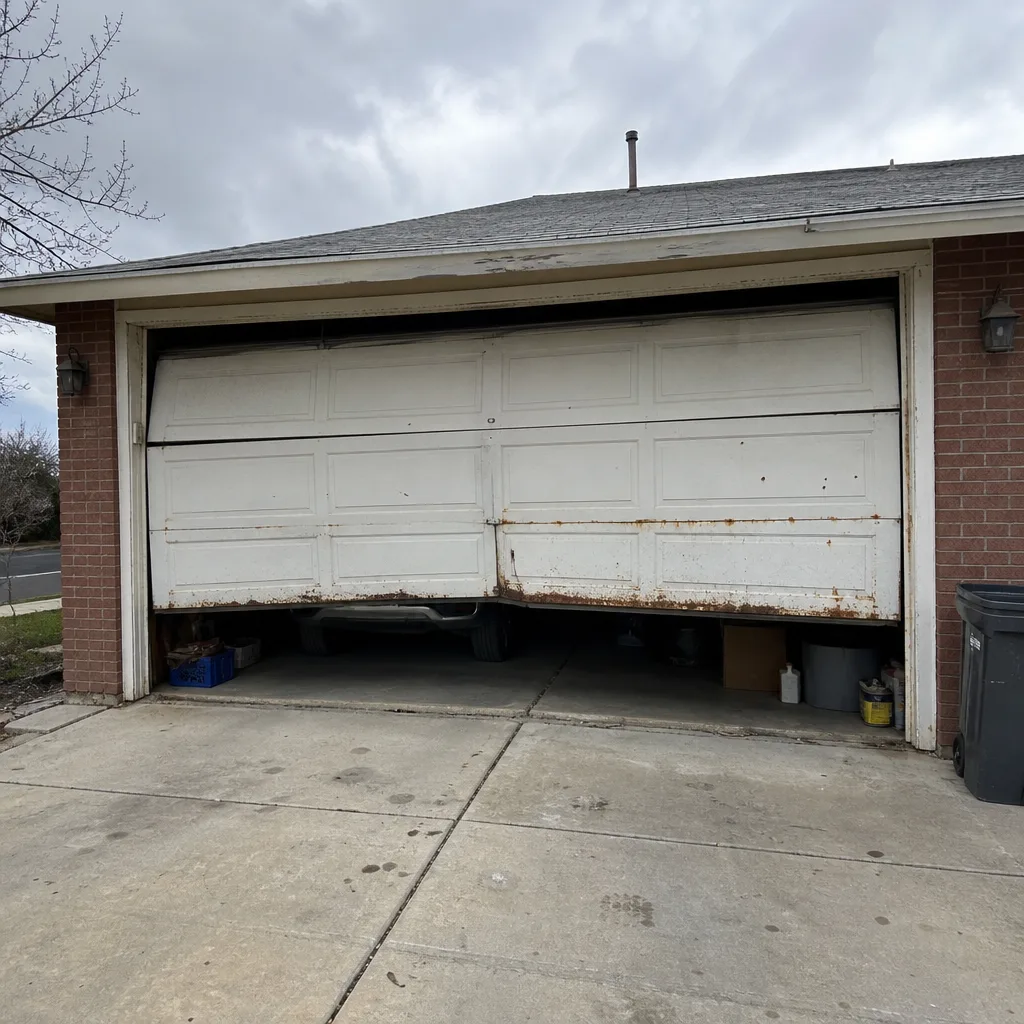 Before
 After
 Before
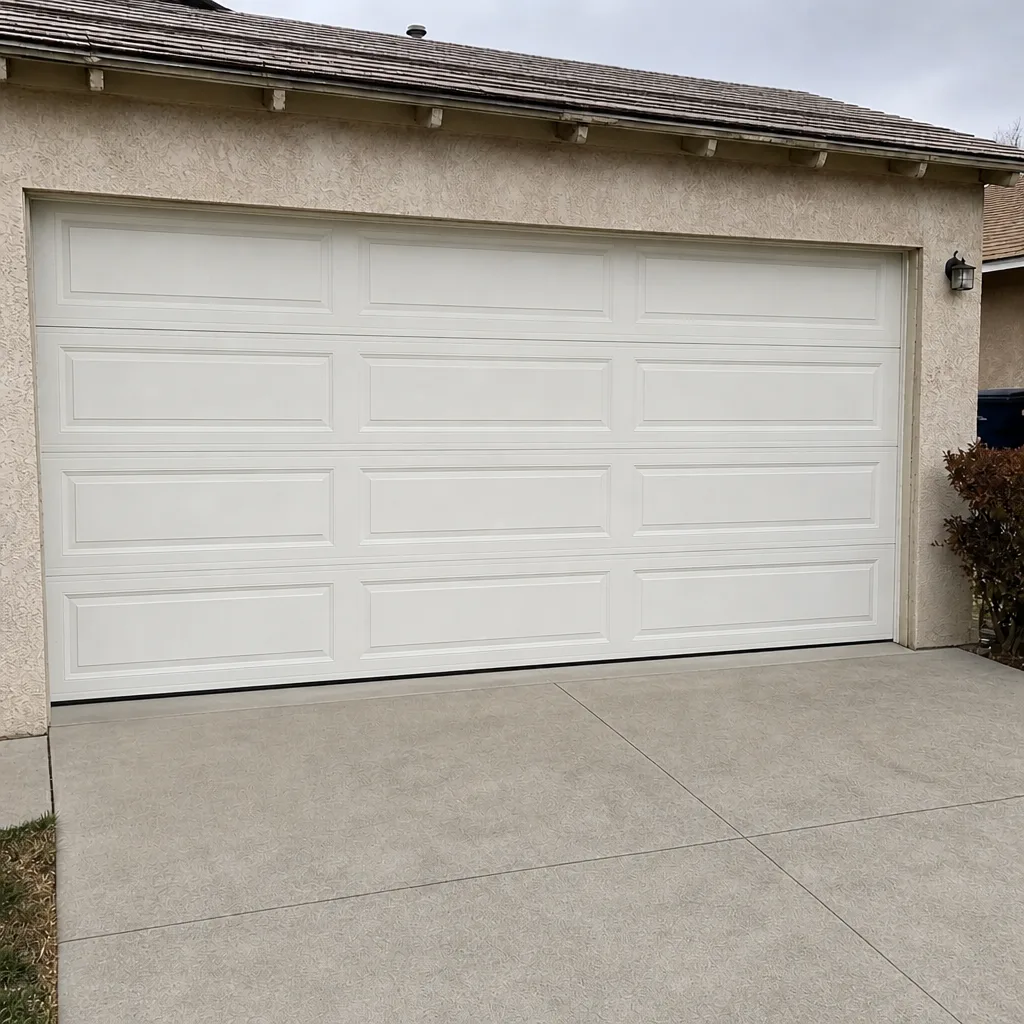 After
When to Call a Professional
Call a professional the moment the door behaves unpredictably – reversing before closing, stopping partway, or feeling heavy to lift. Those symptoms point to the spring or balance system, and the risk of continuing to run the door is real: the opener takes damage, the cables can fail, and the door can come down hard. Call immediately if you see a broken spring or a slack cable. Call for any door that won’t close at all, since that’s a security issue for the home. For everything else – grinding, squeaking, intermittent remotes, worn weatherstripping – a scheduled visit within the week is fine. Mainspring Garage Door Co. Whitney offers free estimates in Whitney – call (844) 797-9248. Our technicians have up to 10 years of experience, they arrive with the parts already on the truck, and every repair is backed by the 90-Day Done Right Promise in writing.
Frequently Asked Questions
In most cases, a door that reverses before closing has a spring that has lost tension, not a sensor problem. The opener hits its force limit because the door is heavier than it should be, and it reverses on its safety setting. Check by disconnecting the opener and lifting the door by hand – if it’s heavy, the spring is the issue. If it lifts easily, check the safety sensors for alignment. Call (844) 797-9248 for an exact quote on a spring repair – estimates are free.
No. Torsion spring replacement is one of the few garage door repairs that genuinely isn’t safe to do as a homeowner. The springs are under extreme tension in every position, and releasing that tension wrong causes serious injury. This is a job for a trained technician with proper winding bars and the right springs for your door. We’ve seen too many injuries from DIY attempts to recommend it to anyone.
Cold morning failures almost always point to a spring that’s near the end of its tension. The metal contracts slightly overnight, the door gets heavier, and the opener that barely worked in the afternoon can’t lift it in the morning. That pattern will worsen and eventually fail every time. It’s worth a diagnostic visit before the opener takes damage. Call (844) 797-9248 for a free estimate – we’ll tell you honestly whether a repair can wait.
Spring replacement typically runs somewhere in the $200-$400 range for a standard residential door, depending on the number of springs, the door size, and the brand. We quote flat before any work starts, so the number on the phone is the number on the bill. The 90-Day Done Right Promise covers the work in writing, and current offer of $50 off any repair over $250 applies. Call (844) 797-9248 for an exact quote on your door – estimates are free.
No. The flat price is stated and agreed before any work begins. If the technician finds a second problem while on site, they’ll explain it, quote it separately, and get your approval before doing anything. The bill matches the quote. That’s the whole point of the no-surprises policy, and it applies to every job we run in Whitney.
If the door still opens and closes fully and noisily – but reliably – it can usually wait a week for a scheduled visit. If it reverses, stops partway, feels heavy by hand, or has a visibly broken spring or slack cable, it needs same-day attention. A door that won’t close at all is a security issue and needs an emergency call. When in doubt, call and describe what the door is doing. We’d rather help you sort out an emergency from a routine repair than have you wait on a problem that’s getting worse. The line is live 24/7, and the number is (844) 797-9248.
The Bottom Line
The most important troubleshooting rule is to test the door before you test the opener. Disconnect the opener, try lifting the door by hand, and follow the force chain from spring to track to opener. The symptom you notice is almost never the part that failed – it’s the part downstream of the failure. Springs cause most problems. Openers get blamed for most of them. Once you can locate the symptom on the chain, you’ll know whether the door can wait a week or needs someone today. Mainspring Garage Door Co. Whitney has been answering that call for Whitney homeowners for over 42 years, with flat pricing, background-checked technicians, and a 90-Day Done Right Promise on every job. Call (844) 797-9248 for a free estimate, and we’ll sort out the symptom from the source.
Written by the team at Mainspring Garage Door Co. Whitney.