
Last updated November 17, 2026
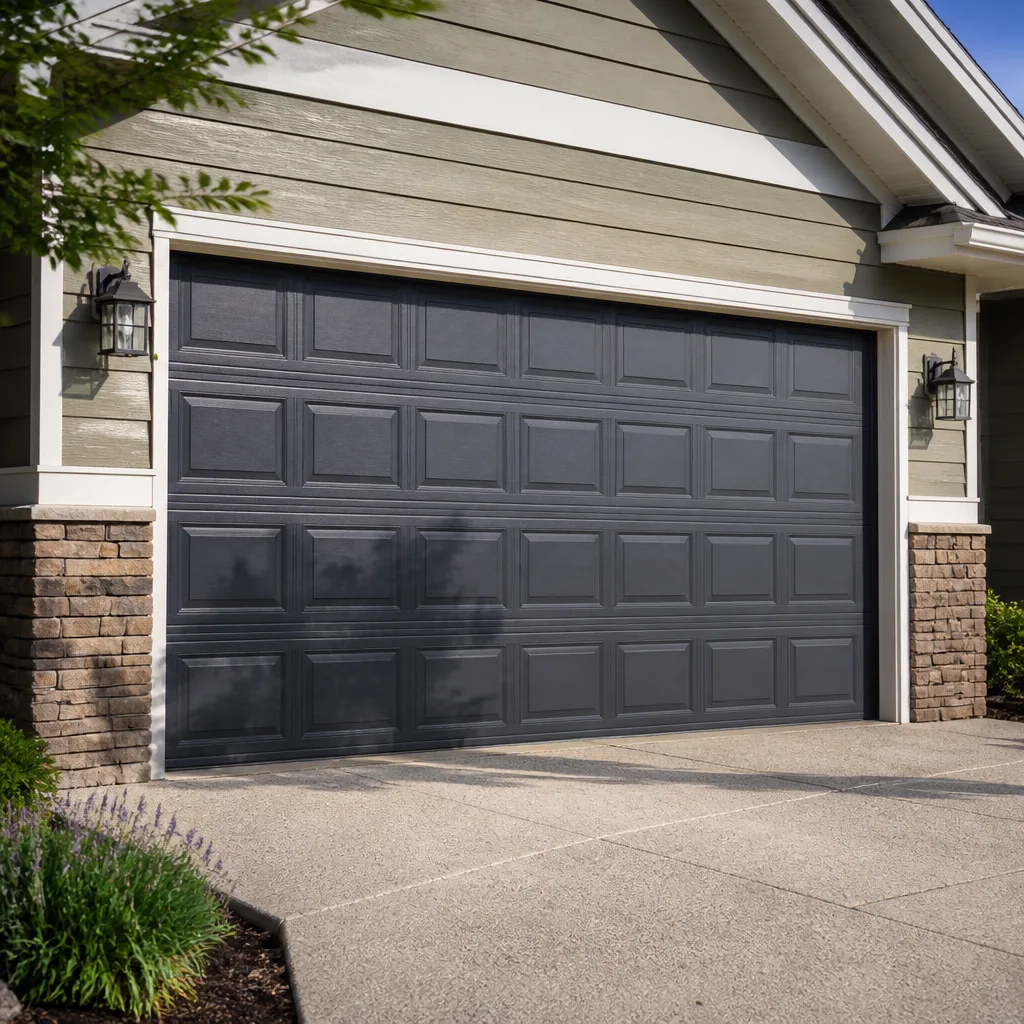 Raised-panel steel
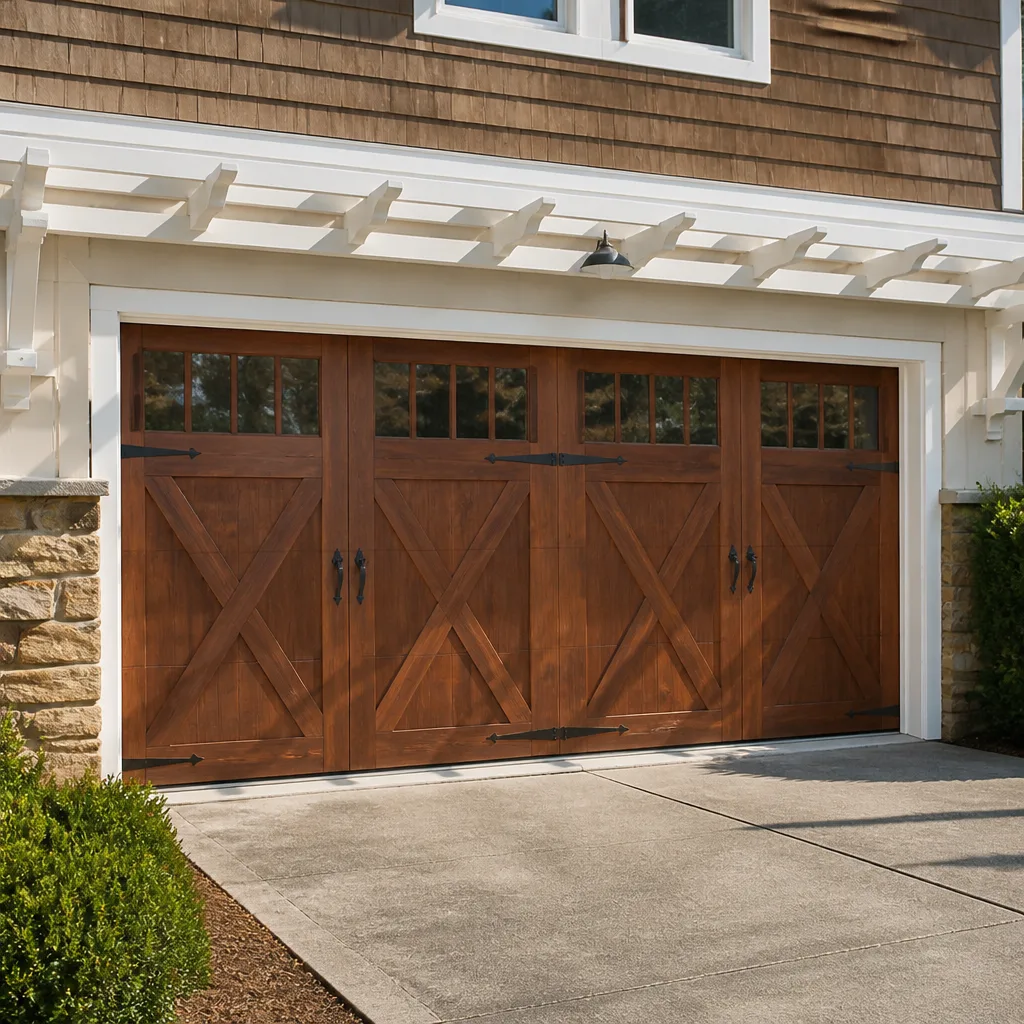 Carriage house
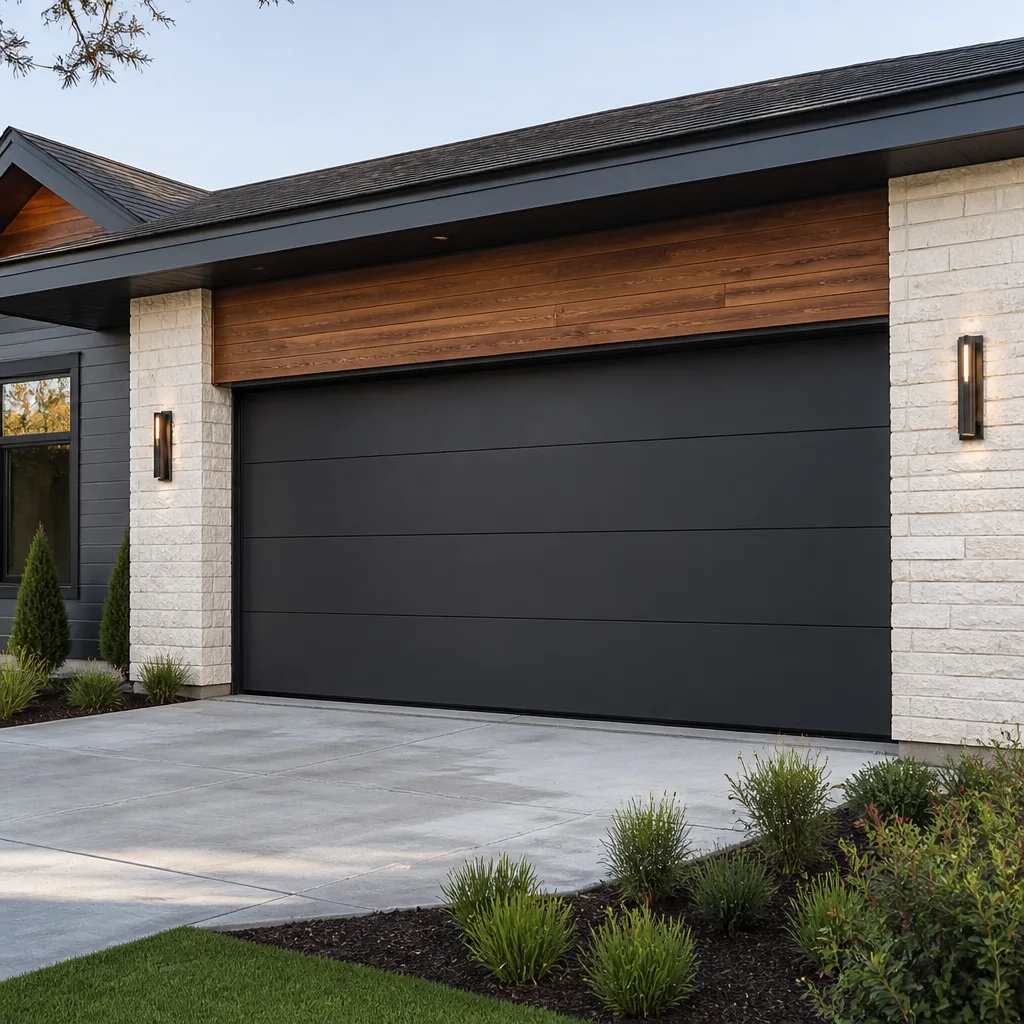 Modern flush
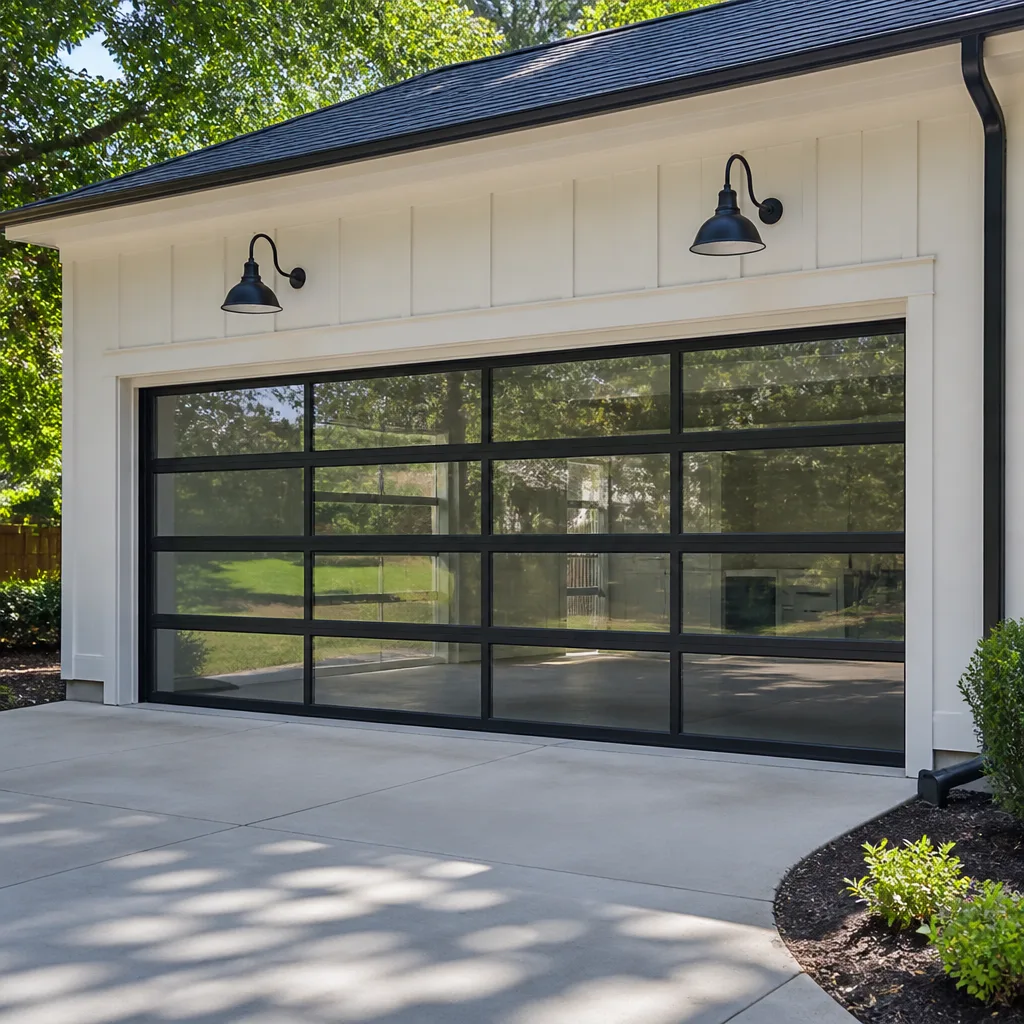 Full-view glass
 LiftMaster openers
 Chamberlain openers
Full 25-point door and opener safety check with every visit - springs, cables, rollers, tracks, and your LiftMaster or Chamberlain opener included
You get a price before we start. It does not change when the pro arrives.
Get your free estimateHow Long Does Emergency Garage Door Take? Timelines and What to Expect
A “90-minute response time” guarantee means a truck arrives in 90 minutes. It says nothing about whether the right spring is on that truck, and that single detail decides whether your repair takes 45 minutes or gets rescheduled for tomorrow morning. Response time and repair time are two different numbers, and most emergency service promises only cover the first one. In this guide we break the emergency timeline into its three separate phases, explain what controls each one, and show what a realistic night looks like when a torsion spring lets go at 11 p.m. in Whitney. By the end you’ll know exactly what to ask when you call, and what to expect when the tech pulls into your driveway.
Quick Answer
Most emergency garage door repairs take 60 to 120 minutes of actual work once a technician arrives, with broken torsion springs and snapped cables at the faster end and opener electronics at the slower end. The response time (how long until a truck reaches you) is a separate number from the repair time, and you should ask for both when you call. In the Whitney area, a same-night visit with the right parts on board is the normal outcome for spring, cable, and roller failures because those components are standard stock.
Styles & brands we work with
- Raised-panel steel
- Carriage house
- Modern flush
- Full-view glass
- LiftMaster openers
- Chamberlain openers
Table of Contents
- The Three Phases of an Emergency Call
- Phase One: Dispatch and Response Time
- Phase Two: Diagnosis Time on Site
- Phase Three: Repair Time by Failure Type
- What “Stocked Truck” Actually Means
- Jobs Finished in One Visit vs. a Return Trip
- Overnight Emergencies: What Can Be Done in the Dark
- Whitney Logistics and After-Hours Parts Reality
The Three Phases of an Emergency Call
When you call for emergency service, three clocks start at different times. Homeowners who understand this tend to have a much smoother night, because they can separate “why isn’t anyone here yet” from “why is this taking so long to fix.”
Phase one is dispatch. That’s the window between your call and a technician rolling up to your house. It’s controlled by how busy the night is, how far the nearest available tech is from your address, and whether the dispatcher can pair your problem with a tech who has the right parts already loaded.
Phase two is diagnosis. Once on site, a good technician spends 10 to 20 minutes confirming what actually failed. A door that won’t close isn’t always a broken spring. It could be a misaligned safety sensor, a stripped gear in the opener, a bent track, or a snapped cable. Diagnosis is where experience pays off, because the wrong guess costs you a second visit.
Phase three is repair. This is where the number most homeowners actually care about lives. It runs from 30 minutes for a roller swap to well over two hours for a custom-panel replacement that needs a return trip. A broken torsion spring on a standard double door often takes 45 to 60 minutes of hands-on work once the old spring is off.
The key insight: each phase has its own controls. Faster dispatch doesn’t shorten diagnosis. Better diagnosis doesn’t shorten repair. When you call, ask about all three, because a company that only quotes response time is telling you one third of the story. Our garage door repair in Whitney page covers the full scope of what we handle on emergency calls.
Phase One: Dispatch and Response Time
Dispatch time is the number every emergency service advertises, and it’s the easiest one to overpromise. A realistic range for a Whitney address is 45 to 120 minutes for a same-night call, depending on time of day and how many other emergencies are on the board. Weekday evenings between 6 and 9 p.m. are the busiest window because that’s when most people get home and try the door.
Here’s what actually moves dispatch time up or down:
- Location of the nearest available tech. Whitney sits just south of Las Vegas and east of Henderson, which means a tech working the east valley may be 20 minutes away while one out of the southwest is 45 minutes out. Dispatch time is a distance problem more than a scheduling problem.
- Time of night. Calls between midnight and 5 a.m. usually get faster dispatch because there’s less volume, not slower.
- Weather. A summer monsoon lightning storm in the Las Vegas Valley can slow a driver crossing the 215 or dealing with flooded surface streets in the eastern part of the valley.
- Whether the job needs a permit or gate clearance. Gated communities in Whitney and the surrounding east valley areas sometimes require a gate code or call-box approval, which can add 5 to 10 minutes.
- How clearly you describe the failure. “The door won’t close and the light is flashing” points a dispatcher toward a sensor or opener issue. “The door fell” points toward a spring or cable. Clear descriptions get matched with the right tech the first time.
Ask directly: “What is your typical response time to my zip code tonight, and is the tech coming with the parts for a broken spring already on the truck?” That combination of questions is the one that separates a real emergency service from an answering service.
Phase Two: Diagnosis Time on Site
A good on-site diagnosis takes 10 to 20 minutes. It doesn’t feel like much, but skipping it or rushing it is where second visits come from. A technician who jumps to conclusions before confirming the failure will often arrive at the wrong part, and you’ll be waiting until morning.
Here’s what a proper diagnosis looks like, in the order a trained tech usually runs it:
- Ask what happened and when. A single loud bang followed by a door that won’t move usually points to a torsion spring. A door that drifts down on its own often means a cable or a broken spring on one side.
- Inspect the torsion springs and their mounting hardware. Springs are color-coded by wire gauge and cycle count, and matching the old spring to the new one is the single most important step.
- Check the lifting cables for frays, kinks, or separation from the drum. A snapped cable can whip and is genuinely dangerous to handle without training.
- Test the safety reversing sensors at the bottom of each track. A misaligned sensor is the most common reason a door won’t close, and it’s a 5-minute fix.
- Inspect the opener head, rail, and gear assembly. A stripped nylon gear in a Genie or LiftMaster unit is a common overnight failure.
- Check the rollers and hinges for wear and lubrication. Worn nylon rollers can bind a door and mimic a bigger problem.
- Confirm the balance. Disconnect the opener and lift the door by hand. A properly balanced door stays where you leave it. One that falls means the springs are mis-tuned, which is a professional-only adjustment.
If the tech tells you they need to “have a look inside” and then disappears for 40 minutes, that’s a sign of either a very complex job or one that isn’t well-organized. A clear diagnosis is quick when the tech knows what to check and in what order.
Phase Three: Repair Time by Failure Type
Repair time is the number homeowners really want, and it varies more than the other two phases. Here are the realistic windows we see on Whitney emergency calls, measured from the moment the tech starts work to the moment the door is tested and running:
| Failure | Typical repair time | Finished in one visit? |
|---|---|---|
| Broken torsion spring (single door) | 45 to 60 minutes | Usually yes |
| Broken torsion spring (double door, pair) | 60 to 90 minutes | Usually yes |
| Snapped lift cable | 45 to 75 minutes | Usually yes |
| Broken roller or hinge | 20 to 40 minutes | Yes |
| Misaligned safety sensor | 10 to 20 minutes | Yes |
| Stripped opener gear (common brand) | 45 to 75 minutes | Usually yes |
| Bent track or panel | 30 to 90 minutes | Often yes |
| Custom-size panel replacement | 20 to 30 minutes to secure, return trip to replace | No |
| Opener logic board or specialty parts | 20 to 30 minutes to secure, return trip to replace | No |
Notice that springs and cables dominate the “finished in one visit” column. That’s not a coincidence. They’re the most common overnight failures and the most standardized repairs, which is exactly why a well-stocked truck matters. If you want a deeper look at how a garage door opener in Whitney gets evaluated when the failure is electronic rather than mechanical, that page walks through it.
One note on timing that surprises homeowners: a single broken spring on a two-spring door usually means the second spring is at or near the same fatigue stage. A tech who replaces only one may be back next month. Ask whether replacing the pair is the right move for your door. It’s almost always cheaper over five years.
What “Stocked Truck” Actually Means
“Stocked truck” is used loosely by a lot of companies. In practice there are three levels of stock, and knowing which one is coming to your house tells you a lot about whether the repair happens tonight.
- Level one: basic hardware. Rollers, hinges, sensor brackets, lubricant, and a handful of springs. Handles the minor failures, but if your door has a nonstandard spring, you’re waiting until morning.
- Level two: standard springs and cables. A range of torsion spring gauges and lengths, a set of lift cables, and common opener gears. Covers roughly 85 percent of overnight calls. This is what most serious emergency services aim for.
- Level three: brand-specific opener parts. Common gears and boards for major brands, plus standard panel sizes. Rarer, but the services that carry this level finish more jobs in one visit.
Here’s what to ask when you call to confirm the tech is likely to have the right parts:
- “What brand and model of opener do I have?” (If you don’t know, the dispatcher can often identify from a photo or a description.)
- “Do you carry the common parts for that brand on the truck, or do you order them?”
- “For a broken torsion spring, what’s the range of spring sizes on the truck tonight?”
- “If the parts aren’t on the truck, how long to get them, and what’s the plan to secure the door tonight?”
Our technicians arrive with springs, cables, and common opener parts already on the truck as standard, and that’s why most emergency jobs are finished in a single visit. When we can’t finish a job because a part is genuinely nonstock, we tell you on the diagnosis call and quote the return trip before you agree to anything.
Jobs Finished in One Visit vs. a Return Trip
A single-visit repair is one where the tech arrives, diagnoses, has the right part, and leaves with the door running. A return-trip job usually isn’t a failure of the company; it’s a reflection of what’s available at 11 p.m. Here’s the split:
Usually finished in one visit:
- Broken torsion or extension spring on a standard-width door
- Snapped lift cable
- Broken roller, hinge, or bearing plate
- Safety sensor misalignment or failure
- Standard opener gear replacement (Genie, LiftMaster, Chamberlain, Craftsman)
- Track straightened or re-anchored where the damage is minor
Usually finished with a temporary fix and a scheduled return:
- Custom or nonstandard door panel replacement (Clopay and Amarr custom orders are made to door dimensions and rarely sit in stock)
- Specialty opener logic board or control board for an older or unusual unit
- Sectional door panel damage from a vehicle strike, when the affected panel needs to be manufactured
- Full door replacement after structural damage, which is a scheduled install
For the second group, a proper emergency response looks like this: the tech secures the door in the closed position, disconnects the opener so it can’t be accidentally operated, documents the damage with photos, and gives you a written quote with a scheduled return window. Our garage door installation in Whitney page covers the panel and door replacement side in more depth, and our garage door repair in Whitney page covers the emergency mechanics side.
Overnight Emergencies: What Can Be Done in the Dark
If your door fails at 2 a.m., some things can be done safely in the dark and some genuinely cannot. The distinction matters most for older doors and doors with torsion springs, which are under very high tension and have caused serious injuries to homeowners who tried to work on them without training.
What can typically be done overnight:
- Securing the door in the closed position so the house is protected
- Disconnecting the opener arm from the carriage so the door can’t be accidentally powered
- Placing a visual marker or brace against the door for reinforcement
- Inspecting from the ground with a flashlight to confirm whether the failure is mechanical or electronic
- Confirming the door will not fall if left alone
What should wait for daylight or parts:
- Any work involving the torsion springs or cables. These carry the full weight of the door and can cause serious injury if handled without proper winding bars and training. This is not a homeowner task, ever.
- Replacing a broken panel or a specialty part that needs to be ordered
- Adjusting the spring balance on an older door where components may have rusted or frozen
If the door is stuck open and your house is exposed, that’s a genuine emergency, not a convenience. Call right away rather than waiting for morning. Our team answers live, including nights, weekends, and holidays, because we’ve seen far more damage from a door left open for six hours than from a spring that failed at 10 p.m. For a sense of who we are, start with the Mainspring Garage Door Co. Whitney home page.
Whitney Logistics and After-Hours Parts Reality
Where you live affects what can happen overnight. Whitney sits within the Las Vegas Valley, which means it’s close enough to regional distribution that standard parts are reachable quickly and far enough from a major metro that specialty parts take a real overnight run. Here’s what that means in practice.
Standard parts availability: Springs, cables, rollers, and common opener gears are typically stocked locally because this is a mature service market with a strong contractor base. A Whitney call at 9 p.m. for a broken standard spring usually has resolution available the same night.
Specialty parts reality: A custom-ordered Clopay or Amarr panel cut to a specific door size usually can’t be sourced overnight anywhere in the valley. Expect a one to three day turnaround for the part and a scheduled install after that. This is true even in a large metro; it’s a function of manufacturing lead time, not contractor readiness.
Geography in your favor: Whitney has good highway access east and southwest, which shortens drive times compared to outlying areas near Boulder City or the far northwest valley. In practice, most Whitney addresses are within a 30 to 60 minute drive for a tech already working the east valley.
Summer heat: Las Vegas Valley summer temperatures put extra stress on springs, cables, and opener gears. Late June through early September is the busiest season for overnight failures. If your door is over eight years old and you’re heading into summer, a tune-up before the crunch is a much cheaper phone call than an emergency repair after it.
We’d rather tell you honestly what can be done tonight than promise a same-night fix that isn’t possible. When we quote an emergency repair, the price is stated before any work begins, and it’s covered by our 90-Day Done Right Promise in writing. If the fix doesn’t hold, we come back. That’s the whole deal.
Common Mistakes to Avoid
- Asking only about response time. A “90-minute response” is phase one of three. Always ask for the typical repair time and whether the parts are on the truck. The second number is the one that decides whether the door works tonight.
- Forcing a door that won’t move. If the door is stuck or partially fallen and you force it open or closed, you can bend a panel or snap a cable, turning a $250 repair into a $900 door replacement.
- Not mentioning the door’s age or brand when you call. For an older Whitney home with a Genie or LiftMaster unit over 10 years old, parts availability changes significantly. Telling the dispatcher upfront saves a trip.
- Assuming overnight and daytime service are priced the same. After-hours rates are usually higher. Ask for the full quote including any after-hours premium before the tech is dispatched, not after the work is done.
- Letting the tech work without a written estimate. Even at 2 a.m., you should see the price in writing before the wrench comes out. A legitimate shop expects this.
- Trying to adjust the springs yourself after watching a video. Torsion springs carry hundreds of pounds of tension and cause serious injuries. This is one job where the answer is always “call a properly trained technician.”
- Ignoring a single broken spring on a two-spring door. The second spring is usually at the same fatigue stage. Replacing one and skipping the other often means a repeat call in 30 to 60 days.
See the difference
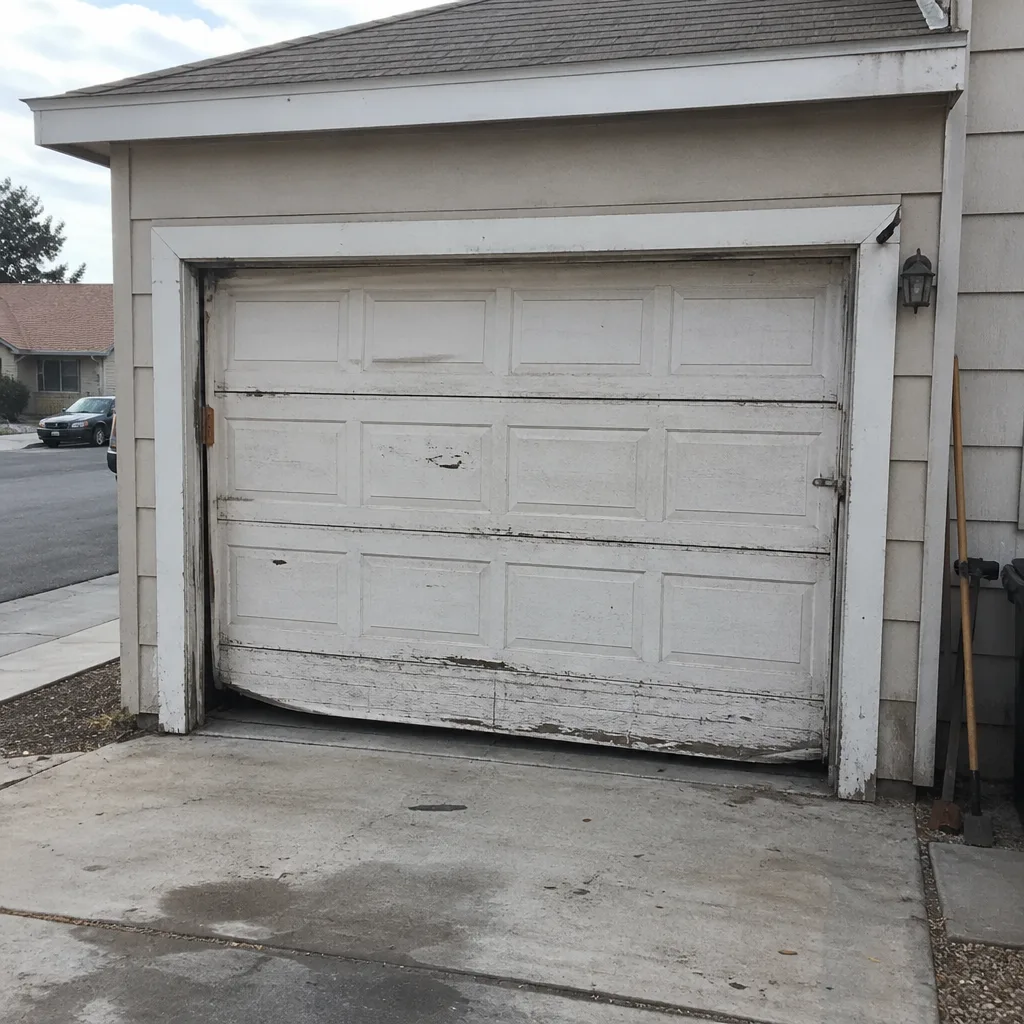 Before
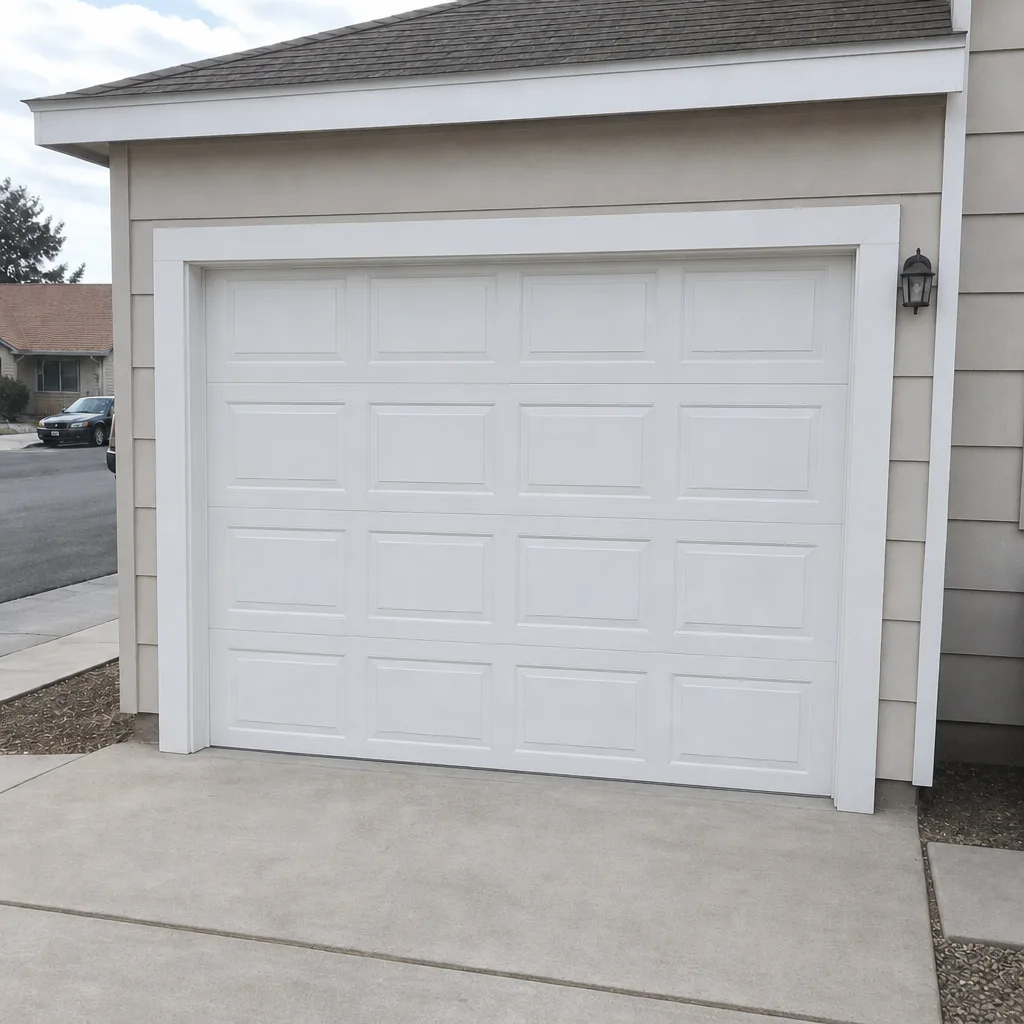 After
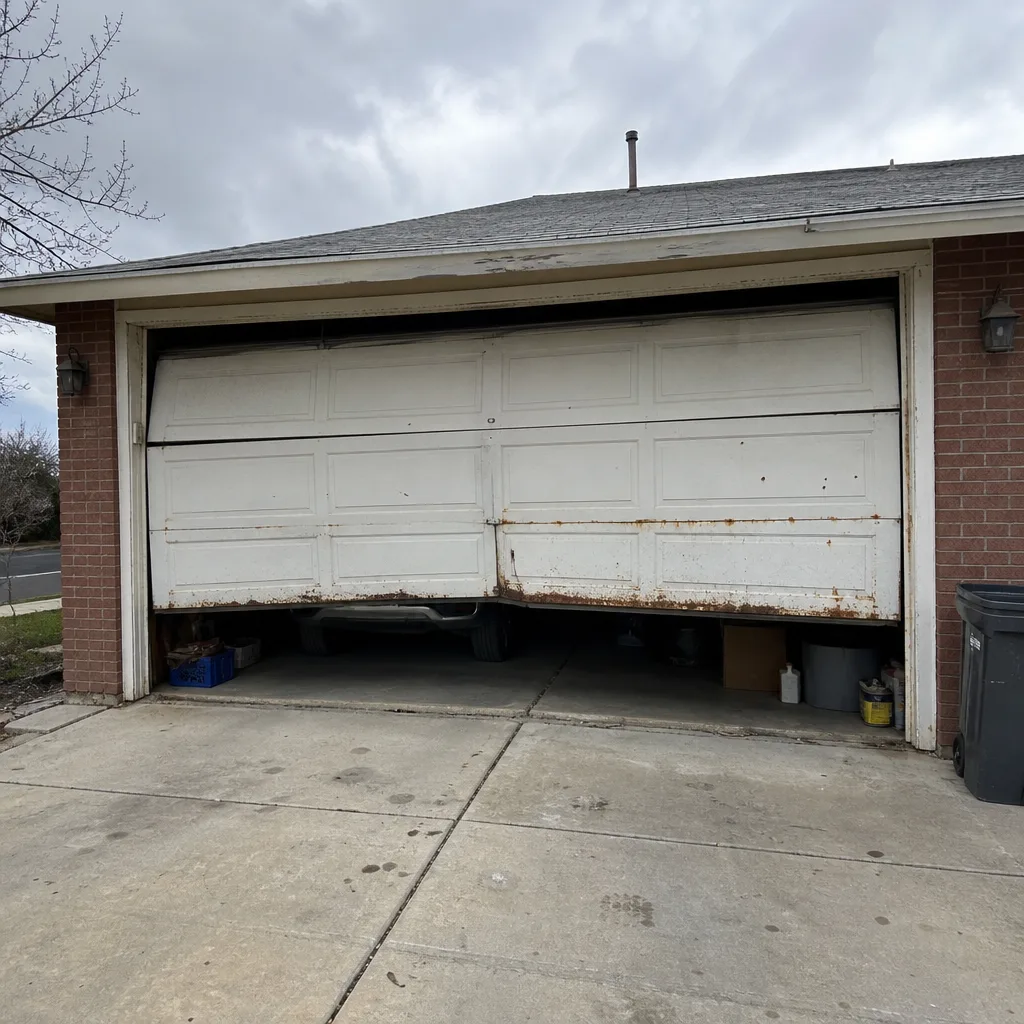 Before
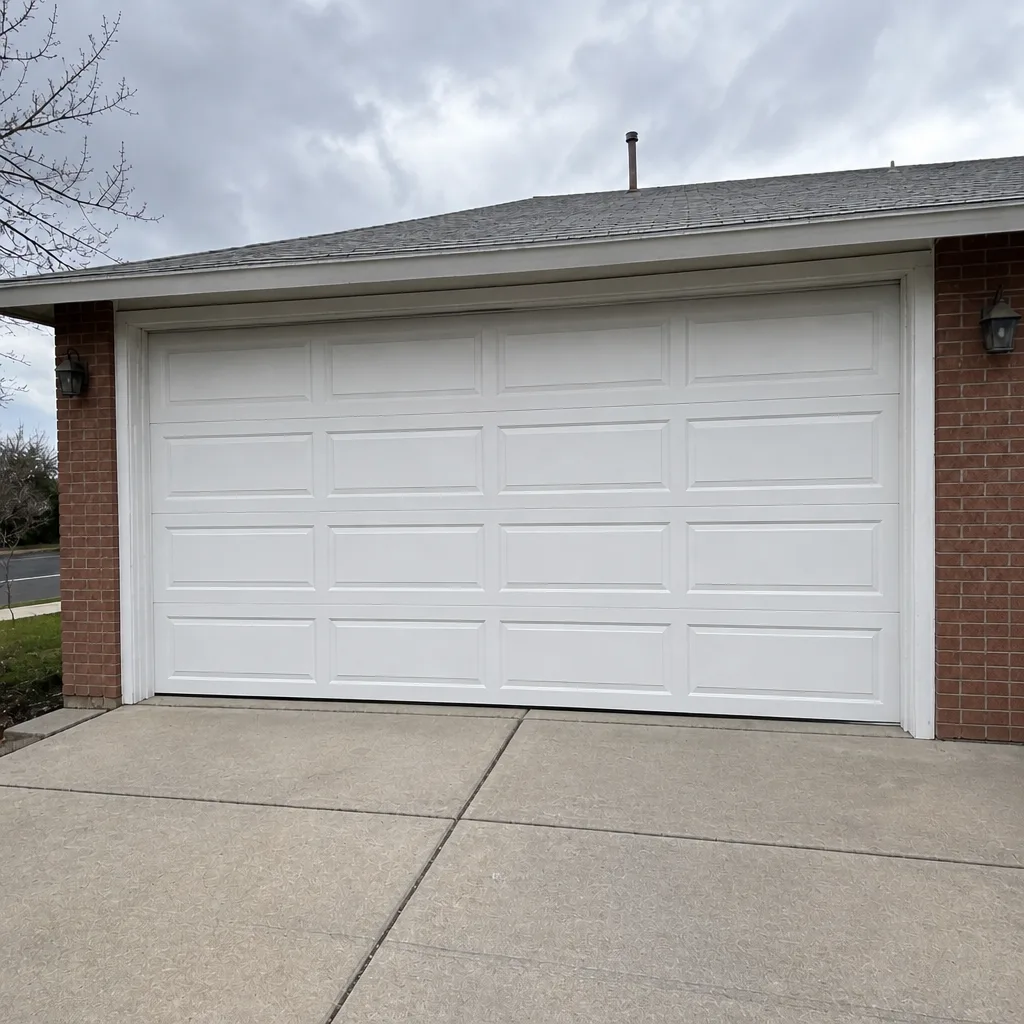 After
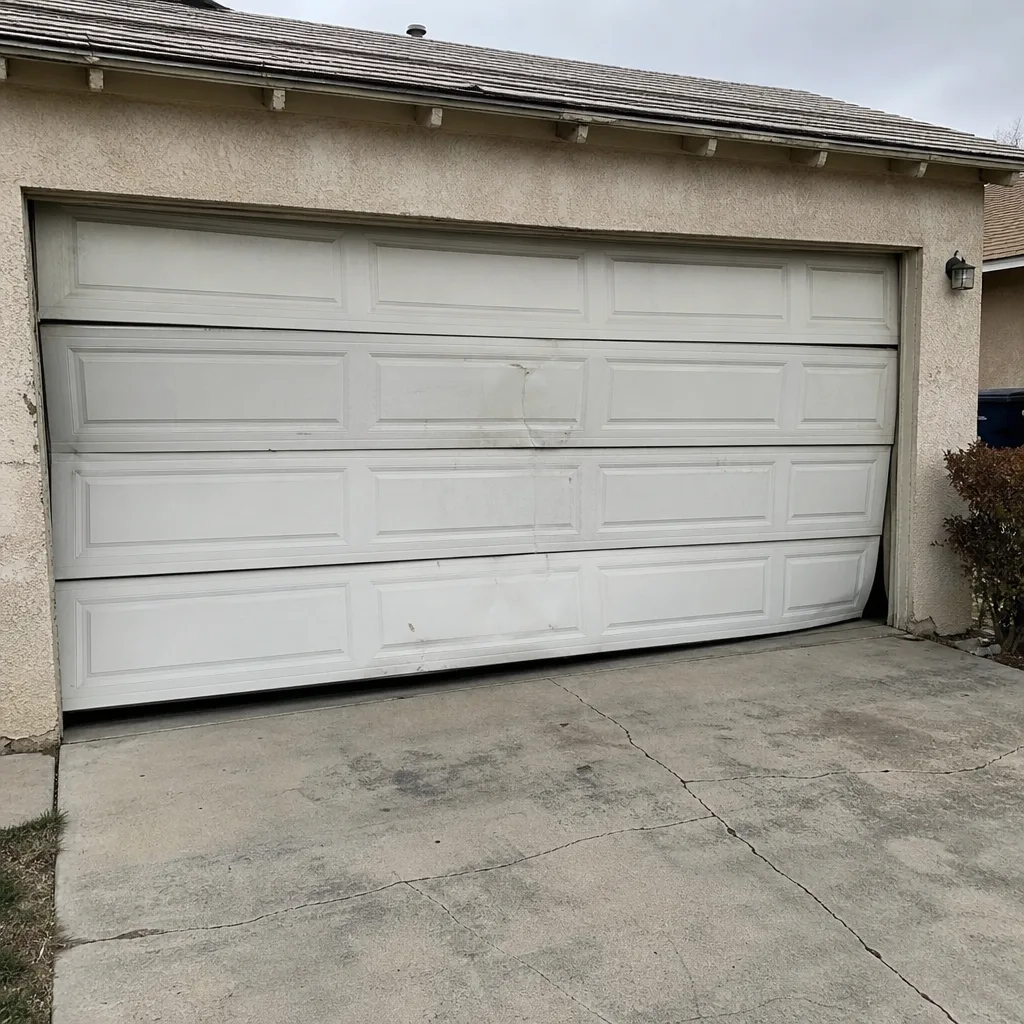 Before
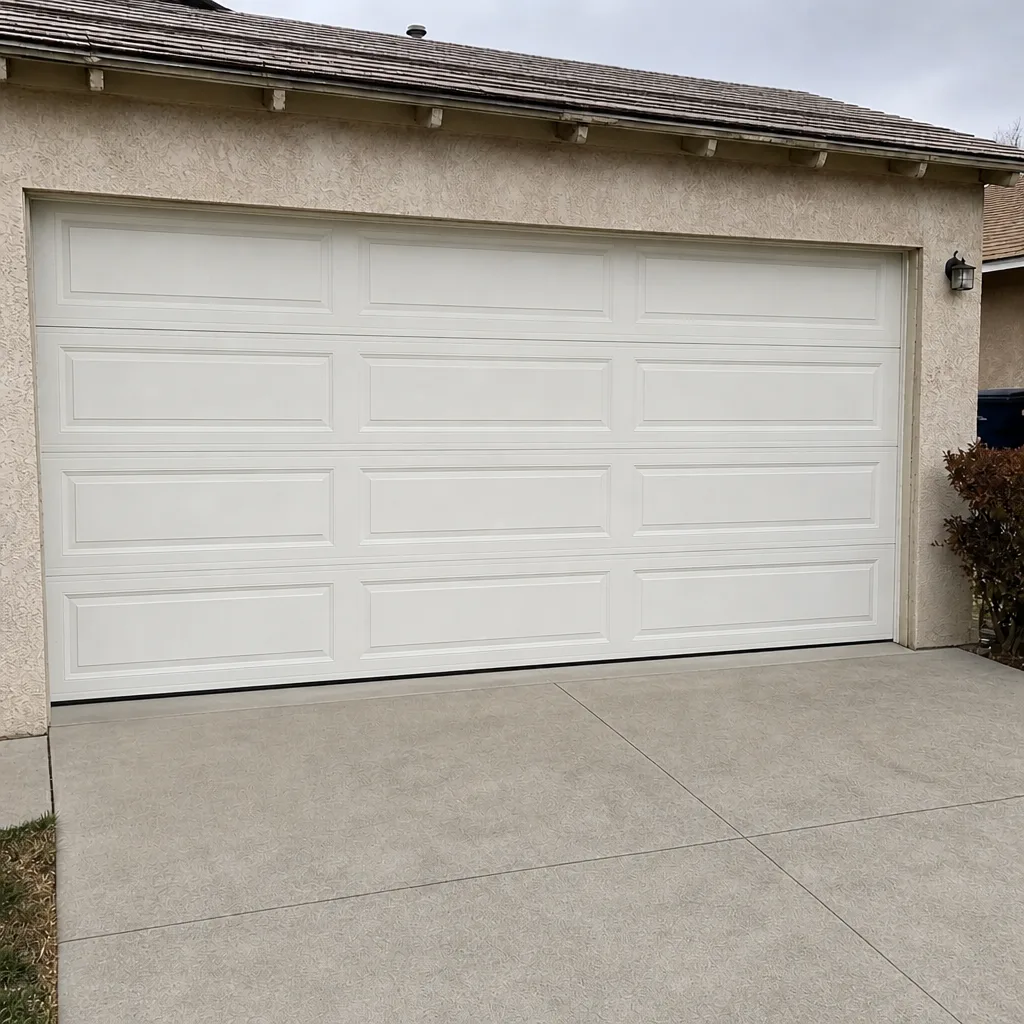 After
When to Call a Professional
Call a professional immediately if any of these are true: the door has fallen or is hanging unevenly, you hear a loud bang and the door won’t move, a cable has visibly snapped or is hanging loose, the door won’t close and the safety sensors won’t realign, the opener runs but the door doesn’t move, or the door has been left stuck open and your house is exposed. Each of these can lead to further damage or a real safety issue if left overnight. Springs and cables are genuinely dangerous to handle without training, and this is not a place to experiment. For everything else, a morning call is usually enough. Mainspring Garage Door Co. Whitney offers free estimates in Whitney – call (844) 797-9248 for a straight answer on what to expect tonight.
Frequently Asked Questions
Most emergency repairs take 60 to 120 minutes of on-site work once the technician arrives. Broken springs, snapped cables, and roller failures are at the faster end of that range because the parts are standard. Opener electronics and nonstandard parts run longer, and custom panels often need a scheduled return. Call (844) 797-9248 and we’ll give you a realistic range for your specific failure before we dispatch.
Usually, yes. Standard torsion and extension springs are stocked on the truck, so a Whitney-area call for a broken spring is typically finished the same night in roughly 45 to 90 minutes of work. If your door uses a nonstandard spring size, we’ll tell you on the call and quote a return trip rather than leaving you guessing. Estimates are free.
No. The price is quoted and agreed before any work starts. If the diagnosis reveals a different failure than expected, we stop, explain what changed, and give you a fresh written number before proceeding. The bill matches the quote. If a job ever isn’t done right, our 90-Day Done Right Promise means we come back in writing and at no charge.
Yes, and they are background-checked and trained to journeyman standards. We don’t send anyone to your home who hasn’t been vetted, and our team has technicians with up to 10 years of experience in the trade. That’s part of what “done right” means when you call.
Do not attempt to lift or force the door. Leave the door in whatever position it’s in, disconnect the opener if you can safely reach the manual release cord (only when the door is fully closed), and keep children and pets away from the door. If the door is stuck open and your home is exposed, call us and mention that immediately so the call is prioritized. For safety on the door itself, leave the springs and cables alone – they’re under too much tension to handle without proper tools.
After-hours calls can carry a premium, and we’ll tell you exactly what it is before we dispatch the tech. Ask for the full amount including any after-hours rate on the call, not after the work is done. Standing offers like our $50 Off Any Repair Over $250 and the permanent 5% senior and veteran discount still apply where they’re relevant.
The Bottom Line
Response time is the number everyone advertises, but repair time is the number that decides whether your door works tonight. Ask about all three phases – dispatch, diagnosis, and repair – and confirm whether the right parts are already on the truck. Standard spring and cable failures usually finish in a single visit; custom panels and specialty opener parts often need a scheduled return. Whitney’s location helps keep standard part availability good, and summer is the season to expect more overnight failures. If you’re facing an emergency tonight, we answer live around the clock, quote the price before work starts, and stand behind it for 90 days in writing.
Call (844) 797-9248 for a free estimate. We’ll tell you what to expect tonight, what it will cost, and whether we can finish it in one visit – and if the answer is that it needs to wait until morning for a part, we’ll say so.
Written by the team at Mainspring Garage Door Co. Whitney.