
Last updated November 17, 2026
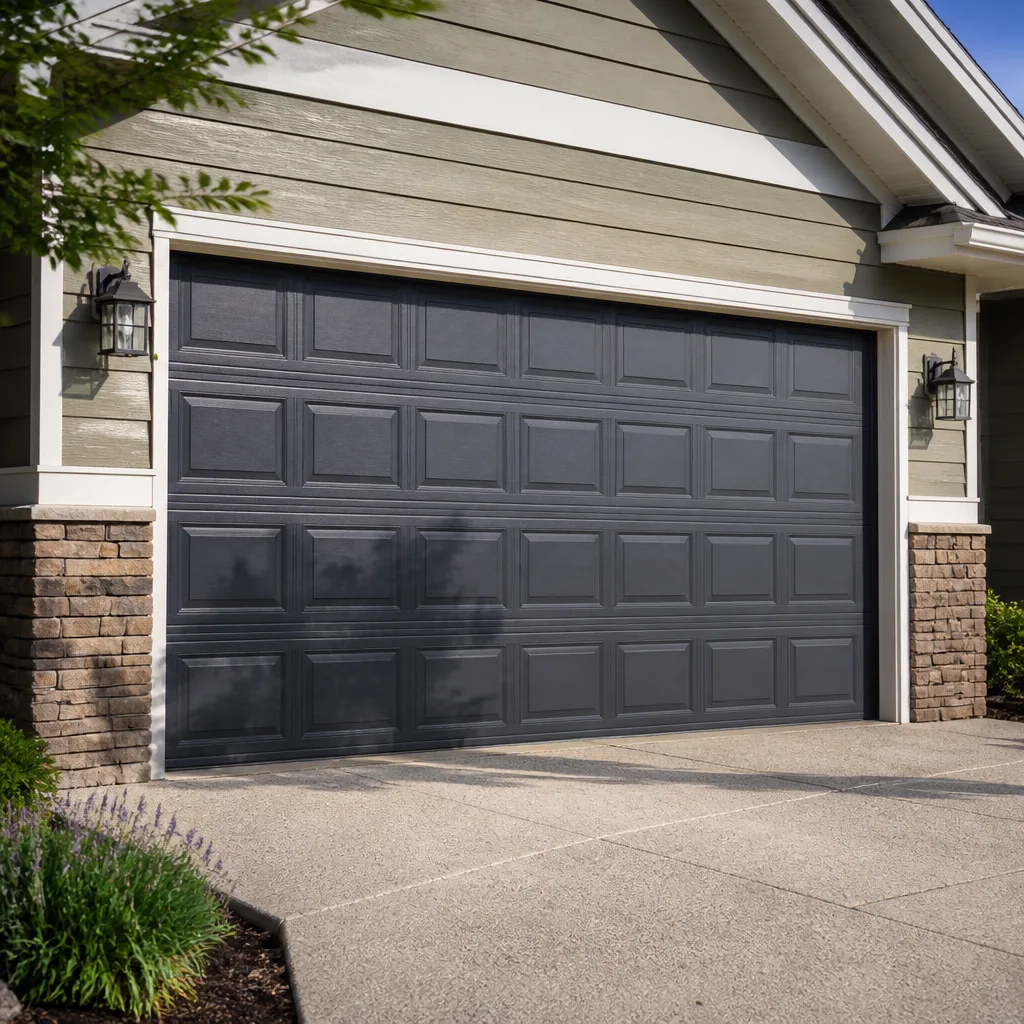 Raised-panel steel
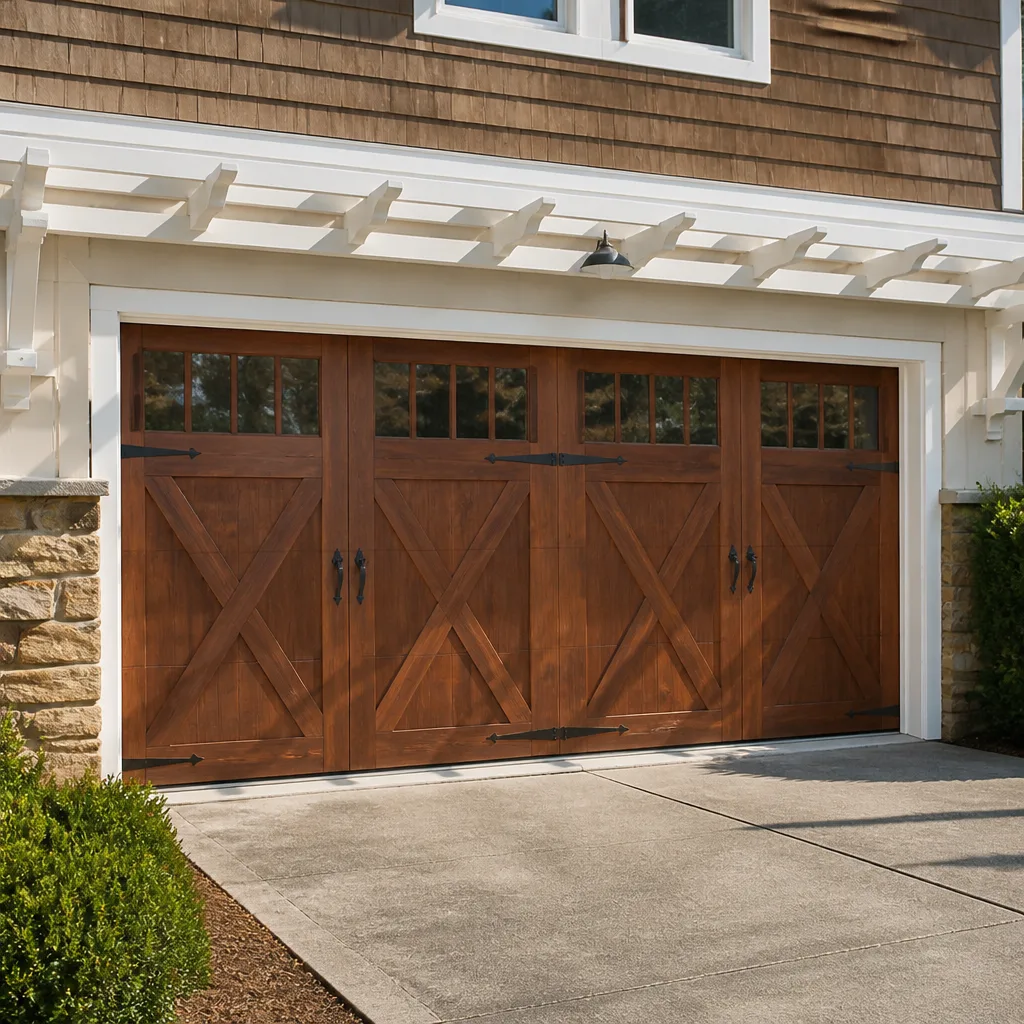 Carriage house
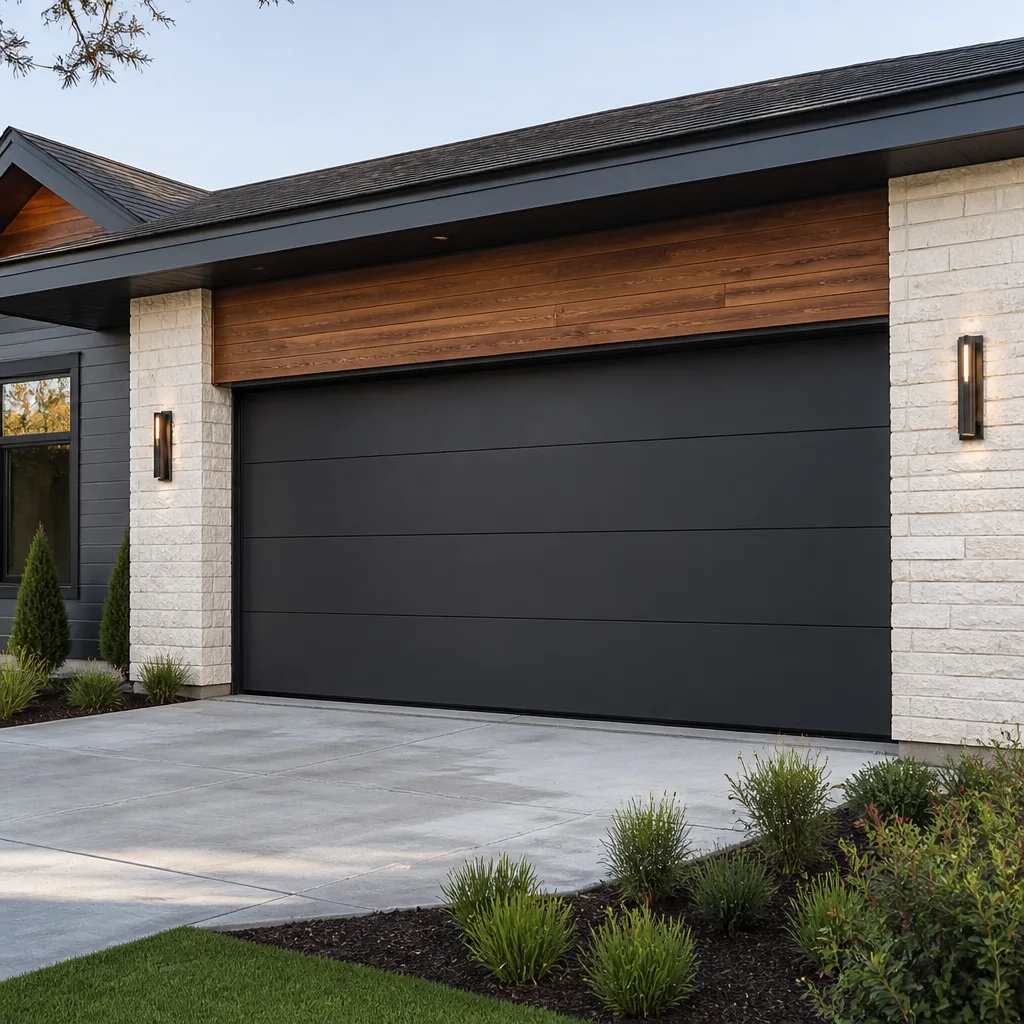 Modern flush
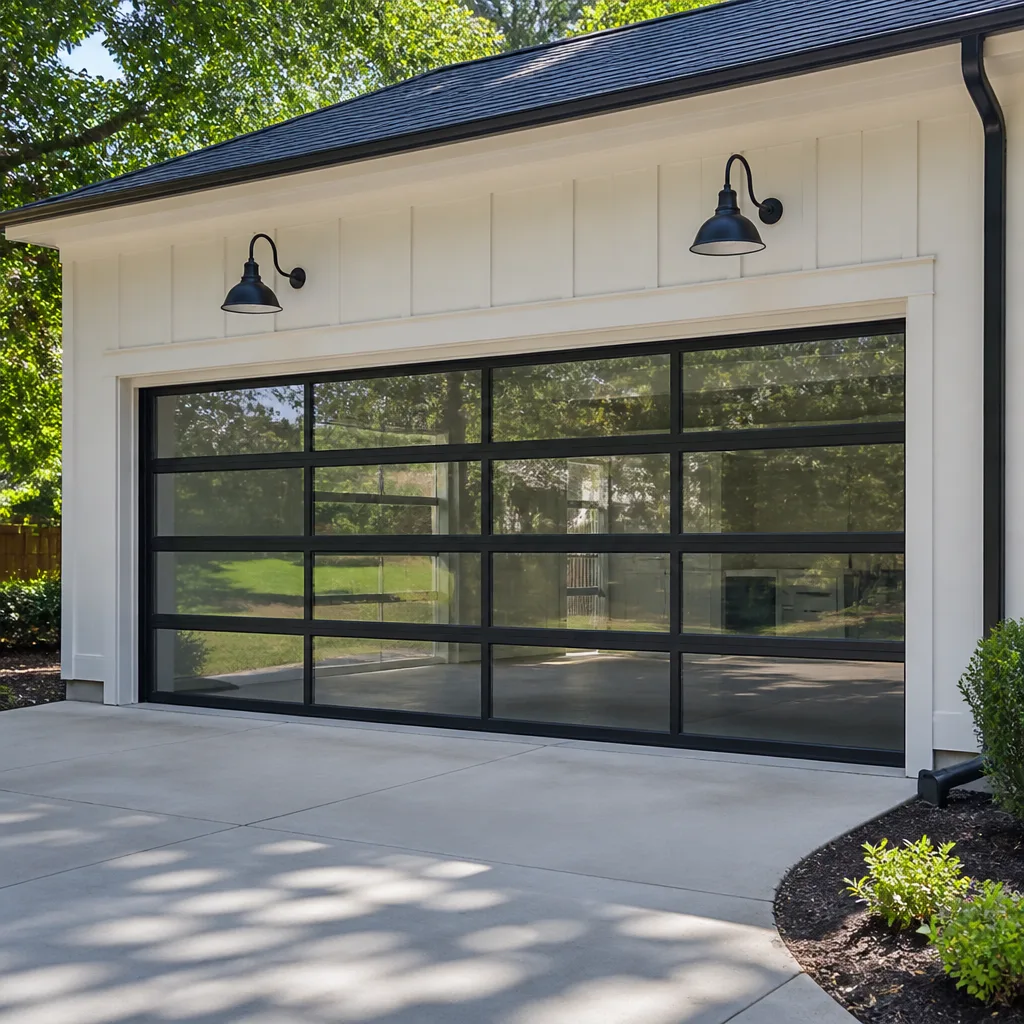 Full-view glass
 LiftMaster openers
 Chamberlain openers
Full 25-point door and opener safety check with every visit - springs, cables, rollers, tracks, and your LiftMaster or Chamberlain opener included
You get a price before we start. It does not change when the pro arrives.
Get your free estimateDIY vs Professional Garage Door: The Whitney Homeowner’s Decision Guide
Torsion springs store enough energy to kill. That isn’t a scare tactic – it’s the plain mechanical fact behind the emergency room data from Clark County, where garage door spring injuries cluster almost entirely among DIY attempts, not professional service calls. The reason is simple: a torsion spring has to be wound while it’s already under load, and the tool can slip. What most homeowners get wrong is thinking the whole decision is about skill level. It isn’t. Some garage door tasks are genuinely homeowner-appropriate. Others carry injury risk no tutorial can convey. This guide draws that line for Whitney homeowners, task by task, with real costs and the one diagnostic test worth learning.
Quick Answer
About 70% of routine garage door upkeep – lubrication, sensor alignment, remote reprogramming, panel painting, and the balance test – is safe and sensible for a prepared homeowner. Spring replacement, cable work, and track realignment under load are categorically not DIY tasks, because the stored energy in a wound spring can cause serious injury or death and no video prepares you for the tool slipping. If your door is heavy, crooked, or making loud noises, call a professional.
Styles & brands we work with
- Raised-panel steel
- Carriage house
- Modern flush
- Full-view glass
- LiftMaster openers
- Chamberlain openers
Table of Contents
- The Safe vs Unsafe Split: What You Can Do and What You Can’t
- Why Whitney’s Temperature Swings Make DIY Spring Work Riskier
- DIY vs Professional: The Real Cost Comparison
- Warranty-Safe DIY: Maintenance Without Voiding Coverage
- The Balance Test: The One Diagnostic Every Whitney Homeowner Should Know
- When a DIY Fix Turns Into a Call-Now Emergency
- Tools and Parts: What’s Worth Buying and What Isn’t
- A Decision Checklist for Whitney Homeowners
The Safe vs Unsafe Split: What You Can Do and What You Can’t
Most DIY-versus-professional advice lumps every garage door task together, which is why homeowners either try too much or call for things they could handle in ten minutes. Here’s the clear division we’ve drawn from years of service calls in Whitney.
Genuinely homeowner-appropriate tasks
- Lubrication. A few drops of garage door lubricant on the rollers, hinges, and springs (never grease on the tracks) quiets the door and slows wear. Do it twice a year.
- Safety sensor alignment. If the door reverses on its own, the two sensors near the floor are usually misaligned or dusty. Wipe the lenses, check the indicator lights, and nudge them until both glow steady.
- Remote reprogramming. Changing a code or pairing a new remote is a five-minute job on LiftMaster, Chamberlain, Genie, and Craftsman openers. The manual or a quick search has the sequence.
- Panel painting and cosmetic touch-ups. Steel doors take exterior paint well. Clean, prime bare spots, and match the sheen.
- Visual inspection and the balance test. Covered in detail below.
Tasks that are categorically not DIY
- Torsion spring replacement. A standard residential torsion spring can hold the equivalent of several hundred pounds of force when wound. Loosening the wrong set screw, using the wrong winding bar, or simply losing your grip can send the bar flying or the spring snapping.
- Cable replacement or adjustment. Cables are under tension and can whip when they fail. A snapped cable is a call-now situation, not a Saturday project.
- Track realignment under load. If a track is bent, the door’s weight is riding on an unstable path. Straightening it without unloading the door first is how people get hurt.
- Roller or hinge replacement on a door that won’t stay up. If the door doesn’t hold position on its own, the springs are compromised and any hands-on work underneath it is unsafe.
- Opener replacement or logic board repair. Line voltage and capacitor discharge make opener internals a job for someone trained on it.
The dividing line is simple. If the task involves stored energy, the door’s weight, or electricity, it belongs to a trained technician. If it involves a rag, a can of lubricant, or a remote, it’s yours. For anything in the second list, garage door repair in Whitney handles it safely, and we’ll tell you honestly if it’s something you could do yourself.
Why Whitney’s Temperature Swings Make DIY Spring Work Riskier
Springs are wound to a specific torque at a specific temperature. In a mild climate where the garage sits between 65 and 80 degrees year-round, the math stays relatively stable. Whitney isn’t that climate. Summer garage temperatures climb well past 100 degrees, and winter nights drop near freezing. Metal expands in heat and contracts in cold, and a spring’s stored tension shifts with it.
That matters for two reasons. First, a spring that was wound correctly in January may sit at a noticeably different tension by July, which is why springs fail more often on the first hot week of the year. Second, if you’re attempting any adjustment, the ambient temperature at the moment you wind affects the torque you’re putting into the spring versus the torque the manufacturer specified. A winding bar that felt controllable at 70 degrees can behave differently at 105.
Metal fatigue is cumulative. Every heat cycle adds a little to the spring’s invisible wear. We see springs in Whitney that failed a year earlier than their rated cycle count would suggest, and the summer heat is the reason. That’s part of why we keep the right springs and cables on the truck – when a Whitney spring lets go on a July afternoon, the homeowner doesn’t want to hear “we’ll order it.”
None of this changes the safe/unsafe rules. It just sharpens them: if you live in Whitney and your spring is making noise, slowing down, or visibly rusted, address it before the heat ramps up. That’s a job for a trained technician, not a hotter-than-usual afternoon with a winding bar in your hand.
DIY vs Professional: The Real Cost Comparison
The honest cost comparison isn’t professional labor versus zero. It’s professional labor versus parts, tools, time, and the risk of a do-over. Here’s how it shakes out on the tasks homeowners typically consider doing themselves.
- Lubrication. DIY: $10-$15 for a can of garage door lubricant, 15 minutes, twice a year. Professional: usually bundled into tune-up service. DIY wins here, clearly.
- Safety sensor alignment. DIY: free, 10 minutes, no tools. Professional: not worth a service call on its own. DIY.
- Remote reprogramming. DIY: free if you have the manual or can find the sequence. Professional: sometimes charged as a trip. DIY unless you’re stuck.
- Roller replacement. DIY: $30-$60 for a set of nylon rollers and maybe an hour. Professional: $120-$200 installed. Close call – DIY is feasible if the door holds position, professional if it doesn’t.
- Spring replacement. DIY parts: $60-$140 a pair. The winding bars are $30-$50. The risk is a hospital bill, a broken door, or worse. Professional: $200-$400 per spring installed with a written guarantee. There is no honest cost comparison here – the risk outweighs the savings by a wide margin.
- Cable replacement. DIY parts: $20-$40. Same tension hazard. Professional: $120-$250 installed. Not worth the risk.
- Opener replacement. DIY kit: $180-$400. The electrical hazard, the rail alignment, and the calibration make this a job most homeowners regret. Professional: $400-$800 installed with a warranty.
Our flat pricing puts the number on the table before a wrench comes out. That’s the whole point of no-surprises pricing – you decide whether the job is worth it to you at a known cost, not a mystery one. A $89 seasonal tune-up, which we offer year-round, often catches the worn roller or fraying cable before it becomes a bigger repair.
Warranty-Safe DIY: Maintenance Without Voiding Coverage
Here’s something most guides skip. You can do plenty of maintenance yourself without voiding your parts or workmanship warranty, as long as you stay in your lane. The rule is that homeowner work has to be non-invasive and reversible.
Warranty-safe homeowner maintenance
- Lubricate hinges, rollers, and springs twice a year. Follow the lubricant label. Don’t over-apply, and don’t substitute grease on the tracks.
- Clean the tracks with a dry cloth. No solvents, no oil. Dirt removal is fine; chemical cleaning is not.
- Test the safety reverse monthly. Place a 2×4 flat under the door’s path and confirm the door reverses. That’s the test, not a repair.
- Wipe down and repaint exterior panels. Cosmetic work never voids coverage. Match the manufacturer’s color if you care about the look.
- Change remote batteries and reprogram codes. Wear item, not a warranty concern.
What pierces the warranty
Anything that involves loosening a spring, cable, or track fastener. Anything that modifies the opener’s internal wiring. Anything where you disassemble a component and reassemble it yourself. If a technician later finds that a homeowner’s adjustment caused a failure, the parts warranty doesn’t cover that failure – and that’s fair. It’s also why the manufacturer specifies professional installation on most springs and openers in the first place.
When in doubt, call. A quick question over the phone is free, and we’d rather answer it than take a call three weeks later about a stripped fastener. For anything involving a Wayne Dalton or LiftMaster component you’re unsure about, the garage door opener in Whitney service team can tell you over the phone whether it’s a homeowner task or not.
The Balance Test: The One Diagnostic Every Whitney Homeowner Should Know
If you learn one thing from this guide, learn this. The balance test tells you whether your springs are doing their job, and it takes ninety seconds.
- Close the door fully and disconnect the opener. Almost every opener has a pull cord or release lever. Pull it so the door moves by hand.
- Lift the door to about waist height. Just past the halfway point of travel.
- Let go and watch. Don’t push, don’t catch it.
What each result means
- The door stays put. Springs are balanced and healthy. This is what you want.
- The door drifts down slowly. Springs are losing tension and will need adjustment or replacement soon. Get it on the calendar before Whitney’s summer heat accelerates the wear.
- The door drops fast. Springs are significantly compromised. Don’t use the door. Call now – this is the point where a spring failure can happen with the door in motion.
- The door springs upward on its own. Springs are over-tensioned. Also a problem – it puts strain on the opener and track.
Don’t test the balance if the door is already crooked, visibly bent, or making a loud crack when it moves. Just call. For everything else, run the test twice a year, ideally at the season change when Whitney’s temperature swings hardest. Reconnect the opener afterward, and confirm the safety reverse still works. If anything looks off, we offer a free second opinion on any written estimate – bring us someone else’s number and we’ll tell you straight.
When a DIY Fix Turns Into a Call-Now Emergency
Some garage door problems wait. These don’t. If any of the following is happening, stop what you’re doing and call us – we answer the phone around the clock, including nights, weekends, and holidays.
- A loud bang from the garage, followed by a door that won’t lift. That’s usually a snapped spring.
- A cable that’s come loose or coiled at the side of the door. Don’t run the opener.
- The door is crooked, hung on one side, or off the track. Don’t force it.
- The door falls too fast when the balance test releases it.
- You’re locked out or in because the door won’t move at all.
- The opener runs but the door doesn’t move, or the door reverses immediately on every close.
Each of these is a same-day priority for us, and most are resolved in a single visit because the truck arrives with springs, cables, and common opener parts already loaded. If it doesn’t get resolved the first time, the 90-Day Done Right Promise applies – we come back and make it right, in writing, no argument.
Tools and Parts: What’s Worth Buying and What Isn’t
Homeowners often over-invest in tools for a one-time job. Here’s a straight answer on what’s worth keeping and what’s wasted money.
Worth owning
- A can of garage door lubricant (not WD-40, not grease).
- A 2×4 cut about a foot long for the safety reverse test.
- A soft cloth and, if your door is steel, a can of matching exterior paint.
- Fresh AA or coin-cell batteries for remotes and sensors.
- A flashlight for the balance test and visual inspection.
Not worth owning
- Winding bars. Even if you own them, the hazard isn’t the tool – it’s the moment of slippage.
- A spare torsion spring “in case.” Springs have to match your door’s weight and drum, and the wrong one fails fast.
- Track-alignment tools. You shouldn’t be aligning a loaded track.
- Off-brand rollers that don’t match the originals. Stick with nylon rollers made for your door model.
If you’re not sure of the model, we’re factory-familiar with all the major brands – LiftMaster, Chamberlain, Genie, Clopay, Amarr, Wayne Dalton, Craftsman, and Raynor – and can identify it from a photo. For somebody ready to replace instead of repair, garage door installation in Whitney starts with a measure and a written price, because a new door is a scheduled job, not a same-day one.
A Decision Checklist for Whitney Homeowners
When something’s off with the door and you’re deciding whether to call, run this list. Answer honestly, and the decision usually makes itself.
- Is the door heavier than it used to be? That points to springs. Call.
- Did the balance test pass? If not, don’t use the door, and call.
- Is the problem a sensor, a remote, or a lube point? Those are yours to handle.
- Is the problem a broken part (spring, cable, roller, track)? If it’s spring, cable, or track, call. If it’s a roller and the door holds position, DIY is feasible.
- Have you been on the same door for more than a decade? Whitney’s heat cycles add up. A tune-up is cheaper than an emergency.
- Are you unsure? Call. We’d rather answer a question than take a cancellation after the fact.
Nobody on our side minds if half of these answers lead to “yes, I’ll do that myself.” The point of a square deal is honesty – including honesty about what’s not worth the risk.
Common Mistakes to Avoid
- Winding a spring with the wrong bar or with no bar at all. Substitutes like screwdrivers or hex keys are the number one cause of the DIY spring injuries we hear about in Whitney.
- Assuming cooler weather means it’s safer to try. Whitney’s winter mornings can be cold enough to change spring tension just as much as July’s heat does. The hazard is present year-round.
- Forcing a crooked door back onto its track. Many homeowners do this before calling, which turns a track realignment into a bent section and a larger repair.
- Using grease on the tracks. Tracks need to stay clean and dry. Grease attracts grit, which wears rollers and slows the door.
- Skipping the balance test after every season. Whitney’s swings between 30-degree winter nights and 100-degree summer days are exactly the stress that loosens springs gradually.
- Painting over the safety sensor lenses. It happens, and then the door won’t close. Tape off the sensors before any exterior work.
- Ignoring a small rattle for months. In our experience, a loose hinge or dry roller becomes a snapped spring far more often than homeowners expect.
See the difference
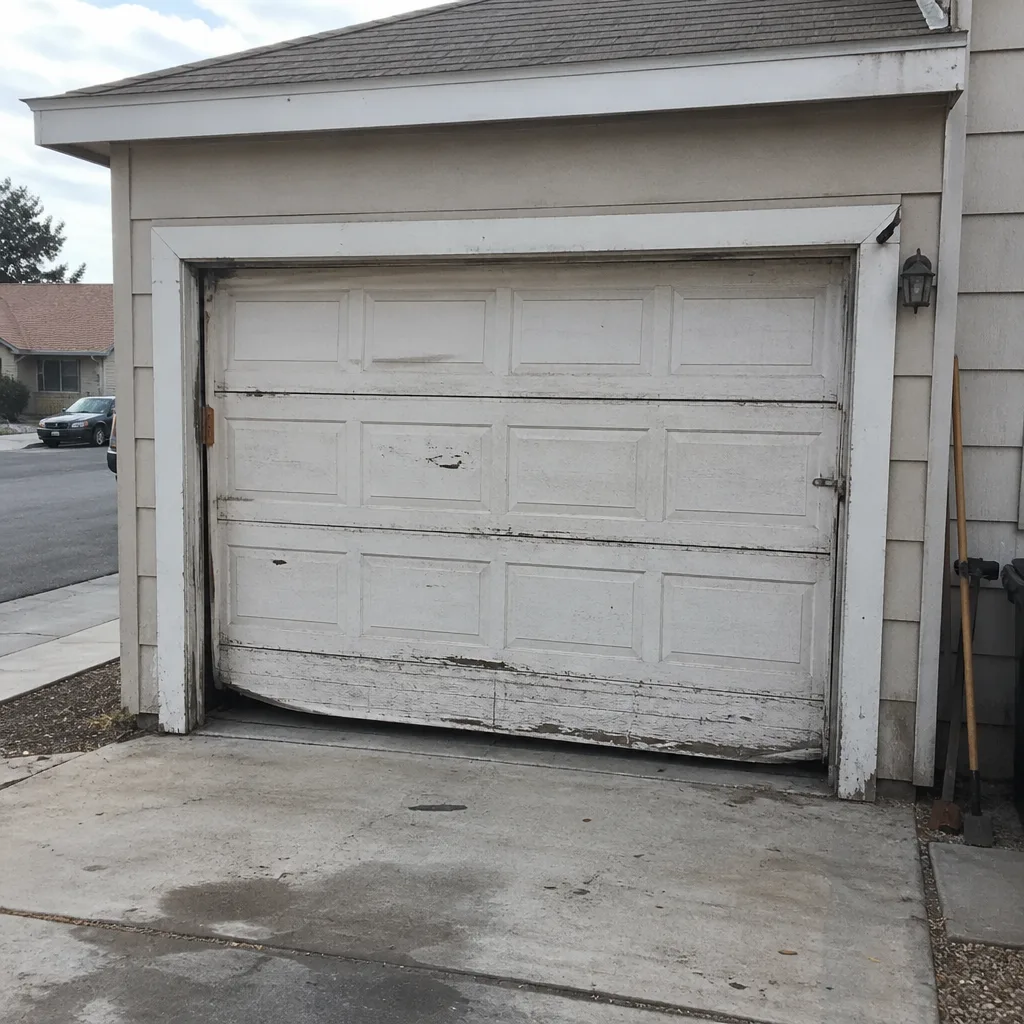 Before
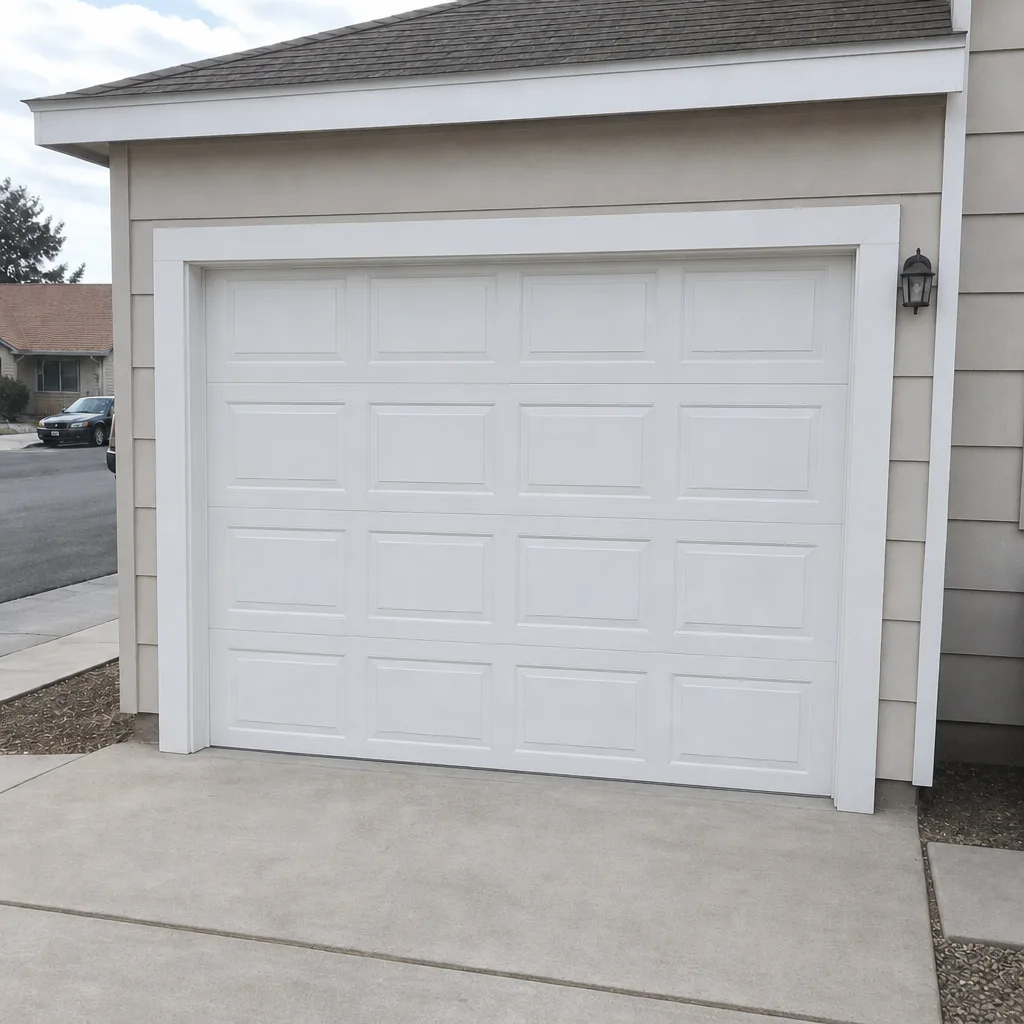 After
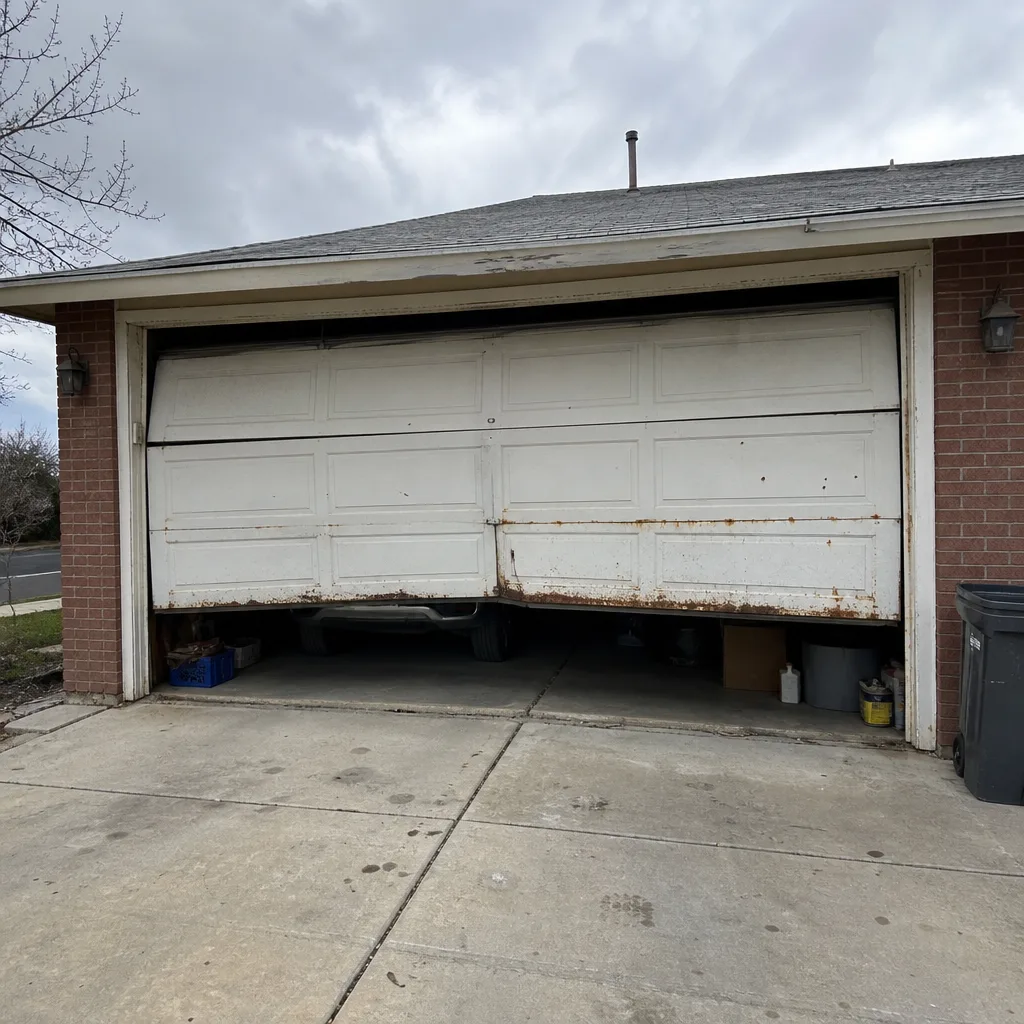 Before
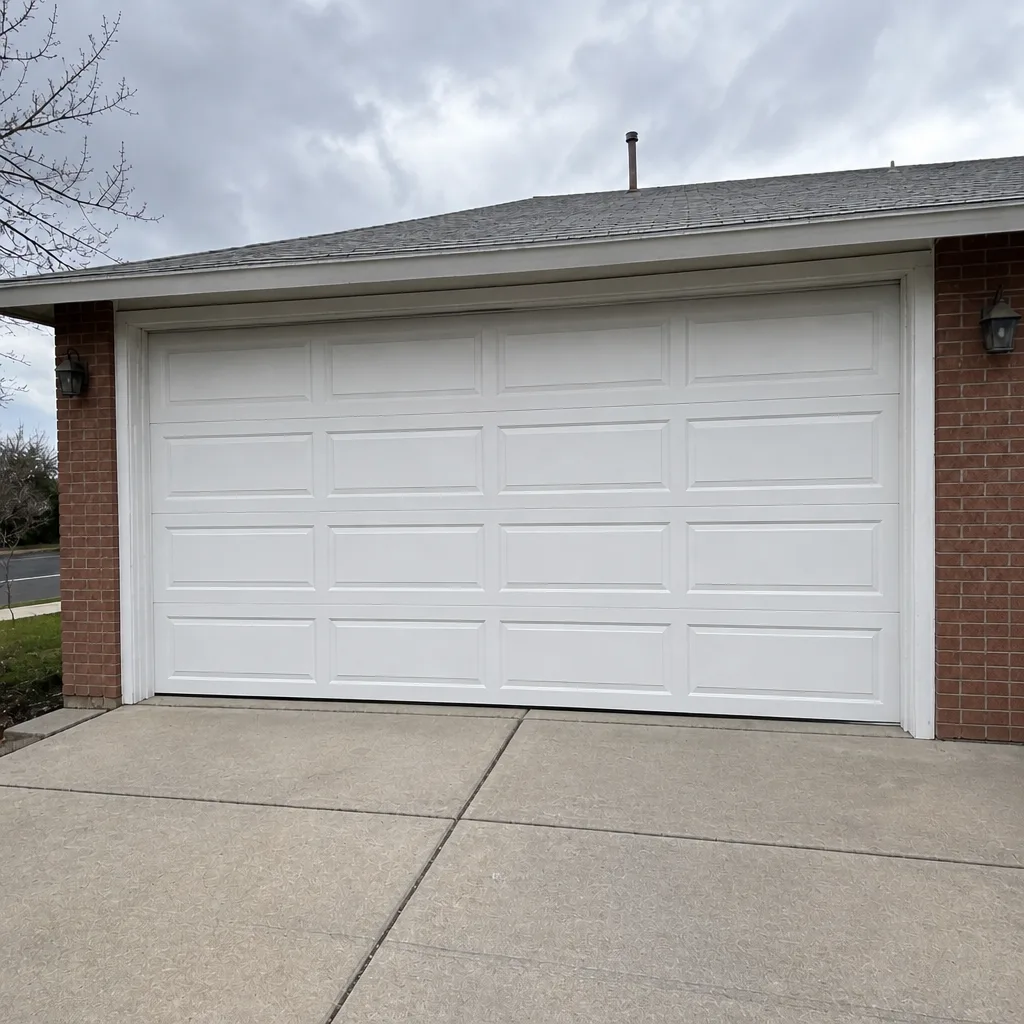 After
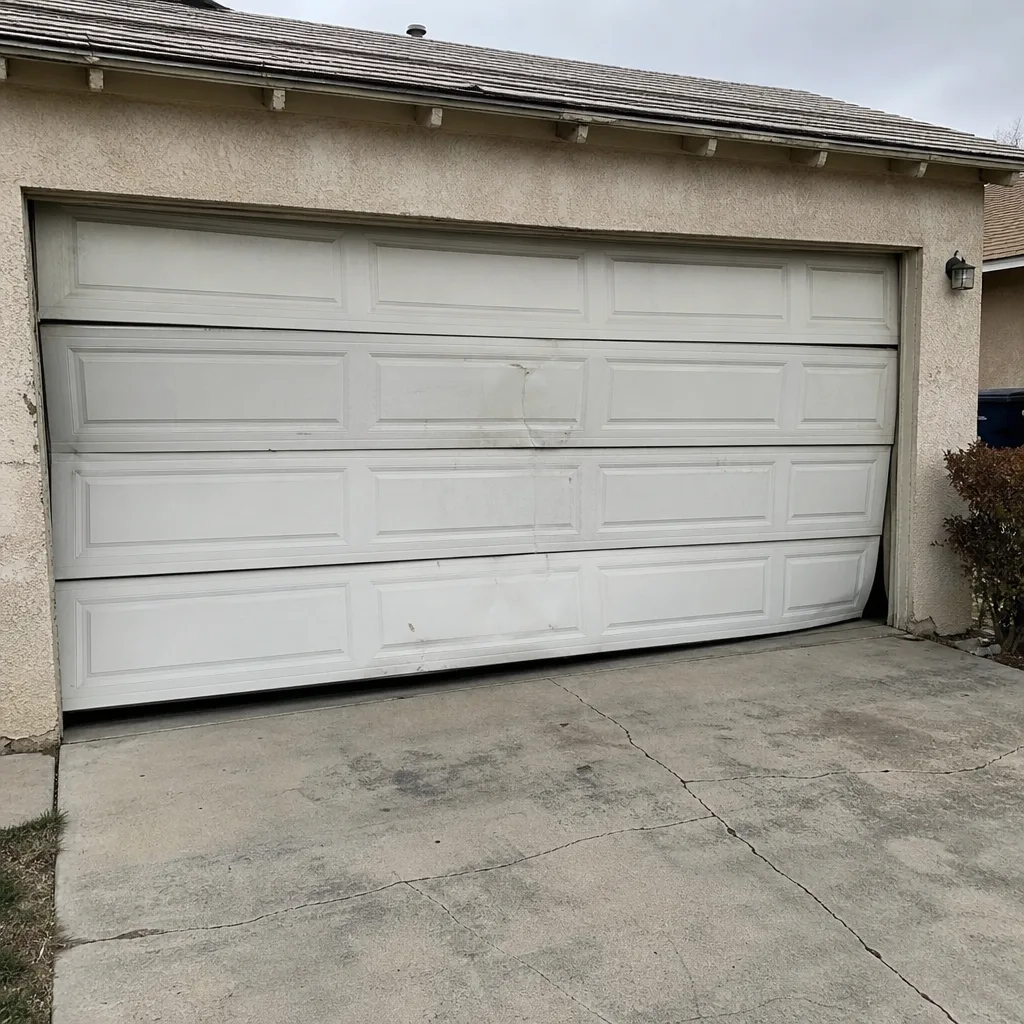 Before
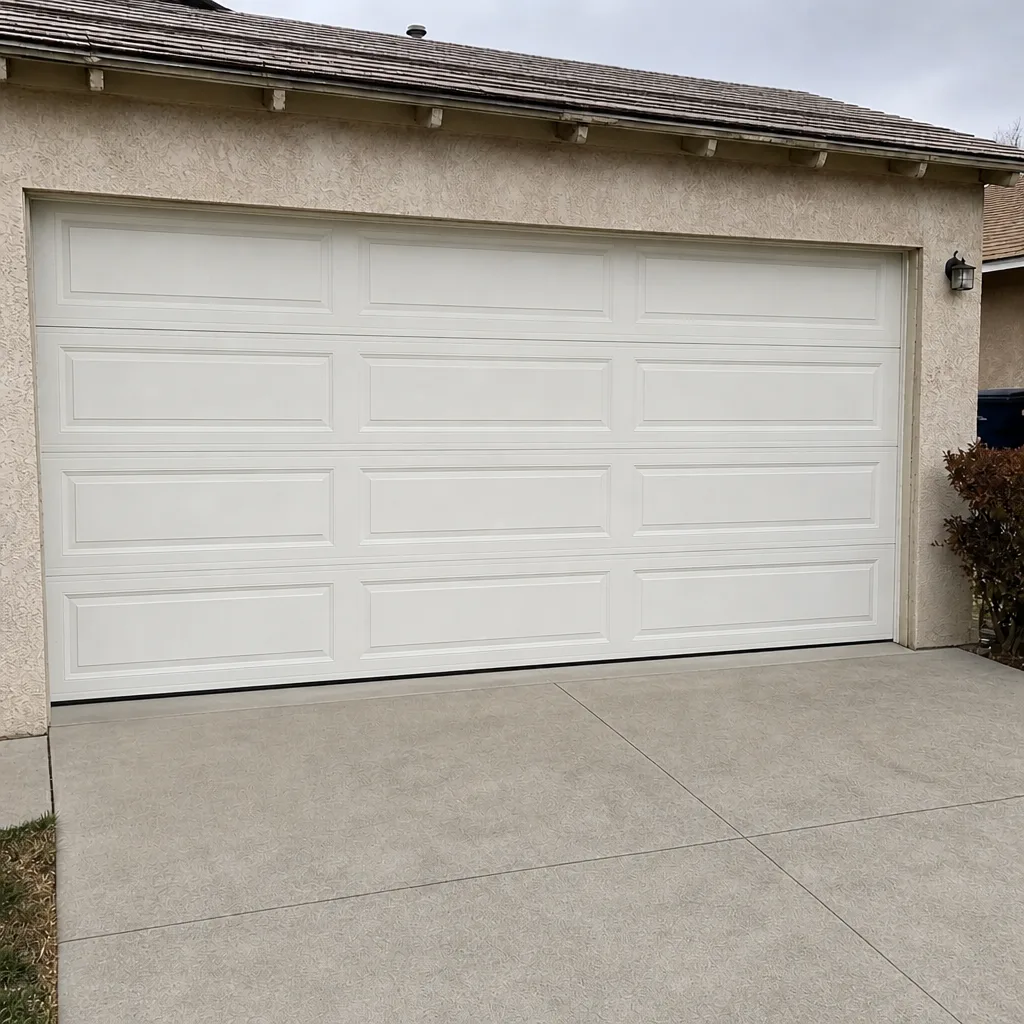 After
When to Call a Professional
Call us if the door won’t lift, if the balance test fails, if a cable is loose, if the spring is visibly rusted or stretched, if the door hangs crooked, or if the opener runs without moving the door. Call if you’re unsure whether the work is safe to do yourself. We answer live – no phone tree, no voicemail, no after-hours service. Every visit begins with a flat price stated before any work starts, and every completed job is backed in writing for 90 days. Mainspring Garage Door Co. Whitney offers free estimates in Whitney – call (844) 797-9248. Ask about the $50 Off Any Repair Over $250, the $89 Seasonal Tune-Up, or the permanent 5% Senior and Veteran discount.
Frequently Asked Questions
No. Torsion springs store hundreds of pounds of force while wound, and the winding process is where virtually all DIY spring injuries happen. A trained technician winds, tests, and balances the door, and if it isn’t right we come back under the 90-Day Done Right Promise. If you’re in Whitney and your spring is suspect, call (844) 797-9248 for a free estimate.
Lubrication, safety sensor alignment, remote reprogramming, cosmetic repainting, the balance test, and visual inspection are all homeowner-appropriate. Anything touching springs, cables, tracks under load, or the inside of an opener is not. If you’re unsure which side of the line your task falls on, call and ask – it’s a free question.
A torsion spring replacement in Whitney typically runs $200-$400 per spring installed, with cables in the $120-$250 range and a full opener replacement in the $400-$800 range. We state the flat price before any work begins, so there are no surprises on the bill. Call (844) 797-9248 for an exact quote – estimates are free.
No, as long as the work is non-invasive. Lubrication, cleaning, cosmetic painting, sensor alignment, and remote reprogramming don’t affect a warranty. Disassembling a spring, cable, track, or opener component does. If you’re worried about a specific job, call and we’ll tell you over the phone.
For repair and emergency calls in Whitney, yes – most jobs are same-day, and our phones are staffed by a live person 24/7. For a new installation or full replacement, that work is scheduled after a measure and a written price, not completed same-day. Call (844) 797-9248 and we’ll tell you exactly what to expect.
If any job we finish isn’t right, we come back and make it right at no charge within 90 days, in writing, no dispute process. It applies to every completed job, and it’s on the paperwork so nothing depends on a handshake. Call (844) 797-9248 with any questions about coverage on your home.
The Bottom Line
The DIY-versus-professional question for a garage door isn’t about skill. It’s about stored energy. Lubrication, sensor alignment, remote work, painting, and the balance test belong to you, and doing them well will keep a Whitney door running quiet for years. Springs, cables, loaded tracks, and opener internals belong to a trained technician, because Whitney’s heavy temperature swings make the torque math riskier here than in mild climates. Learn the balance test, respect the unsafe list, and call us when the door tells you something’s wrong. For everything else, explore the Mainspring Garage Door Co. Whitney home page to see how we work.
Written by the team at Mainspring Garage Door Co. Whitney.